
A defense team wants to implement detections that force an adversary to expend the maximum effort to adapt their operations. Which Pyramid of Pain layer should the team prioritize?
Select an answer to reveal the explanation.
Short Explanation
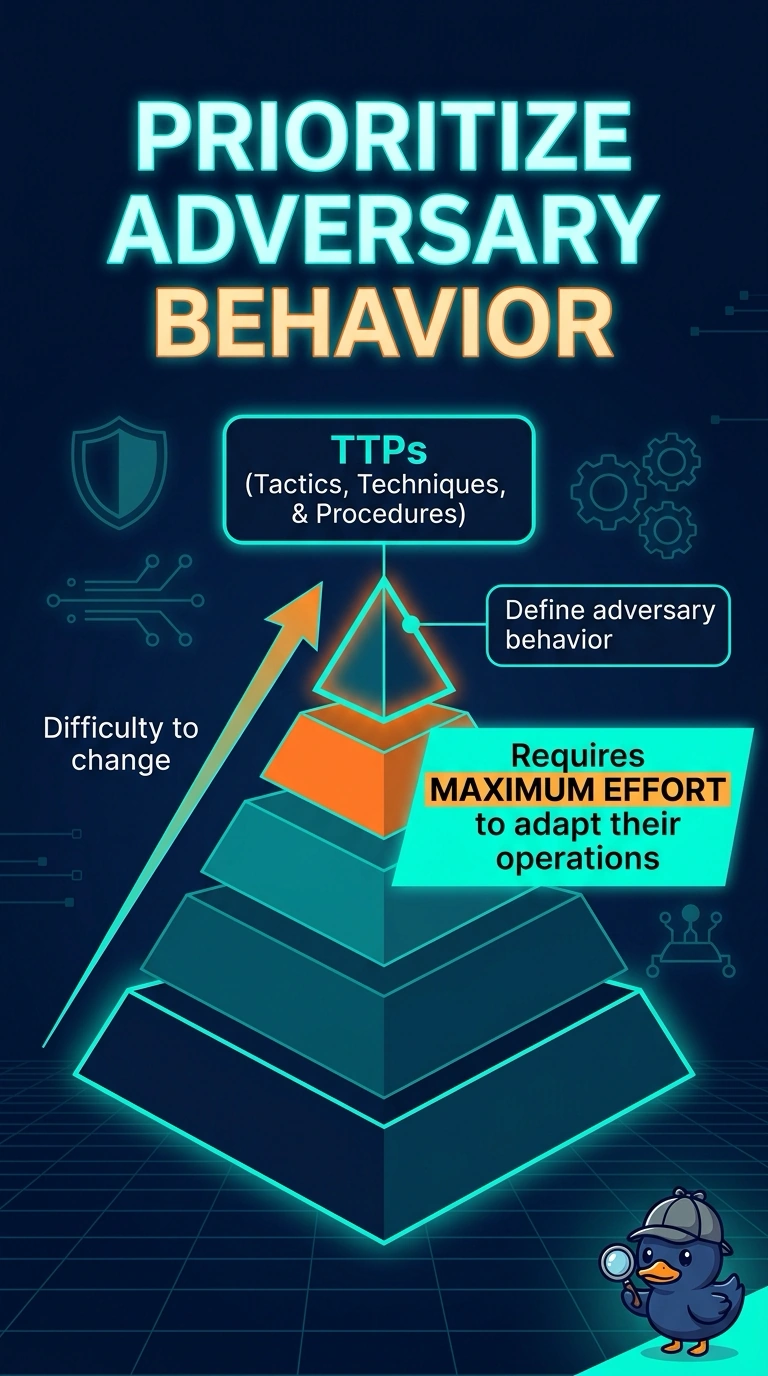
On the Pyramid of Pain, blocking an IP or hash is like changing a license plate, while catching TTPs forces the driver to learn a whole new route. When you detect how attackers actually operate, you raise their cost dramatically. The trap is thinking fast-changing indicators are just as durable as behavioral detections.
Full Explanation
Tactics, techniques, and procedures, which define adversary behavior sit at the apex of the Pyramid of Pain because forcing an attacker to abandon established tradecraft requires rewriting tools, retraining operators, and rebuilding workflows. File hash values, which identify exact binary copies sit at the very bottom since recompiling or appending a single byte invalidates the signature effortlessly. IP addresses, which represent transient network hosts are trivial for attackers to rotate using cloud providers, proxies, or compromised infrastructure. Domain names, which map to registered attack infrastructure require slightly more effort to replace than raw addresses, yet remain far easier to swap than core operational behaviors. As a caveat, behavioral detections often carry higher tuning overhead than exact indicator matches, so defenders must validate them against normal administrative activity. As an operational check, audit your current detection backlog and tag each rule by Pyramid of Pain tier to ensure sufficient coverage of adversary behaviors.