
A financial services SOC wants to adopt a formal methodology that uses incoming threat intelligence to trigger, prioritize, and scope recurring threat hunts. Which framework or methodology is specifically built for this purpose?
Select an answer to reveal the explanation.
Short Explanation
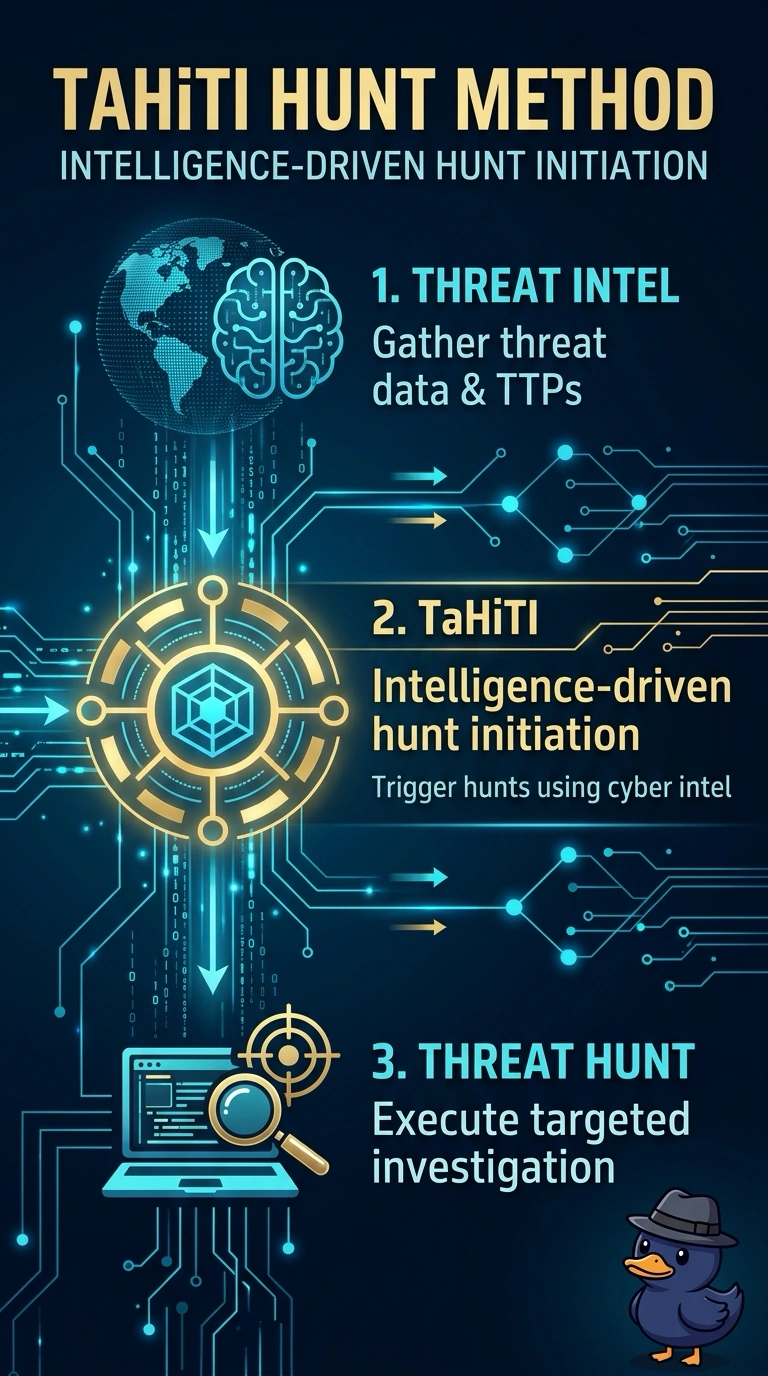
Think of threat hunting like fishing with a sonar map instead of casting a blind net. When you want threat intelligence to drive where your team looks next, TaHiTI gives you that structured loop, whereas general modeling or scoring frameworks pull you into design reviews instead of active hunting.
Full Explanation
TaHiTI for intelligence-driven hunt initiation is correct because the Targeted Hunting integrating Threat Intelligence methodology organizes threat hunting into clear phases—initiate, hunt, and finalize—that directly translate threat intelligence into testable hypotheses and operational detections. By contrast, PASTA for business-aligned application threat modeling is a risk-centric design framework used to identify architectural flaws in applications before deployment rather than to guide active SOC hunting. Similarly, MITRE CAPEC for cataloging software attack patterns provides a taxonomy of common exploitation patterns used by developers and analysts, but it does not define an end-to-end hunting workflow. Finally, CVSS for scoring the severity of known vulnerabilities is for prioritization because CVSS measures vulnerability severity, including environmental adjustments; it supplies an input to risk assessment and is not a complete risk score, and it does not drive intelligence-led adversary discovery. As a caveat, TaHiTI assumes your organization already collects reliable baseline telemetry; without adequate log visibility, intelligence-driven hypotheses cannot be tested. As an operational check, review your last three completed hunts and verify that each had a documented intelligence trigger, a defined scope, and a finalized detection or visibility update.