
While reviewing authentication logs across an enterprise network, an analyst observes a burst of failed service-account logins followed twenty minutes later by a successful interactive remote desktop session from a different internal host. What does this sequence suggest?
Select an answer to reveal the explanation.
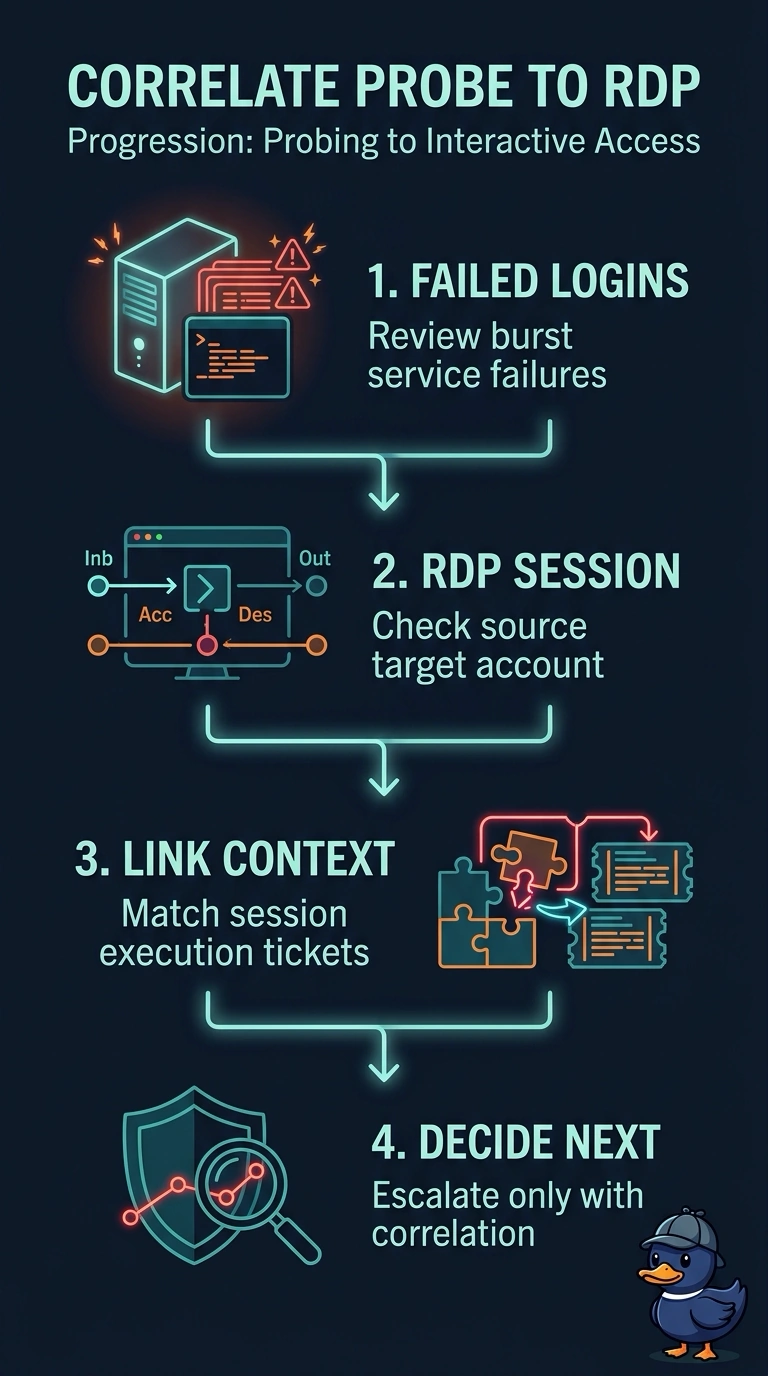
Short Explanation
When you see noisy guessing followed by a quiet remote desktop login, you should consider possible progression rather than assuming routine noise. Link account, source, target, session, and follow-on execution before associating the events; RDP interactive-logon classification does not by itself establish a human operator or an intrusion. You can catch real progression by checking tickets and follow-on activity before escalating.
Full Explanation
Failed service-account logins followed by an interactive remote desktop logon from another internal host fits Possible progression from credential probing to interactive remote access, requiring correlation. Adversaries frequently use automated credential-testing to find a working foothold, then attempt interactive access for exploration, which is consistent with MITRE Remote Services: Remote Desktop Protocol. Link account, source, target, session, and follow-on execution before associating the events; RDP interactive-logon classification does not by itself establish a human operator or an intrusion. Attributing the pattern to Routine automated patch management verifying local service health status ignores the burst of failed service-account logins and the subsequent interactive session from an unrelated host. Blaming A harmless DNS caching delay causing temporary authentication timeouts does not explain why a successful interactive remote desktop logon occurred from a different internal machine. Dismissing the sequence as Normal user password expiration triggering an automated directory sync task overlooks the shift into interactive remote access that requires correlation of identity and execution. Confirm user identity and maintenance tickets, then inspect process-creation logs on the target host immediately following the interactive logon to verify what commands were executed.