
During a late-night hunt, an analyst observes an administrative script modifying firewall rules across three branch routers. Which verification step best distinguishes an authorized maintenance action from an external intrusion?
Select an answer to reveal the explanation.
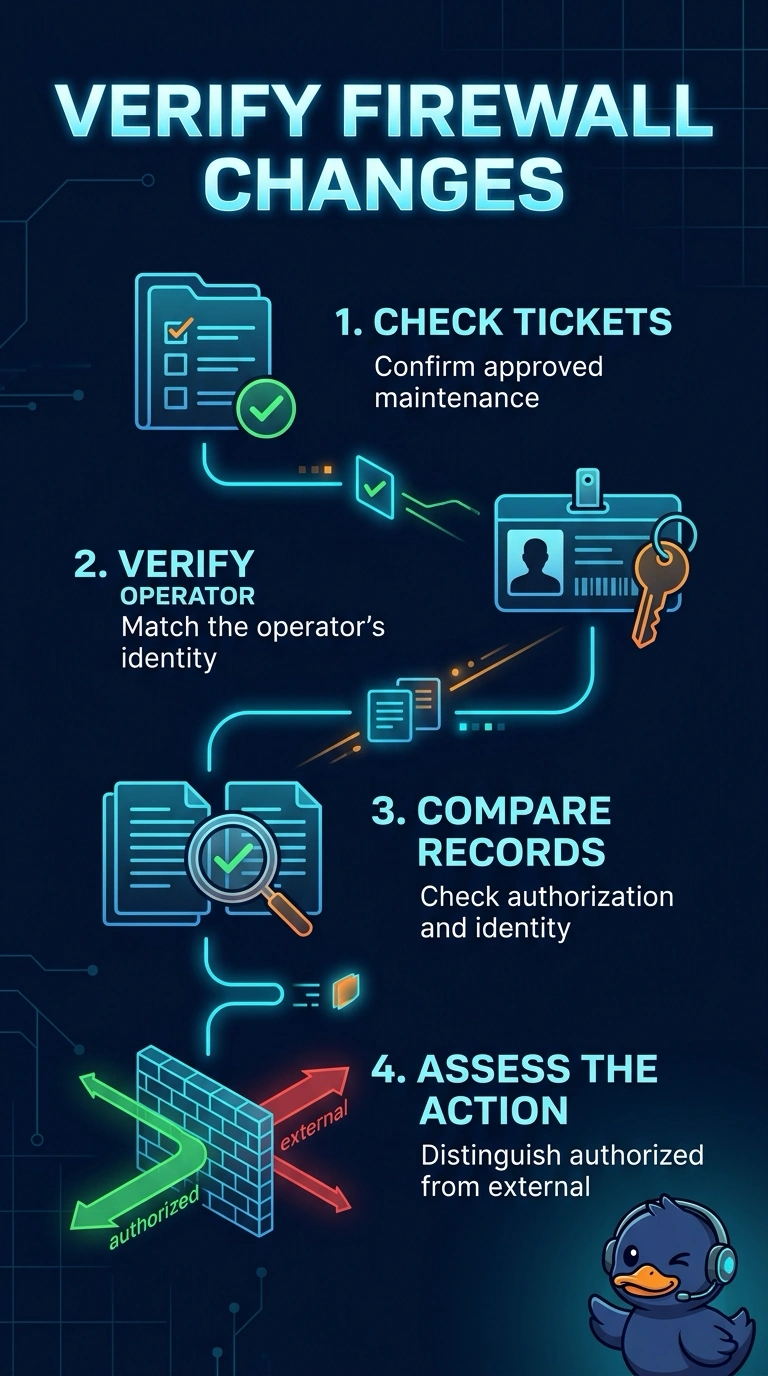
Short Explanation
An internal IP or familiar script name can still belong to an intruder using stolen admin keys. Before you panic or wave the activity through, check the change-management ticket and confirm who actually initiated it.
Full Explanation
Legitimate administrators and stealthy intruders often use the same configuration tools during off-hours windows, so raw technical telemetry can be ambiguous. The best verification is to cross-check approved change-management tickets and the operator’s identity, including out-of-band confirmation with the on-call engineer. Assuming the activity is benign because the script ran from an internal IP address overlooks compromised jump hosts and lateral movement. Immediately wiping all three branch routers before reviewing change logs risks a major business outage during legitimate maintenance and destroys valuable investigative context. Relying solely on the script’s filename fails because adversaries can name malicious scripts after standard administrative utilities to blend in. As a caveat, stolen credentials can make an attacker’s session appear to belong to a real administrator, so verify out of band with the named operator. As a practical check, confirm the change ticket number, validate the exact script hash against the team’s version-controlled repository, and verify with the on-call lead.