
An attribution analyst is comparing two intrusions that occurred four months apart at different subsidiaries using completely different external IP addresses and newly compiled loaders. Which log evidence provides the strongest basis for clustering these two incidents to the same intrusion set?
Select an answer to reveal the explanation.
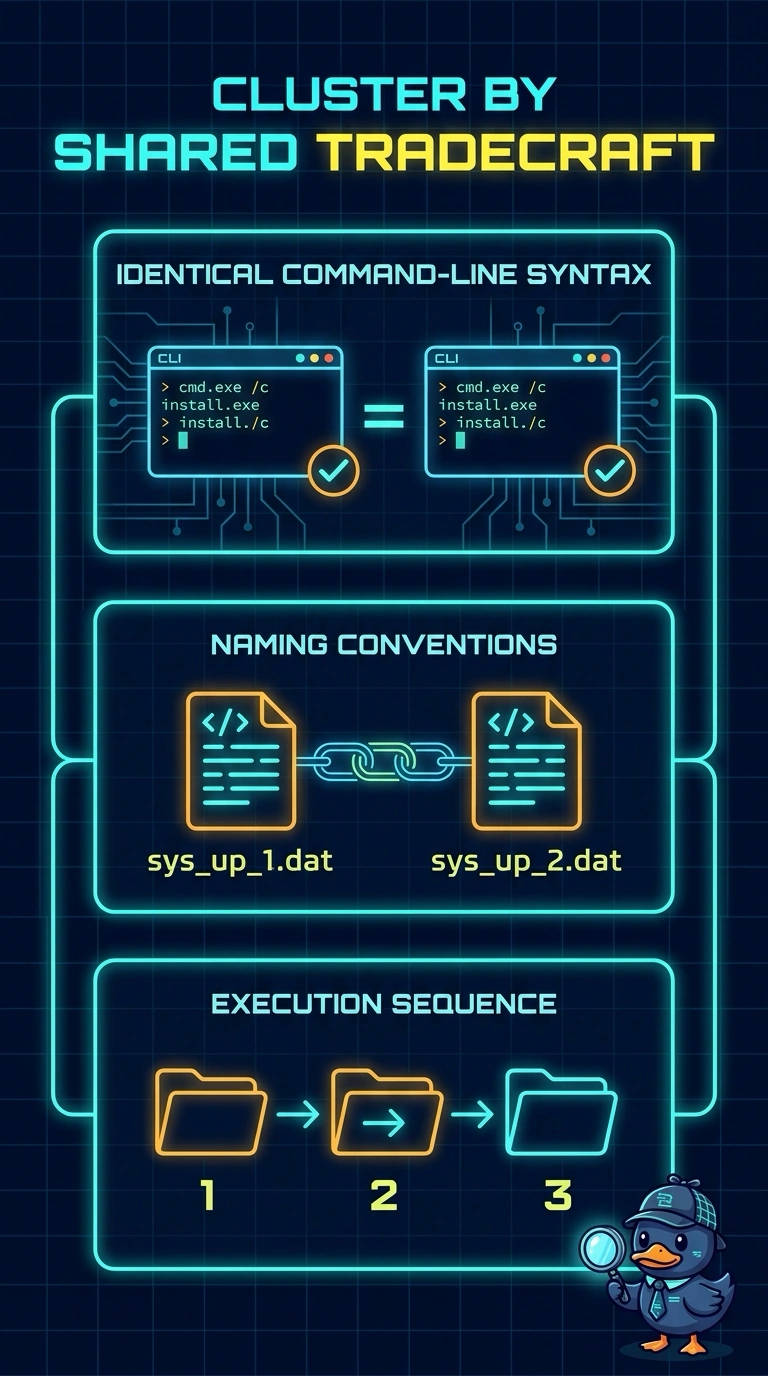
Short Explanation
Adversaries swap IP addresses and recompile loaders like changing license plates, but their habits are much harder to fake. Looking at exact command-line syntax and execution order helps you cluster related intrusions reliably. The trap is putting weight on generic timing or standard ports.
Full Explanation
At the top of the Pyramid of Pain, adversary tactics, techniques, and procedures remain far more consistent than infrastructure or file hashes, making Identical command-line syntax, naming conventions, and execution sequence the strongest clustering evidence. Operators and their automation scripts repeatedly use specific flag combinations, staging directory names, and step-by-step discovery sequences across campaigns. Both incidents began on a Tuesday morning during normal business hours is far too generic because countless unrelated threats and routine business activities occur at that time. Both newly compiled loaders used standard HTTPS port 443 for outbound traffic is weak because port 443 is ubiquitous across both legitimate enterprise software and unrelated malware families. The victim subsidiaries both operate in the same geographic region provides contextual victimology but cannot link two intrusions without shared technical behaviors. As a caveat, public playbooks and leaked operator scripts can cause different groups to copy identical command sequences. As an operational check, compare full process-creation command lines, staging paths, and timing deltas between discovery and credential-access events across both incidents.