
While reviewing intrusion logs from a ransomware incident, an analyst notices the attacker gained initial access on a Tuesday but waited until late Friday night before executing lateral movement and encryption. What does this timing pattern most likely indicate?
Select an answer to reveal the explanation.
Short Explanation
Burglars rarely break in while the store is packed at noon; they wait until the lights go out and only one guard is on duty. The trap is blaming clock drift or automation when you are seeing deliberate off-hours tradecraft designed to slow your response.
Full Explanation
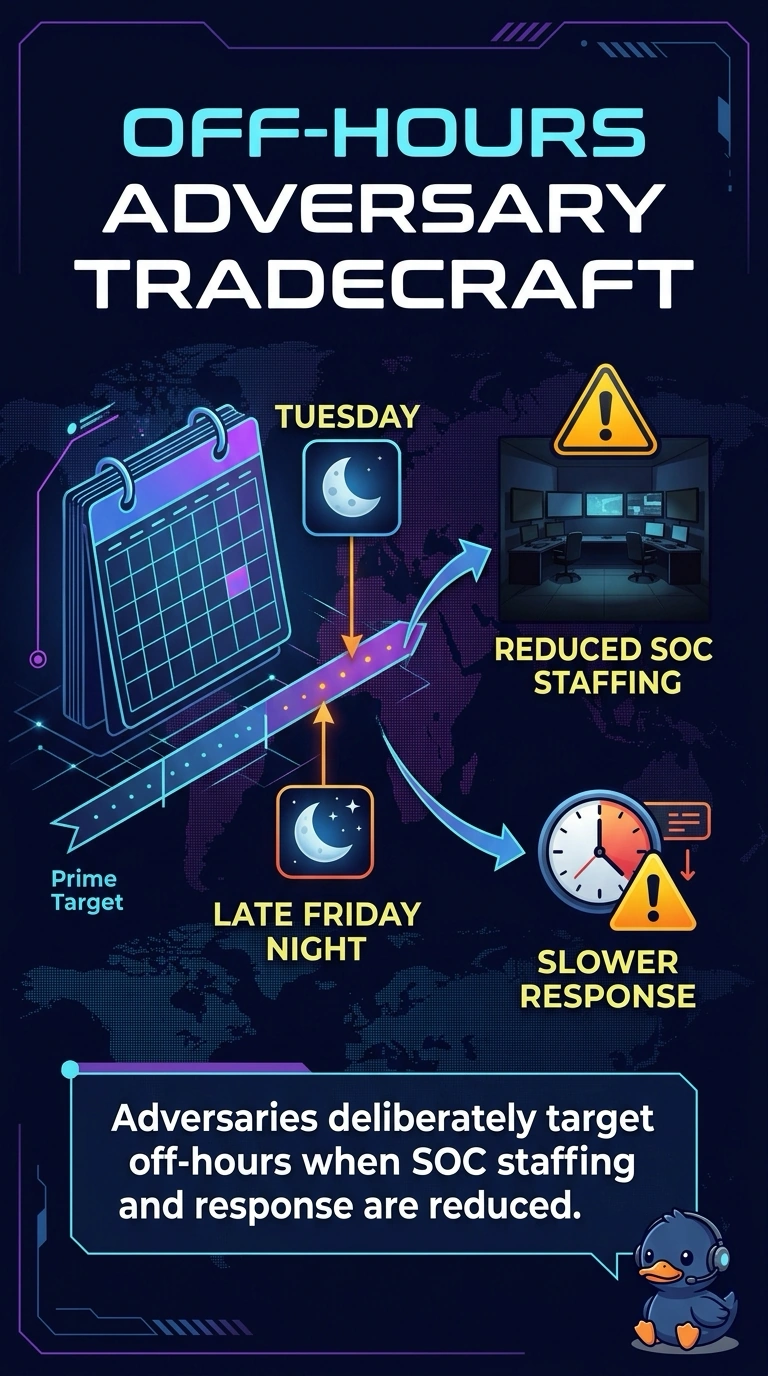
Deliberate adversary tradecraft targeting off-hours when SOC staffing and response are reduced explains why human-operated intrusion teams frequently stage access mid-week and launch noisy lateral movement or encryption on Friday nights, weekends, or holidays. By waiting until fewer analysts and system administrators are actively monitoring queues, the attacker maximizes dwell time to disable backups and spread across critical hosts before containment begins. Automated commodity worms programmed to wait exactly seventy-two hours before scanning local networks is incorrect because self-propagating worms typically spread immediately upon execution without waiting for specific calendar windows. A routine corporate patch window where IT administrators deliberately encrypt production file servers is wrong because maintenance windows apply updates rather than unauthorized mass encryption. Endpoint clock synchronization drift causing Tuesday encryption events to appear on Friday logs fails because minor time skew does not explain a multi-day gap between initial access and impact. As a caveat, attackers operating from different time zones can also create off-hours patterns unintentionally. For an operational check, verify weekend escalation rosters and automated containment thresholds for high-severity lateral-movement alerts.