
During an attribution review, a lead analyst notes that an adversary quickly swapped command-and-control IP addresses and recompiled binaries to change file hashes, yet kept using the same distinctive HTTP User-Agent string and registry persistence key. Where do these persistent observables sit on the Pyramid of Pain?
Select an answer to reveal the explanation.
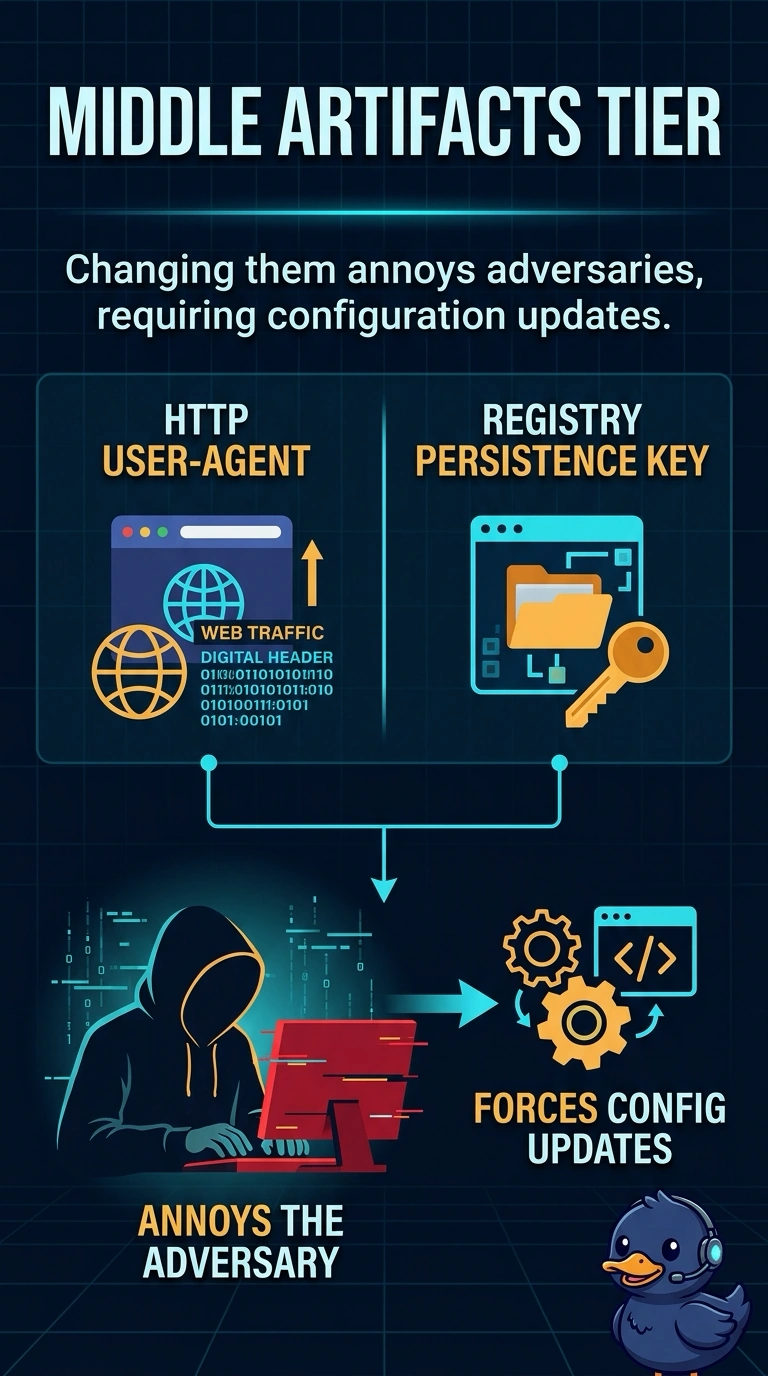
Short Explanation
Swapping an IP address or recompiling a file takes seconds, but changing how malware talks on the wire or hides in the registry starts to get in the attacker's way. You are looking at the middle of the Pyramid of Pain, where detections become genuinely annoying to evade. The trap is placing these artifacts at either extreme of the pyramid.
Full Explanation
The Pyramid of Pain ranks observables by how much effort an adversary must spend to change them, placing custom headers and registry keys In the middle artifacts tier, where changing them annoys the adversary by requiring configuration updates. Unlike trivial hashes or IP addresses, altering embedded User-Agent strings or persistence paths forces the actor to edit code, rebuild configurations, and retest delivery. Placing them At the very bottom tier, where adversaries can randomize them effortlessly without modifying code confuses host and network artifacts with atomic indicators like file hashes and IP addresses. Conversely, putting them At the top TTPs tier, where changing them forces the adversary to reinvent their entire operational playbook overstates the disruption, because renaming a registry key is far easier than abandoning a core technique. Claiming they sit Outside the Pyramid of Pain entirely, because native operating system registries are never tracked is incorrect, since host artifacts are a core layer of the model. As a caveat, determined actors will eventually update artifacts once they realize defenders are hunting them. As an operational check, pair artifact-based detections with broader behavioral rules so a simple string edit does not blind your monitoring.