
During an intrusion investigation at an insurance firm, an analyst finds a malicious binary signed with a valid code-signing certificate belonging to an unrelated software vendor and links the attack to a specific threat group previously seen using that certificate. Why is this attribution weak?
Select an answer to reveal the explanation.
Short Explanation
Think of a stolen code-signing certificate like a forged press badge sold on the street—more than one intruder can flash it at your door. The trap is treating a reused stolen certificate as a unique fingerprint for a single threat group.
Full Explanation
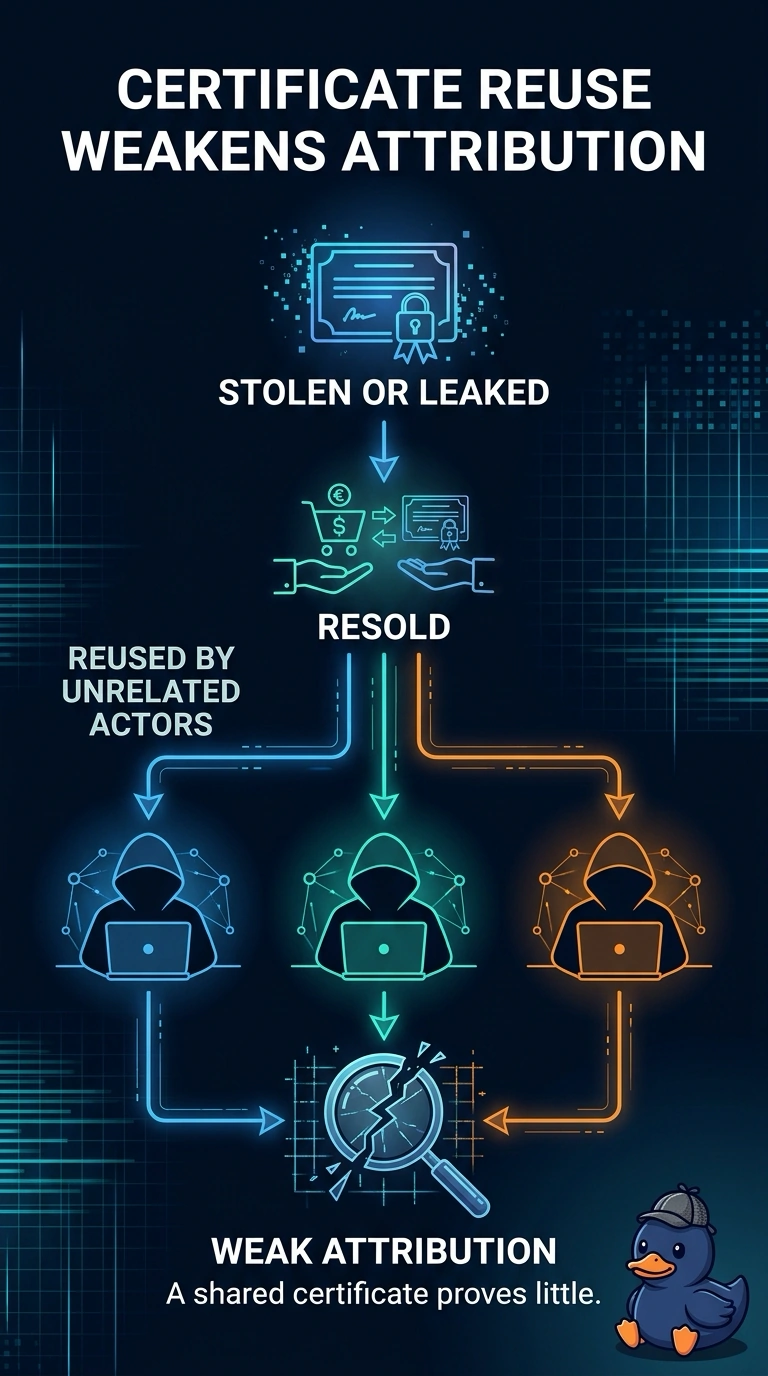
Stolen or leaked certificates are often resold and reused by multiple unrelated threat actors explains why certificate reuse alone is weak attribution evidence. Threat actors frequently purchase compromised signing keys on underground markets or share them across affiliate networks to bypass basic trust checks. Authenticode signatures can be embedded in a PE or held in a separate signed catalog. Signature verification establishes integrity of the content covered by the signing format and the signing identity, not an operating-system author or benign intent. That is why claims about network packet headers miss how signing works, claims about compilation by the operating system vendor overstate what verification proves, and claims about timestamps automatically expiring after twenty-four hours misrepresent timestamping, since properly timestamped signatures can remain trusted even after a certificate expires unless explicitly revoked. One caveat is that a stolen certificate may still help scope affected hosts in your environment while attribution remains open. As an operational check, cross-reference the certificate thumbprint against known revocation lists and correlate the binary's post-exploitation TTPs before attributing the intrusion.