
During a forensic review of a compromised finance server, an analyst notices a suspicious binary in a system directory whose file-creation timestamp predates the operating system installation date by two years. What does this artifact most likely indicate?
Select an answer to reveal the explanation.
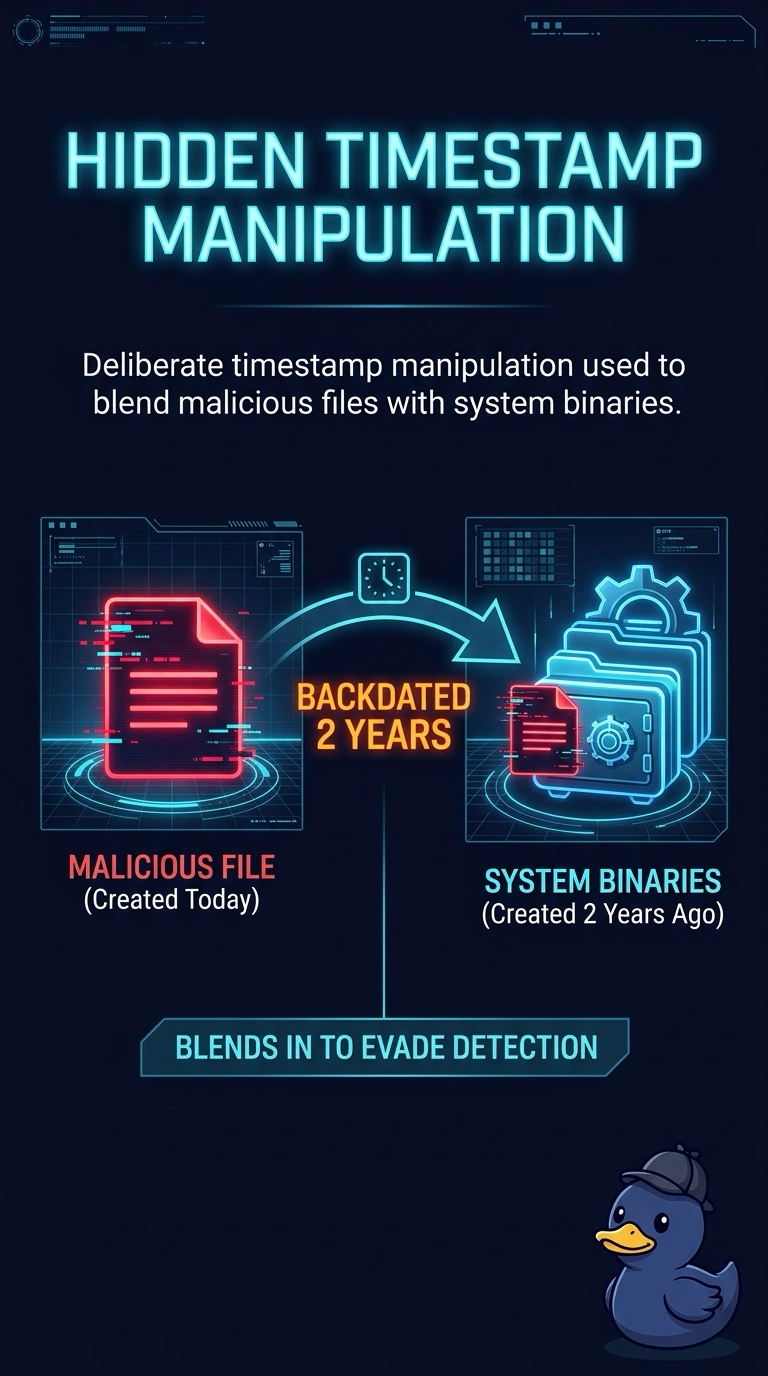
Short Explanation
Imagine finding a brand-new tool in your toolbox stamped with a date from before you bought the house. Adversaries alter file timestamps to hide in plain sight among legitimate system binaries, and treating an impossible date as a harmless glitch is a classic trap.
Full Explanation
A file-creation timestamp predating the host installation strongly points to deliberate timestamp manipulation used to blend malicious files with system binaries. Adversaries modify standard file-system metadata so their payloads match surrounding legitimate executables and evade simple chronological timeline searches. A routine operating system patch that automatically restores archived system files would not explain an unknown binary carrying a date older than the operating system build itself. An automated network time protocol synchronization failure on the domain controller affects live system clocks and log timestamps rather than selectively backdating a single suspicious binary. A harmless file-system indexing error caused by an interrupted backup job on the host is unlikely to target an unauthorized executable in a system folder. As an important caveat, some legitimate installers preserve original build dates, so timestamp anomalies alone never confirm malice without corroborating telemetry. For an operational check, compare standard file-system timestamps against deeper file-system journal records and process-creation logs.