
A healthcare SOC sees a burst of HTTP requests probing known web vulnerabilities against an external patient portal, followed minutes later by interactive shell commands and database schema queries from a different address. How should the analyst interpret this sequence?
Select an answer to reveal the explanation.
Short Explanation
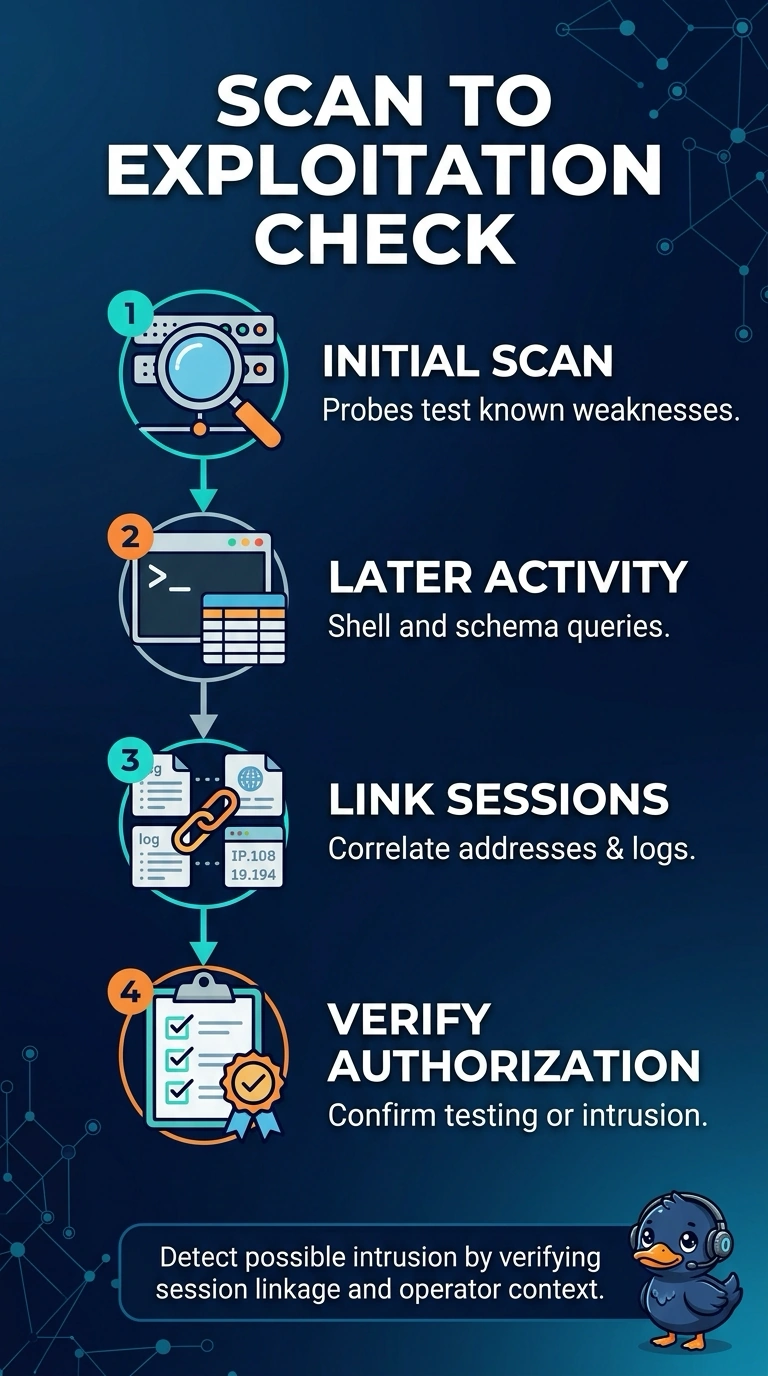
Think of automated scanning like rattling doorknobs, while interactive commands mean someone may have stepped inside your house. You should treat this shift as a possible intrusion and verify whether the sessions link together before assuming who is behind them.
Full Explanation
Possible intrusion progressing from scanning to post-exploitation; verify session linkage and operator context best explains this sequence because initial vulnerability probes gave way to interactive shell commands and database schema queries that suggest follow-on exploitation. Automated exploitation, testing, and AI-assisted tooling can also issue these commands. Correlate sessions and authorization before inferring a human operator or linking the source addresses. In contrast, An authorized vulnerability scanner completing a scheduled perimeter check follows a deterministic, pre-approved test plan and does not pivot into unscheduled interactive database queries. Likewise, A misconfigured load balancer replaying health-check requests to backend nodes repeats identical status probes rather than issuing new shell and database commands. Finally, A benign web crawler indexing public portal pages for search engine results requests publicly linked content without attempting exploit payloads or backend queries. One caveat is that some advanced breach-and-attack simulation tools can chain automated validation steps, so analysts should always verify active test windows. As an operational check, immediately correlate the secondary source address against active VPN, proxy, and authentication logs while verifying with the security testing lead whether any assessment is underway.