
While reviewing domain controller telemetry, a threat hunter spots an interactive administrative session invoking a volume shadow copy utility to stage a copy of the Active Directory database file outside its normal system path. Which adversary tactic does this TTP most strongly indicate?
Select an answer to reveal the explanation.
Short Explanation
Staging the Active Directory database from a shadow copy is like making a master key of your entire identity kingdom so an attacker can crack hashes offline. The trap is mistaking this late-stage credential theft for initial phishing or destructive wiper activity.
Full Explanation
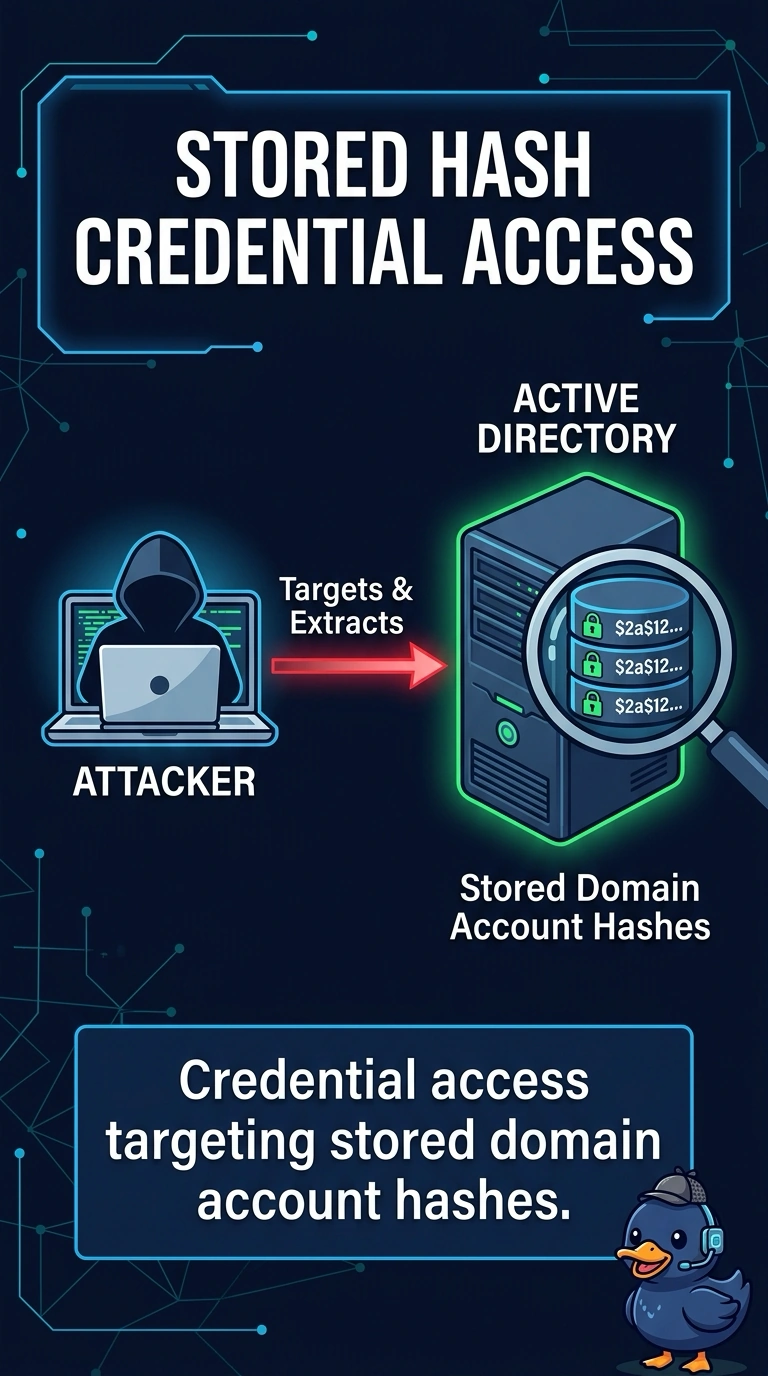
Credential access targeting stored domain account hashes is the right answer because the Active Directory database holds password hashes for domain accounts, and adversaries use volume shadow copy utilities to bypass file locks and extract a copy for offline cracking. Initial access via external phishing attachments occurs at the perimeter on user endpoints rather than during interactive extraction of directory databases on a domain controller. Resource hijacking for unauthorized crypto mining consumes CPU or GPU cycles for financial gain and does not require copying identity databases. Impact via immediate disk wiper execution destroys data availability and often deletes shadow copies rather than staging the directory database to a separate path for exfiltration. As a caveat, authorized backup software and administrators also interact with volume shadow copies during scheduled maintenance, so parent processes and destination paths must be checked. As an operational check, audit domain controller process-creation logs for shadow-copy commands referencing directory database paths and verify them against approved backup schedules.