
While hunting across Windows endpoint telemetry, an analyst discovers an unauthorized permanent WMI event consumer configured to launch an encoded PowerShell command every time the system boots, with no corresponding file in the startup folder. What adversary behavior does this finding represent?
Select an answer to reveal the explanation.
Short Explanation
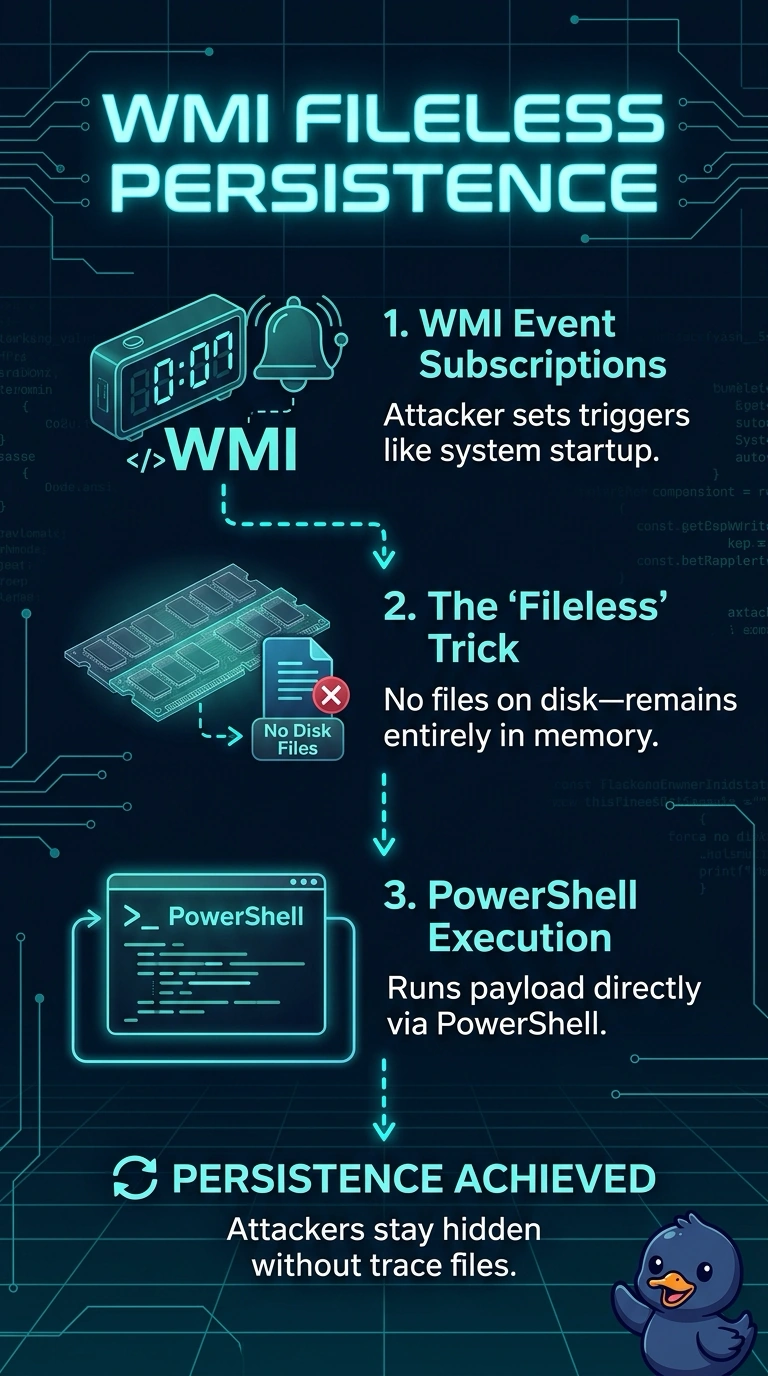
Attackers love hiding persistence where your basic file scanners never look, and WMI subscriptions let them trigger code right out of the repository. The trap is assuming any encoded PowerShell command means credential theft or lateral movement when a boot-time trigger points straight to persistence.
Full Explanation
Fileless persistence using WMI event subscriptions is the correct answer because permanent WMI event filters, consumers, and bindings live inside the Common Information Model repository and automatically execute commands on system triggers such as boot without placing executables in startup folders. Credential harvesting via local security authority memory targets authentication secrets inside sensitive system processes rather than establishing boot-time execution triggers. Lateral movement through unencrypted administrative shares involves transferring tools or executing commands across remote hosts over the network, which is distinct from local persistence. Data staging inside hidden compressed archive directories prepares stolen files for exfiltration rather than maintaining long-term host access. As a caveat, legitimate enterprise management and monitoring suites occasionally register WMI event consumers, so the consumer's command line and binding must be verified. As an operational check, query WMI permanent event filter-to-consumer bindings and audit WMI-Activity operational logs alongside endpoint process-creation events.