
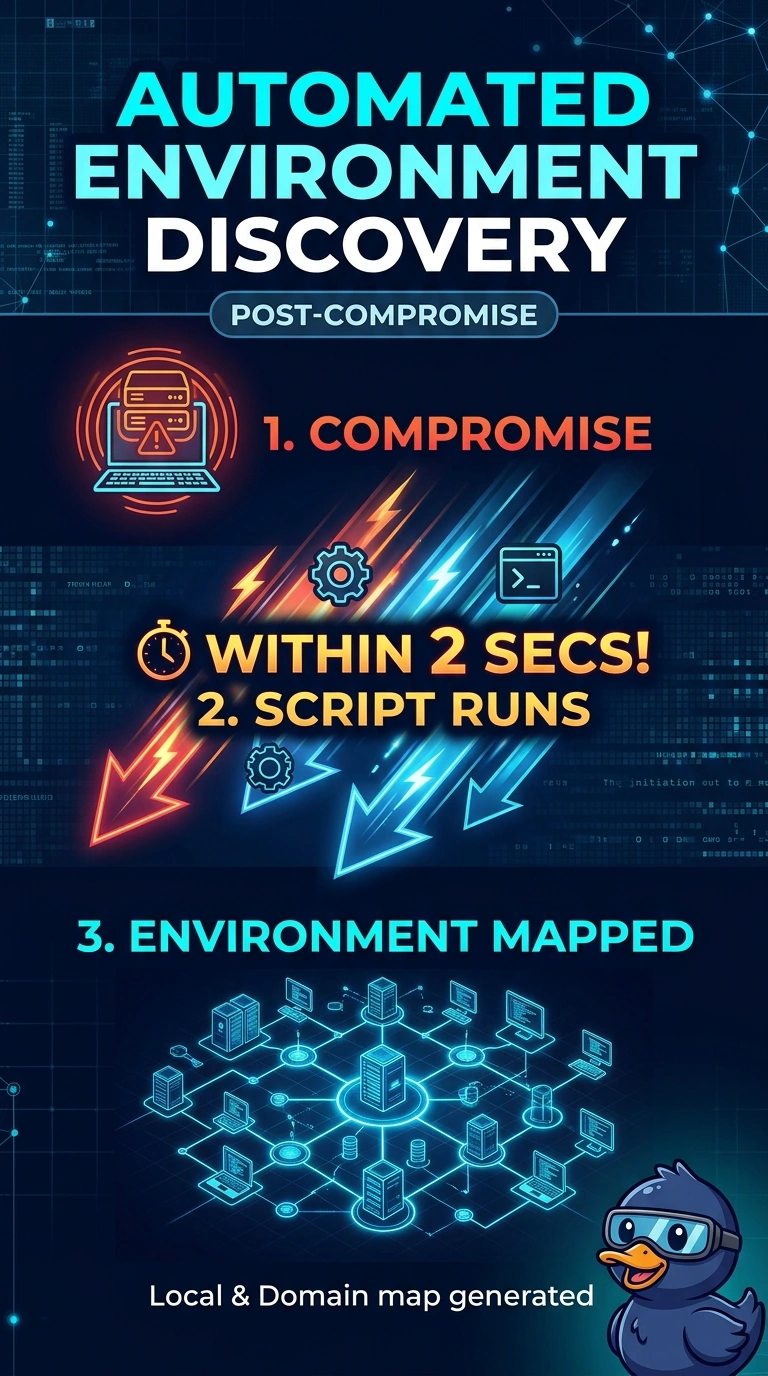
While reviewing endpoint process-creation logs from an engineering workstation, an analyst notices a single non-interactive shell session executing system, network, and domain-group enumeration commands in rapid succession within two seconds. Which threat actor behavior does this log pattern represent?
Select an answer to reveal the explanation.
Short Explanation
You can treat the rapid, non-interactive burst as a strong sign of automated discovery after compromise. Built-in utilities may look routine, but their clustered use to enumerate system, network, and domain details does not fit manual troubleshooting.
Full Explanation
Adversaries often run scripted reconnaissance after gaining a foothold to map host privileges, network interfaces, and domain groups before attempting lateral movement. Automated post-compromise discovery scripting used to map the local and domain environment best explains a non-interactive shell executing system, network, and domain-group enumeration commands in rapid succession. Scheduled operating system patch verification triggered by the enterprise management server does not account for shell queries of domain groups and local system details; patch verification alone is not evidence of this discovery behavior. Normal interactive troubleshooting performed manually by a help desk technician at the keyboard conflicts with the non-interactive session and tightly clustered execution. Automated malware signature updates downloading fresh definitions from the vendor cloud concern updating antivirus definitions, not querying local and domain group membership through shell commands. Exam caveat: legitimate inventory or login scripts can also issue bursts of system queries, so this pattern is suspicious but not conclusive on its own. Practical check: inspect the shell session’s parent process and look for subsequent credential-access or lateral-movement activity from the workstation.