
During an incident investigation at a shipping company, an analyst finds two separate unauthorized remote access tools on different servers within the same week. Which log evidence best determines whether these findings represent two distinct threat actors rather than one actor using backup tools?
Select an answer to reveal the explanation.
Short Explanation
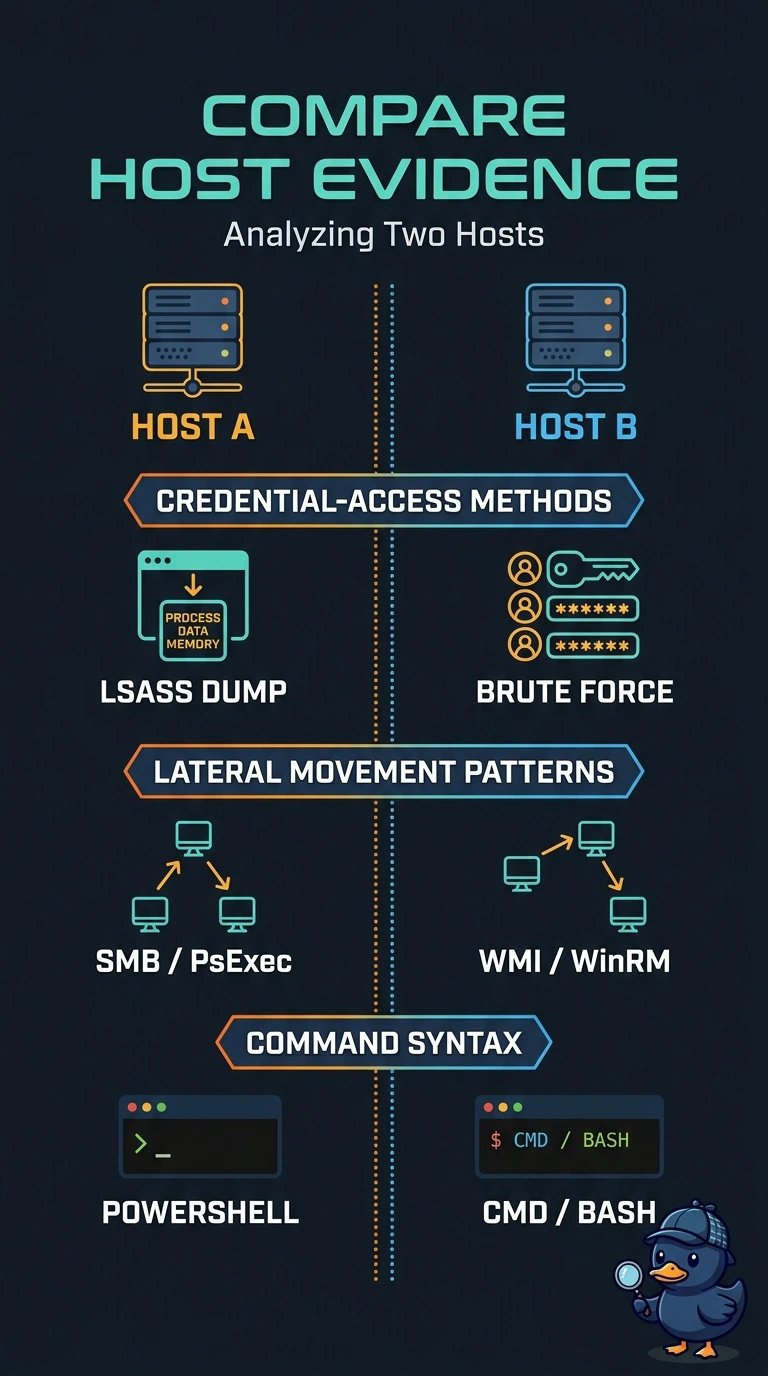
Think of two burglars in the same building: even if both carry crowbars, the way they move through rooms tells you whether you are dealing with one intruder or two. Comparing post-exploitation habits and command syntax across hosts reveals distinct operator playbooks. The trap is relying on hashes, IPs, compile timestamps, or domain metadata, because a single actor routinely rotates infrastructure and artifacts for backup access.
Full Explanation
Determining whether multiple backdoors belong to one intrusion or separate actors requires looking at operator behavior rather than disposable infrastructure. Divergent credential-access methods, lateral movement patterns, and command syntax across the two hosts reflect ingrained habits and playbooks at the top of the Pyramid of Pain, making them strong evidence of different operators. By contrast, Different compiled file hashes and distinct external IP addresses for the two remote access binaries are trivial for a single actor to vary when deploying redundant access channels. Similarly, Different timestamps in the portable executable headers of the two recovered remote access utilities can be forged or simply reflect separate build dates by the same group, while Distinct TLS certificate serial numbers and registrar privacy settings on the external command-and-control domains are standard operational security practices used by one actor to compartmentalize backup infrastructure. As a caveat, even a single threat group may hand off access to an affiliate with different habits. Operational check: map each host's observed command-line and lateral movement sequence to high-level adversary tactics before clustering the incidents.