
While investigating two separate intrusions at different retail companies, an analyst discovers that both payloads were wrapped using the same commercial obfuscation packer and concludes that the same threat actor conducted both attacks. Why is this attribution conclusion unreliable?
Select an answer to reveal the explanation.
Short Explanation
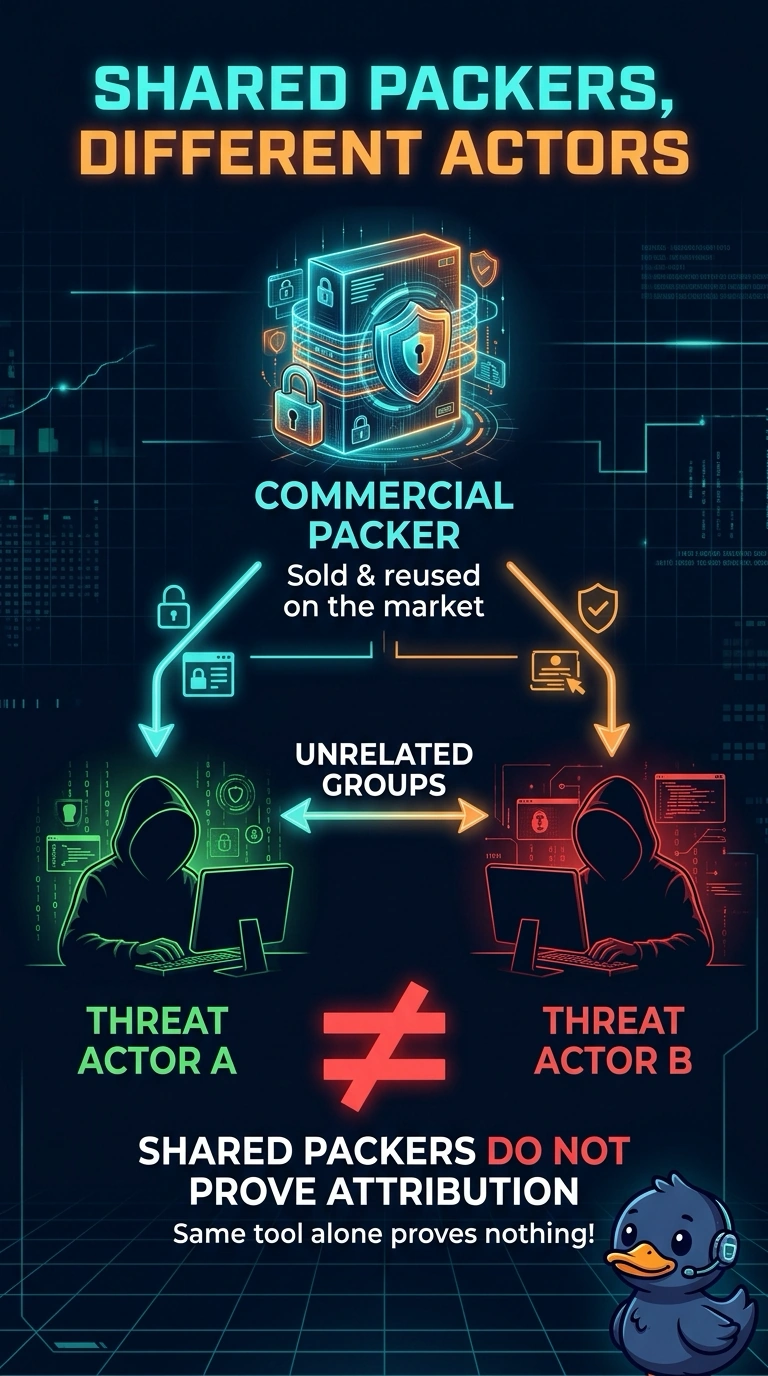
Blaming two burglaries on the same crew just because they bought identical ski masks is a quick way to chase the wrong suspect. In attribution, your trap is treating a widely sold packer as a unique signature rather than checking deeper behavioral TTPs.
Full Explanation
Attribution based solely on obfuscation tooling is weak because Unrelated threat actors commonly purchase and reuse the same packers from underground markets or public repositories to evade static detection. Sharing a commodity wrapper does not prove shared operators, infrastructure, or intent. Conversely, Packers automatically erase all network command-and-control traffic is false because packers wrap executable files on disk without altering external network session logs. Similarly, Commercial packers only function on unpatched Linux kernel versions is inaccurate, as packing tools are widely used across multiple operating systems regardless of patch level. Likewise, Obfuscated payloads always originate from authorized penetration tests is incorrect because both malicious actors and authorized testers use obfuscation to bypass basic signatures. As a caveat, custom-built private packers paired with consistent post-exploitation behaviors can serve as one supporting data point among many. For an operational check, unpack both samples in an isolated sandbox and compare their underlying payload capabilities, infrastructure, and post-compromise TTPs.