
During a malware triage at a logistics firm, an analyst finds a payload compiled from a well-known ransomware builder previously linked to a single cybercrime group and prepares to attribute the attack to that group. Why should the lead hunter challenge this conclusion?
Select an answer to reveal the explanation.
Short Explanation
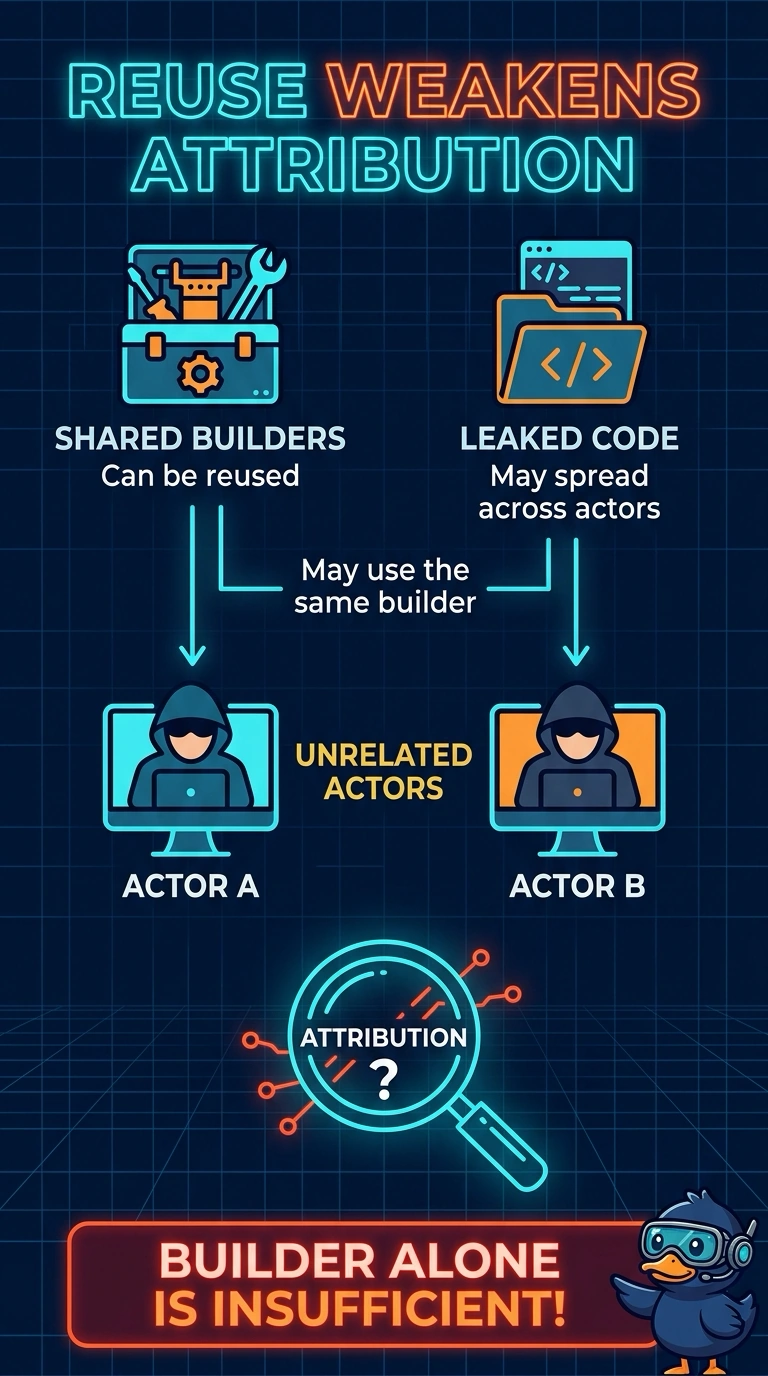
Finding the same brand of lockpick at two crime scenes does not prove the same burglar visited both houses. Your trap is equating shared tooling with a single operator. Leaked source code and commercial builders spread across unrelated groups, so corroborate with TTPs and victimology.
Full Explanation
The lead hunter should caution that Unrelated actors may reuse leaked code or shared malware builders, because cybercrime builders, affiliates, and leaked repositories frequently circulate across multiple independent crews. Attribution requires correlating post-exploitation behaviors, infrastructure overlaps, and target selection rather than relying on payload lineage alone. The intrusion must belong to the original malware author's threat group repeats the exact attribution fallacy of assuming exclusive tool ownership. Victimology and command-and-control infrastructure can be ignored is wrong because who is targeted and how operations are managed provide essential corroborating context. Static file hashes alone prove two campaigns share one operator is incorrect because hashes sit at the bottom of the Pyramid of Pain and only identify an exact file, not who compiled or deployed it. Caveat: even when two intrusions share a builder and similar initial access, affiliates may still operate independently with distinct extortion or exfiltration habits. Operational check: compare interactive post-compromise commands, persistence choices, and infrastructure registration patterns against historical profiles before assigning an actor label.