
During a scheduled external penetration test window, a threat hunter spots credential-stuffing and internal privilege escalation attempts targeting a production finance server. A junior analyst suggests ignoring the alerts because a test is underway. What should the hunter do?
Select an answer to reveal the explanation.
Short Explanation
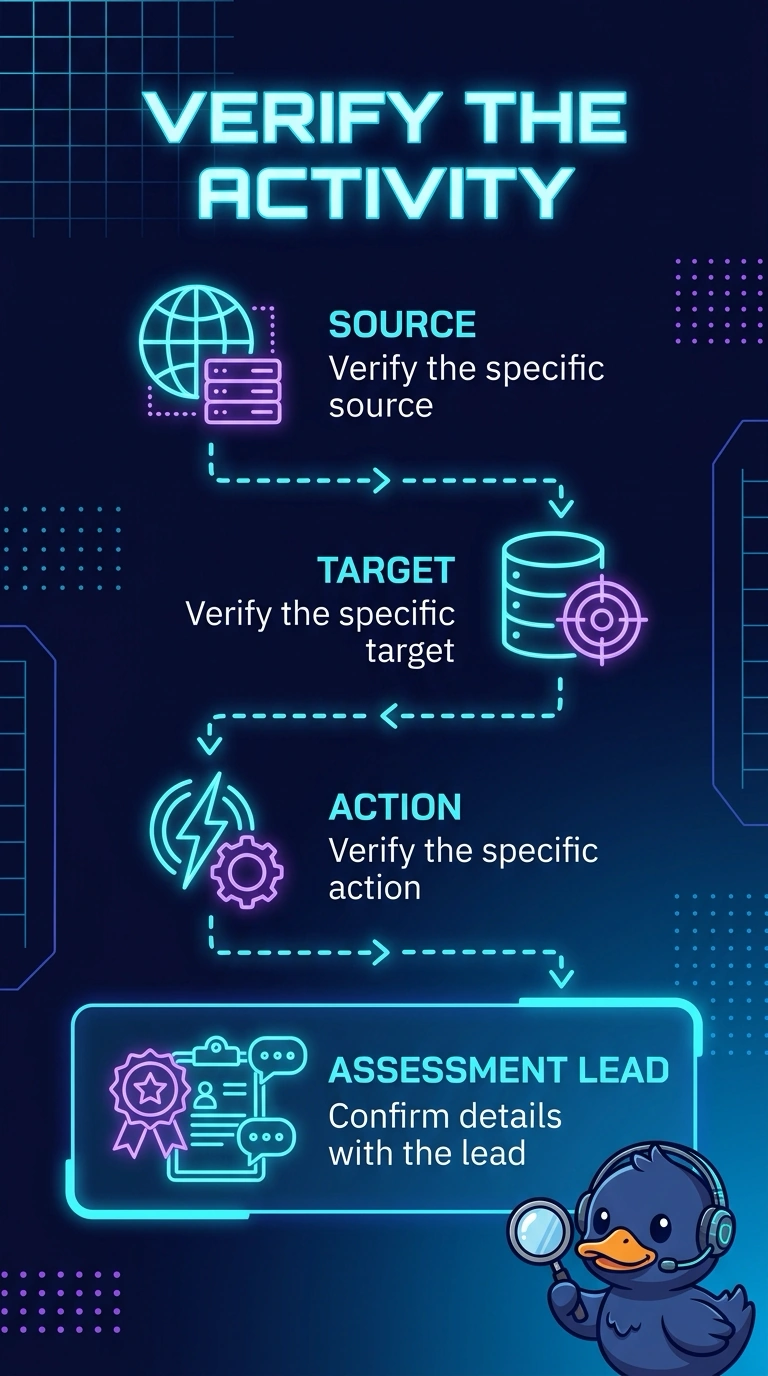
Real attackers love hiding behind a scheduled drill, hoping your team hits the snooze button. Never wave off suspicious activity just because a test is on the calendar—always confirm the exact details with the test lead.
Full Explanation
Verify the specific source, target, and action with the assessment lead is essential because real threat actors can strike during authorized test windows, or testers may inadvertently stray outside approved targets. Confirming exact timestamps, source addresses, and commands out-of-band ensures you do not dismiss a live intrusion or an unauthorized scope violation. Automatically suppress all alerts during the test window fails because blinding your SOC during an assessment creates a dangerous gap that real adversaries can exploit undetected. Wait until the final penetration test report arrives next month fails because leaving a potential live compromise uninvestigated for weeks allows an attacker time to exfiltrate data or establish deep persistence. Assume the activity is benign because a test is scheduled fails because an active calendar entry proves only that a test exists, not that every anomalous event belongs to the testers. Keep in mind as a caveat that verification requests should go through a pre-established out-of-band contact so you do not tip off a real intruder watching internal chat channels. As an operational check, maintain a live assessment tracker listing authorized source IPs, target ranges, and emergency escalation contacts.