
A utility company's SOC spots PowerShell scripts querying Active Directory group memberships from an IT jump host at 2:00 AM. Which check best distinguishes an authorized administrative maintenance task from threat actor reconnaissance?
Select an answer to reveal the explanation.
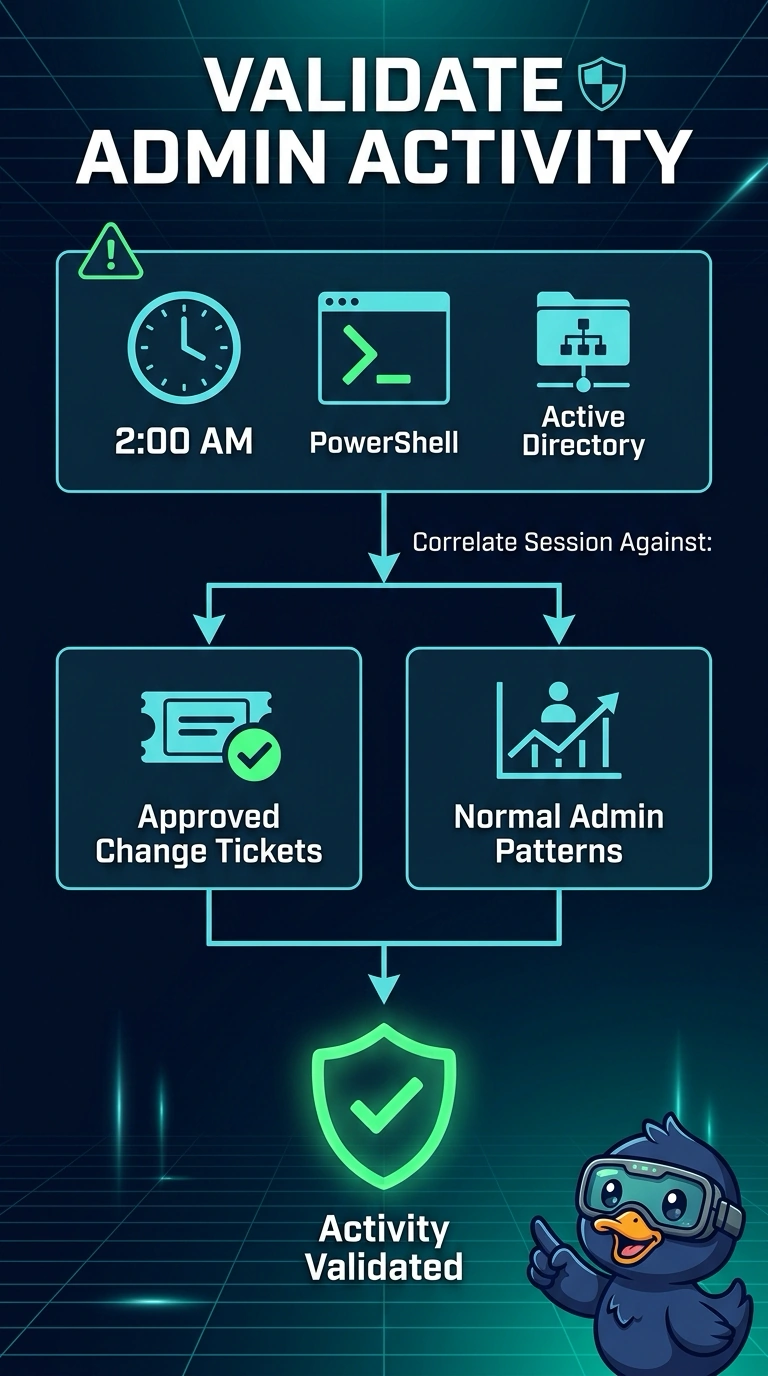
Short Explanation
You’re right to look beyond the host name: attackers can hide in off-hours administrative activity. Correlating the session with approved change tickets and normal admin patterns helps you verify whether it was authorized.
Full Explanation
Correlating the session with approved change tickets and normal admin patterns provides operational context for distinguishing scheduled IT maintenance from unauthorized Active Directory reconnaissance. Legitimate administrators typically follow documented change windows, use expected accounts, and work from established host patterns, while intruders may reuse compromised credentials at unusual hours. Assuming PowerShell activity from an internal jump host is benign overlooks that attackers target these hosts for their broad administrative reach. Checking whether a script ran using a standard built-in Windows system binary does not distinguish legitimate work from malicious activity, because administrators and living-off-the-land adversaries use the same native binaries. Verifying that the jump host has an up-to-date antivirus signature database does not establish whether an interactive script execution was authorized. One caveat is that emergency maintenance can occur outside normal hours, so when a ticket is missing, confirm the activity with the on-call owner. As a practical check, compare the originating user account, source workstation, and target domain controllers with the change-management log before closing the alert.