
Within 48 hours of a critical remote code execution flaw being publicly disclosed, a defense manufacturer's SOC observes exploitation attempts matching that flaw and attributes the incident to a specific nation-state group that used it earlier. Why is this attribution conclusion flawed?
Select an answer to reveal the explanation.
Short Explanation
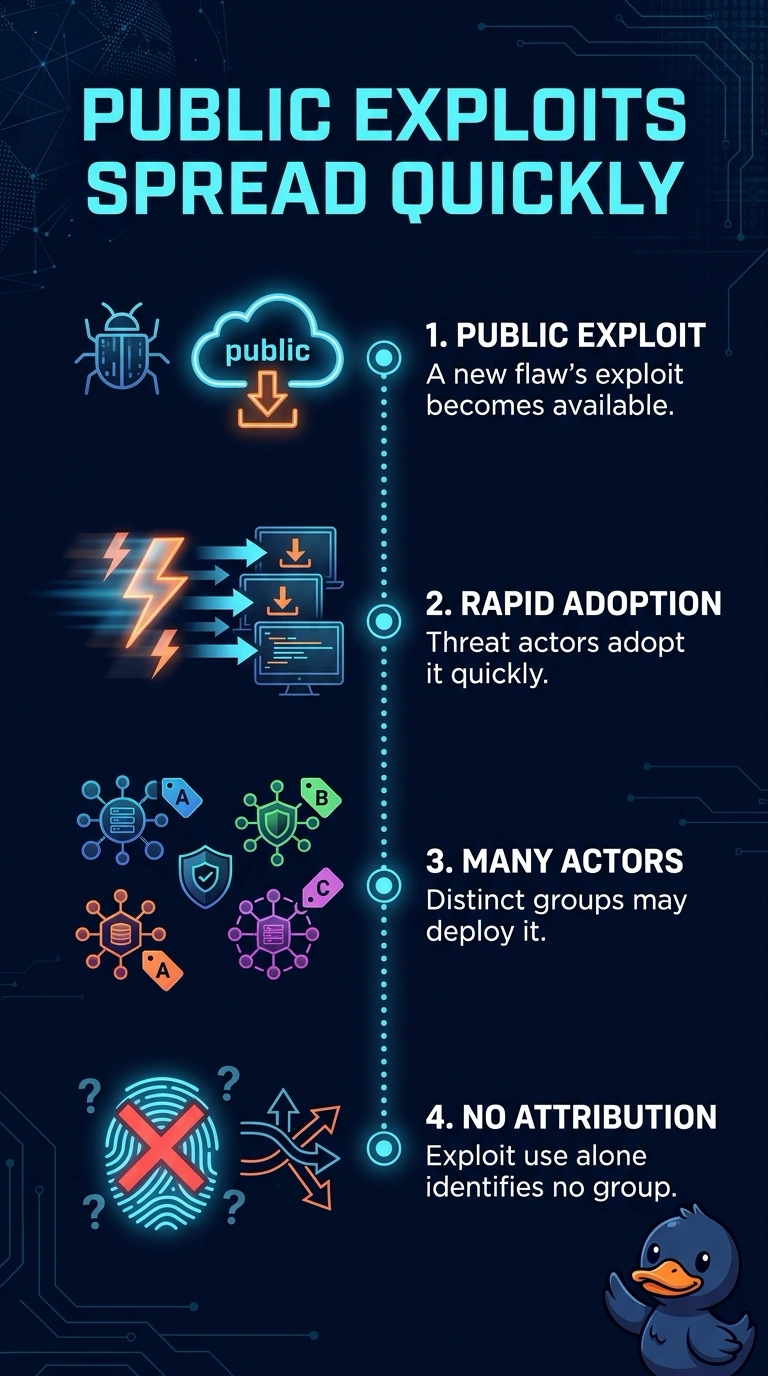
When a major vulnerability goes public, treat it like an unlocked door that every burglar in town tries at once, or you will blame the wrong crew. The trap is equating a shared exploit with a unique actor fingerprint.
Full Explanation
Multiple distinct threat actors rapidly adopt newly disclosed public exploits, which means observing a public exploit in your logs provides weak evidence for attributing an intrusion to one specific group. Once proof-of-concept code or technical details become public, opportunistic scanners, cybercriminals, and state-aligned teams all race to weaponize the same flaw against exposed targets. Publicly disclosed exploits are exclusively reserved for financially motivated cybercriminals is false because actors of every motivation routinely incorporate public exploits into their operations. Vulnerability exploitation logs never record the source network address of an attacker is incorrect, as perimeter firewalls, web servers, and intrusion sensors routinely capture source addresses, even if those addresses are proxied. Threat actor attribution requires seizing physical servers from the adversary's host country is wrong because analysts build high-confidence attribution from correlated victimology, infrastructure, and post-exploitation behaviors. One caveat is that early zero-day use before public disclosure carries stronger attribution weight than post-disclosure mass scanning. As an operational check, correlate post-exploitation commands and lateral movement behaviors in your SIEM before linking any exploit event to a named group.