
While reviewing identity provider authentication logs for a financial services firm, an analyst needs to separate normal remote employee activity from suspected credential compromise. Which log pattern most strongly indicates an unauthorized intrusion?
Select an answer to reveal the explanation.
Short Explanation
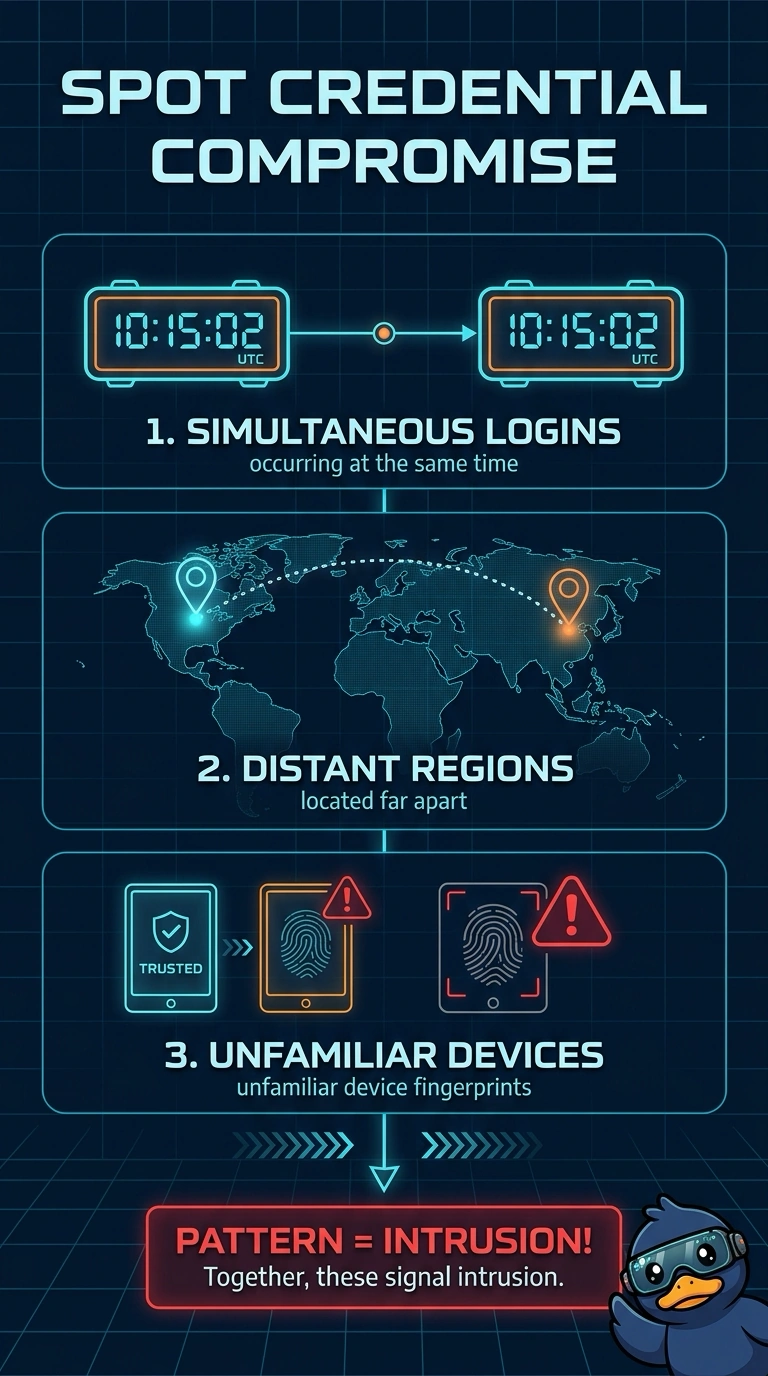
Distinguishing a legitimate remote worker from a hijacked account requires checking whether the context fits your user's normal behavior. Simultaneous logins from distant regions paired with unfamiliar device fingerprints point directly to compromised credentials. The trap is overlooking device and location context when you triage routine authentication events.
Full Explanation
The correct indicator is Simultaneous logins from distant regions paired with unfamiliar device fingerprints. When valid credentials are stolen or replayed, attackers frequently authenticate from infrastructure far removed from the employee's physical location and from unmanaged browsers or operating systems that do not match the corporate device baseline. Correlating geographic impossibility with device posture provides strong evidence of unauthorized access. By contrast, A single failed login followed by a successful sign-in from the user's normal workstation commonly reflects a simple typing mistake on an enrolled endpoint. Routine VPN connections occurring at the start of the employee's scheduled shift align with expected daily work patterns and provide no anomaly on their own. Similarly, Password resets initiated through the corporate self-service portal with MFA represent standard, verified identity maintenance unless paired with suspicious session hijacking. As a caveat, corporate VPNs or cloud proxies can occasionally make legitimate users appear to jump regions, so verify exit nodes before isolating an account. For an operational check, cross-reference the suspicious session's source IP, user-agent string, and MFA challenge history against the user's known enrolled devices.