
While reviewing endpoint file-access and process telemetry from a corporate file server, an analyst looks for signs that an intruder is preparing sensitive intellectual property for exfiltration. Which behavioral pattern best indicates adversary data staging?
Select an answer to reveal the explanation.
Short Explanation
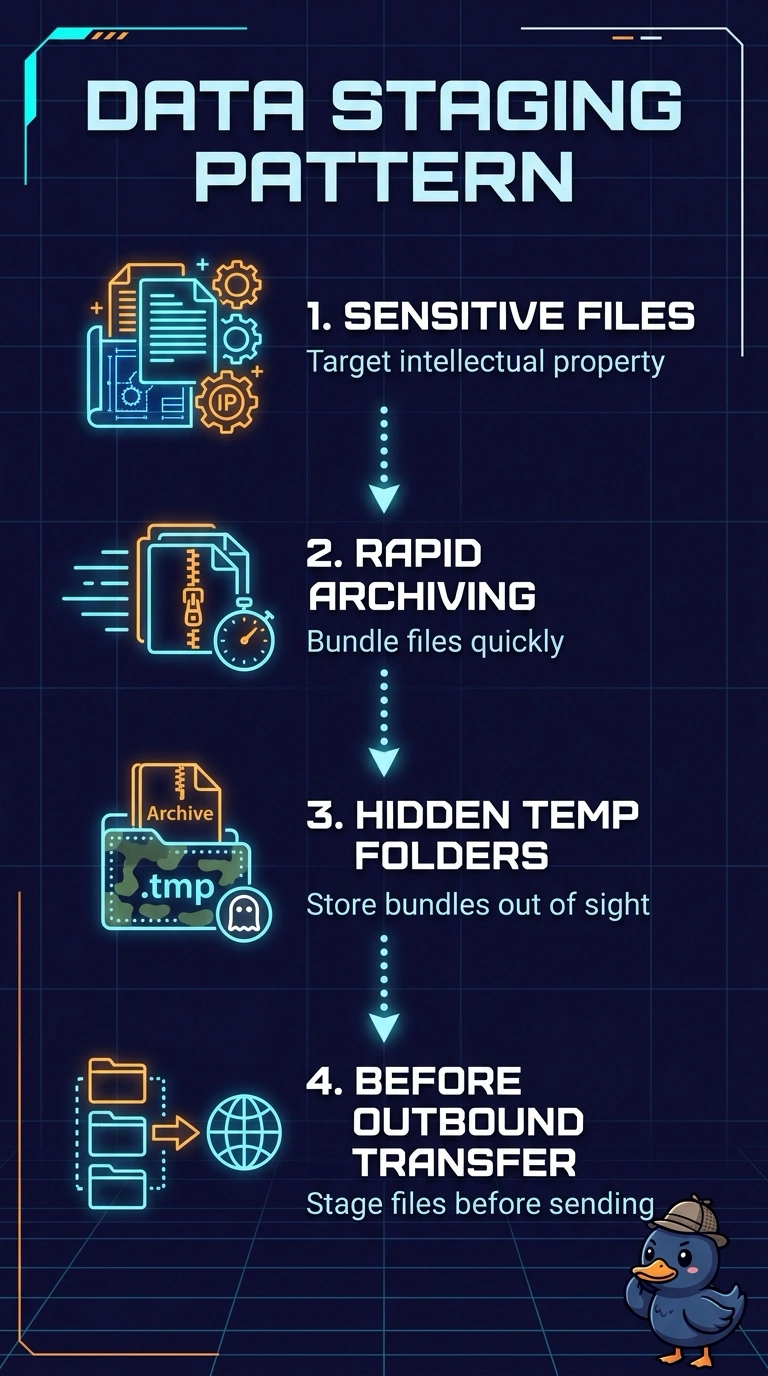
Before an intruder steals your data, they usually pack their bags quietly in a corner. Rapid archiving of sensitive files into hidden temporary folders before outbound transfer is a classic staging behavior you can spot in endpoint logs. The trap is confusing normal backup or log-rotation compression with unauthorized data staging.
Full Explanation
The correct indicator is Rapid archiving of sensitive files into hidden temporary folders before outbound transfer. Adversaries commonly collect target documents from multiple shares, compress or encrypt them into consolidated archives inside non-standard temporary paths, and then transfer those archives outward to minimize network noise and bypass casual inspection. Spotting archive utilities reading broad departmental directories and writing to hidden staging paths provides high-signal attribution of collection and staging TTPs. Conversely, Routine automated endpoint backups writing scheduled snapshots to an approved enterprise vault represent expected, authorized data protection running under known service accounts. Normal employee downloads of signed software updates into the standard user downloads directory reflect routine user activity rather than bulk internal collection. Likewise, Standard operating system log rotation compressing older audit files inside the system directory is normal host housekeeping. As a caveat, legitimate administrators occasionally bundle large datasets for migrations, so verify the initiating user and ticket context. For an operational check, query endpoint process-creation logs for archiving tools accessing sensitive share paths and writing output to user-writable temporary directories.