
While investigating two separate intrusions at different logistics firms, an analyst discovers that both command-and-control servers reside within the same offshore hosting provider's IP range. Why should the analyst avoid attributing both attacks to the same threat actor based on this finding alone?
Select an answer to reveal the explanation.
Short Explanation
Finding two intrusions in the same offshore hosting range is like spotting two suspects leaving the same crowded hotel—it proves they used the same building, not that they work together. The trap is treating shared infrastructure as a unique fingerprint, when your attribution must rest on deeper behavioral evidence.
Full Explanation
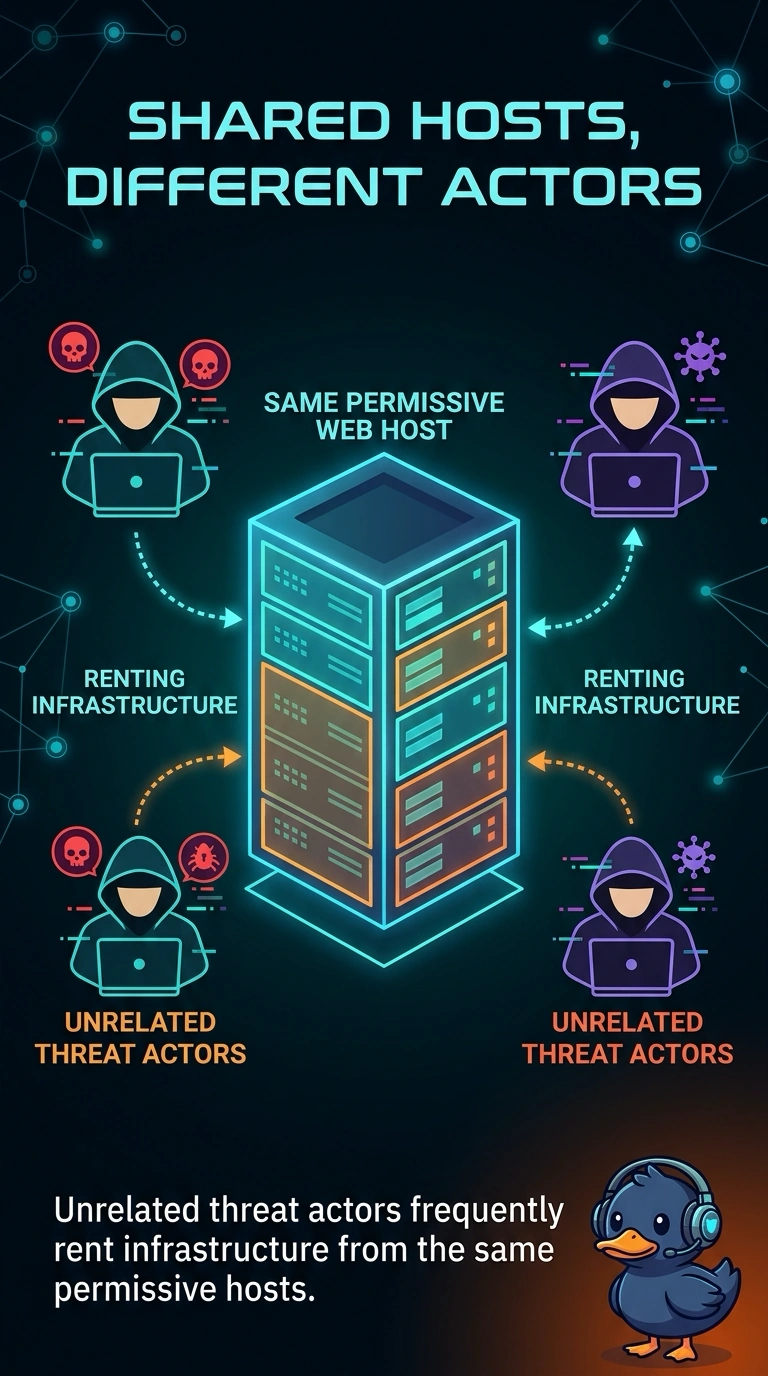
Attribution requires correlating durable adversary behaviors rather than relying on shared commodity infrastructure. Unrelated threat actors frequently rent infrastructure from the same permissive hosts, meaning multiple distinct groups often lease virtual servers within the same offshore autonomous system or IP block. Claiming that Hosting provider IP ranges are permanently assigned to a single cybercrime group ignores how cloud and bulletproof hosting providers dynamically lease addresses to many unrelated tenants. The notion that Offshore hosting providers always encrypt network telemetry before it reaches firewalls is false, because hosting location does not dictate how an enterprise firewall logs outbound connections. Saying that Shared hosting infrastructure sits at the top of the Pyramid of Pain for attribution inverts the model, since IP addresses sit at the bottom and are trivial to rotate. A key caveat is that hosting overlap can still serve as weak supporting context when combined with consistent tooling and post-exploitation tradecraft. As an operational check, pivot from the shared IP range to host-based execution sequences and command patterns across both incidents before proposing a link.