
While examining a suspicious Windows binary recovered from a compromised server, an analyst notices the compile timestamp matches normal business hours in a specific foreign time zone. Why should the analyst treat this timestamp cautiously during attribution?
Select an answer to reveal the explanation.
Short Explanation
A compile timestamp on a malware binary is like the return address on an envelope—anyone can write whatever they want on it. The trap is letting easily altered file metadata convince you that you have found where an attacker lives or works.
Full Explanation
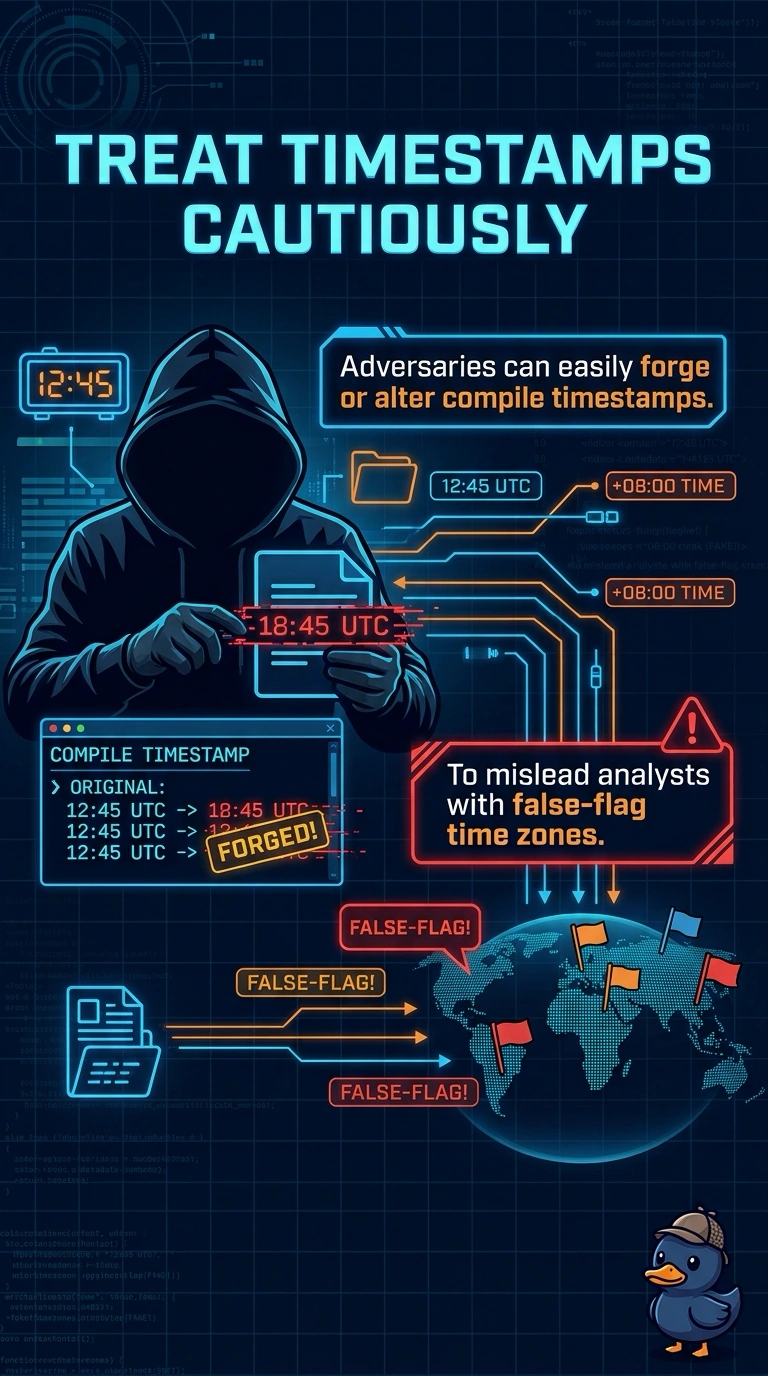
During threat actor attribution, you must remember that adversaries can easily forge or alter compile timestamps to mislead analysts with false-flag time zones. Portable Executable headers store a timestamp field that compilers populate by default, but attackers routinely modify or zero out this value using simple build scripts or timestomping utilities. Suggesting that operating systems automatically rewrite binary compile timestamps whenever a file is copied across subnets confuses file-system MACB timestamps with internal PE header fields. Claiming that antivirus engines strip compile metadata from executables during routine quarantine and inspection is incorrect, as quarantine wrappers preserve the original binary structure for forensic review. Likewise, stating that compile timestamps always reflect the local time zone of the compromised victim server rather than the author misunderstands how linker headers are generated at build time. As a caveat, even unmanipulated timestamps only indicate when the build machine's clock was set, which may use UTC or a virtual machine snapshot clock. As an operational check, cross-reference any suspicious header metadata with behavioral execution TTPs, post-compromise command patterns, and corroborated infrastructure before making an attribution assessment.