
During a scheduled penetration test, a SOC analyst confirms that traffic originates from the vendor's authorized source IP address, but notices attempts to exfiltrate customer records from an out-of-scope production database. What should the analyst do next?
Select an answer to reveal the explanation.
Short Explanation
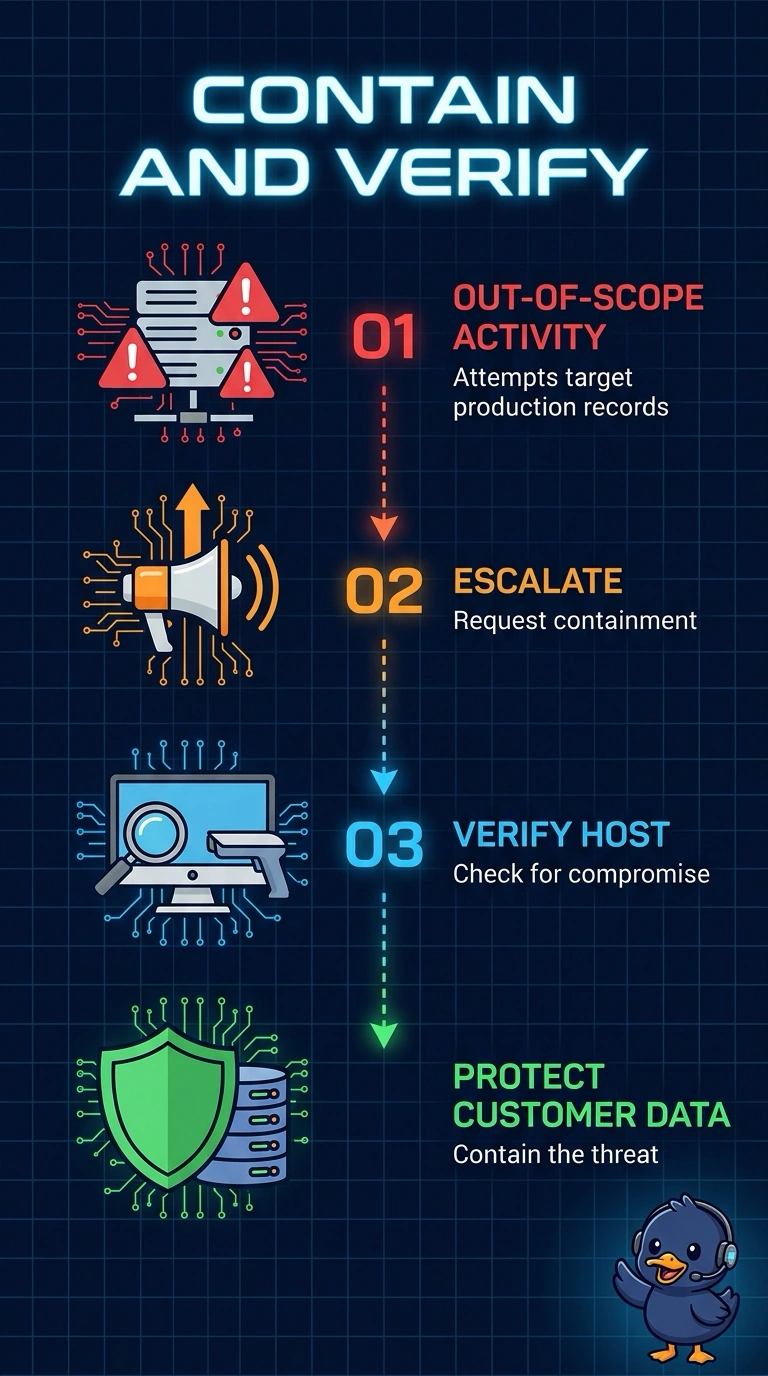
An authorized source IP is like a contractor's badge—it lets them in the lobby, not into the vault! When assessment traffic crosses into out-of-scope databases or attempts unauthorized exfiltration, you must escalate for containment and verify whether the testing host was compromised. Don't fall into the trap of waving traffic through just because it matches a scheduled window, because attackers love hiding behind legitimate testing.
Full Explanation
Authorized security assessments operate strictly within defined boundaries, and any deviation from approved targets or permitted actions indicates either a serious procedural error or an active compromise. Choosing to Escalate for containment and verify whether the testing host was compromised protects critical data while determining whether an external adversary hijacked the assessment infrastructure. Deciding to Close the alert as benign because the source IP matches the approved testing window creates a dangerous blind spot, since source-IP validation alone cannot distinguish an authorized tester from an intruder pivoting through a jump box. Electing to Wait until the engagement concludes before asking the vendor to summarize their findings allows potential data theft from production systems to continue unchecked for days. Attempting to Add the production database to the authorized scope so testing logs remain complete violates change-management governance and obscures unauthorized access. As a caveat, confirm the deviation with the engagement point of contact through an out-of-band channel so containment does not disrupt legitimate, in-scope testing elsewhere. As an operational check, compare the destination hosts, user accounts, and action types in SIEM logs against the signed rules of engagement document before clearing any assessment-related alert.