
During a routine log review, a defender spots automated port scanning and credential testing targeting a staging subnet. Which finding best confirms that the activity is an authorized assessment rather than an external attack?
Select an answer to reveal the explanation.
Short Explanation
Before you sound the alarm on a noisy scan, check whether your own security team invited the traffic in. The trap is assuming benign tool defaults or low-sensitivity targets prove authorization, when only documented scope and timing can confirm it.
Full Explanation
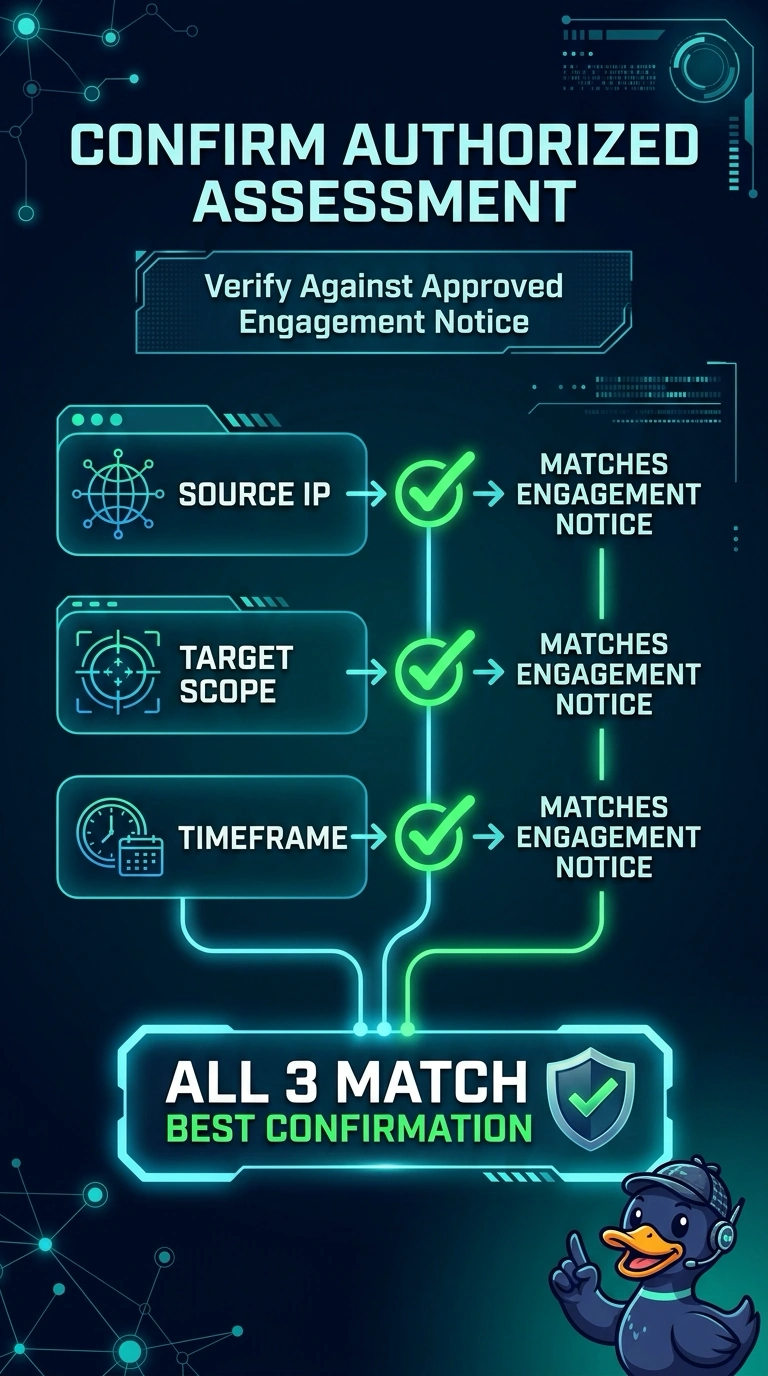
Confirming that "The source IP, target scope, and timeframe match an approved engagement notice" is the right decision because authorized penetration tests and red team exercises are governed by formal rules of engagement specifying exact source addresses, permitted targets, and testing windows. By contrast, "The scanning tool uses standard default user-agent strings rather than obfuscated headers" is unreliable because real attackers frequently use unmodified open-source scanners and default headers during reconnaissance. Similarly, "The activity originates from a cloud provider located within the same geographic region" proves nothing about authorization, as threat actors routinely lease regional cloud infrastructure to blend in with local traffic. Meanwhile, "The targeted staging servers do not currently store regulated customer records" addresses data impact rather than intent, since attackers often compromise staging hosts to pivot into production. Keep in mind the caveat that adversaries may mimic authorized traffic if engagement details leak, so defenders must verify all three parameters together. As an operational check, cross-reference the alert timestamp and source address against your change management calendar and signed assessment roster before closing the ticket.