
While reviewing six months of authentication and network logs at an energy utility, an analyst notices low-volume credential harvesting, targeted reconnaissance of industrial control subnets, and custom-compiled utilities rather than noisy mass scanning. What does this behavioral pattern most strongly indicate?
Select an answer to reveal the explanation.
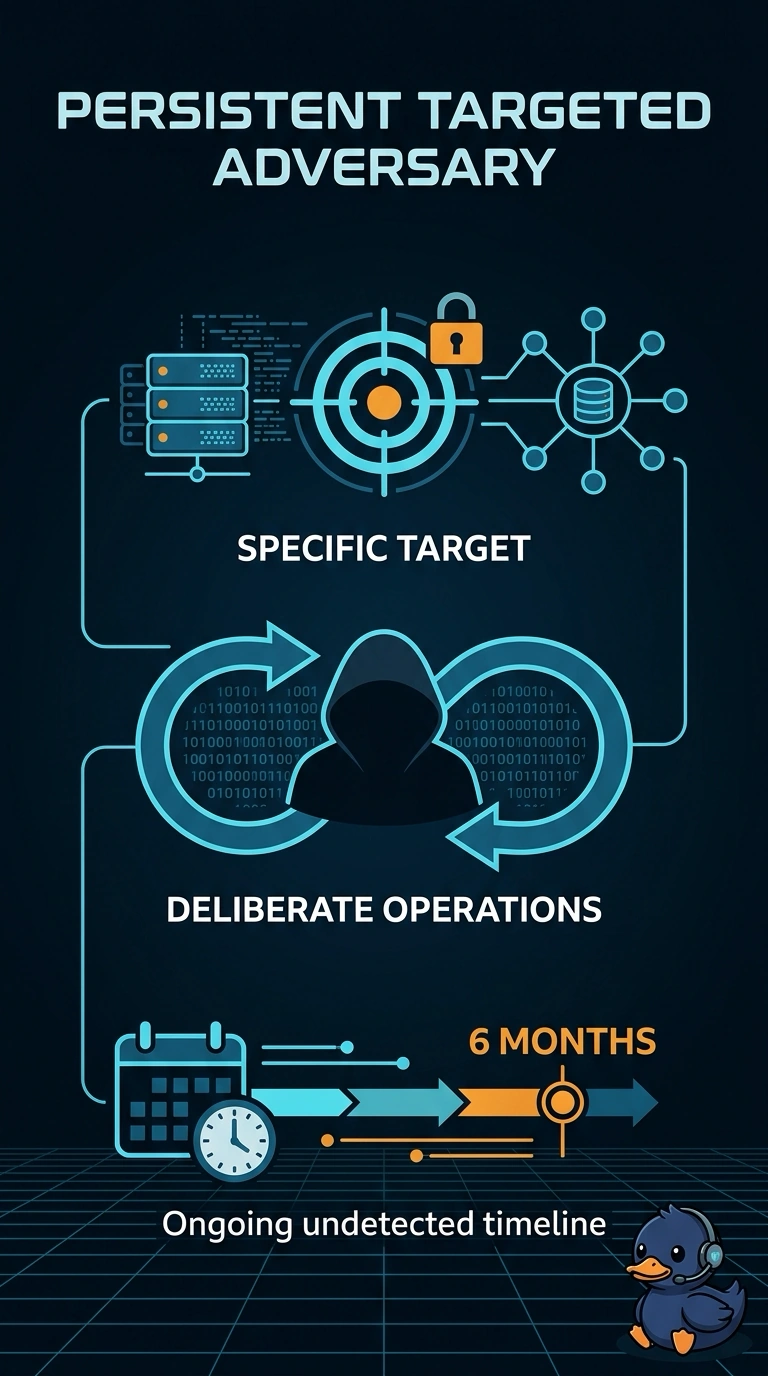
Short Explanation
Patient, low-volume activity leaves a very different footprint from an automated commodity worm. When you see tailored reconnaissance and custom tools aimed at sensitive subnets, you’re seeing deliberate human-driven operations. Don’t assume quiet activity is benign or mistake it for routine scanning or backup errors.
Full Explanation
A persistent, targeted adversary conducting deliberate operations best explains low-volume credential harvesting, selective reconnaissance of industrial control subnets, and custom-compiled utilities observed over six months. Advanced threat actors may minimize noise to evade threshold-based alerts while pursuing high-value operational technology environments. An automated commodity worm spreading opportunistically across subnets would more likely produce rapid, indiscriminate connection bursts and uniform payload signatures, not patient, tailored targeting. A routine vulnerability scanner verifying patch levels on schedule should follow predictable, authorized scan windows and use known administrative IP addresses; it would not explain custom-compiled utilities. A misconfigured backup script failing repeated authentication checks would typically cause repetitive, localized logon errors against a single service, not methodical cross-subnet reconnaissance. One exam caveat is that authorized red teams can mimic stealthy adversary behavior, so this pattern alone does not establish attribution; cross-check internal testing schedules. As a practical check, correlate custom utility hashes and source hosts with change-management records, then isolate affected credentials as appropriate.