
Cisco Secure Endpoint later returns a malicious disposition for a hash and alerts on hosts that already had the file. What does retrospective mean in that result?
Select an answer to reveal the explanation.
Short Explanation
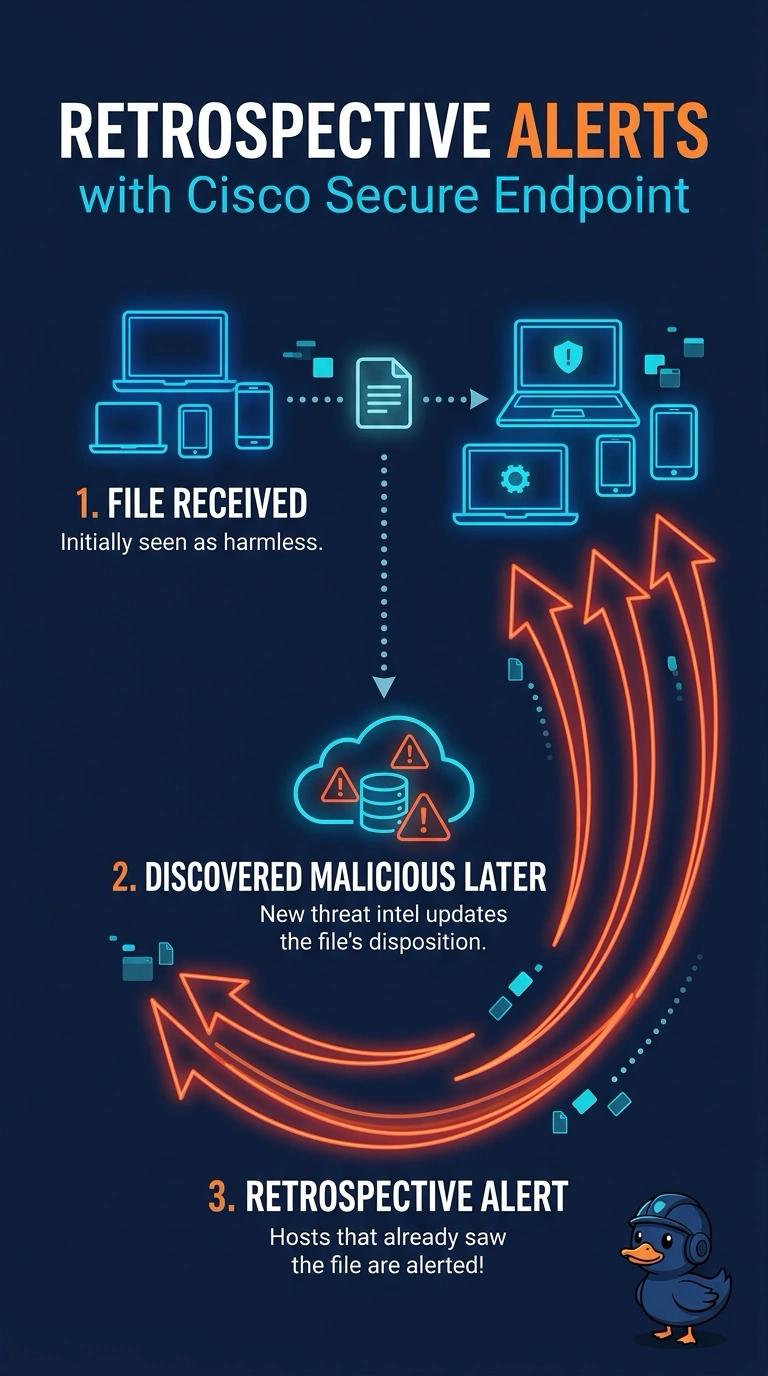
A store calls you about a product you already carried home once the maker issues a recall, and that callback is the whole point. Retrospective means a later malicious disposition can alert hosts that already saw the file. It is not silence on older hosts, a cloud delete, or a conversion of the hash into firewall addresses.
Full Explanation
Retrospective means a later malicious disposition alerts hosts that already saw the file before it was called malicious. The cloud lookup can change after endpoints first observed the hash, and Secure Endpoint can then tell you about hosts that already had it. It does not mean later launches of that hash are blocked while earlier hosts stay quiet; silence on the earlier hosts is the opposite of retrospective. It does not mean the cloud copy of the file is removed while local copies stay in place; removal is a different action from the alert. It does not mean the file hash is converted into a firewall address list for perimeter drops; a hash is not an address, and this result is an endpoint disposition event. The alert pairs a prior observation with a new disposition, and it does not delete the bytes on disk. Exam caveat: retrospective tells you the file was seen, and it does not by itself prove what the file did on each host. Operational check: filter Secure Endpoint events for the hash and find the retrospective alert tied to hosts that saw the file before the disposition became malicious.