
Security intelligence on a university firewall blocked a known-bad address. Why may endpoints still hold the file that used to contact that address?
Select an answer to reveal the explanation.
Short Explanation
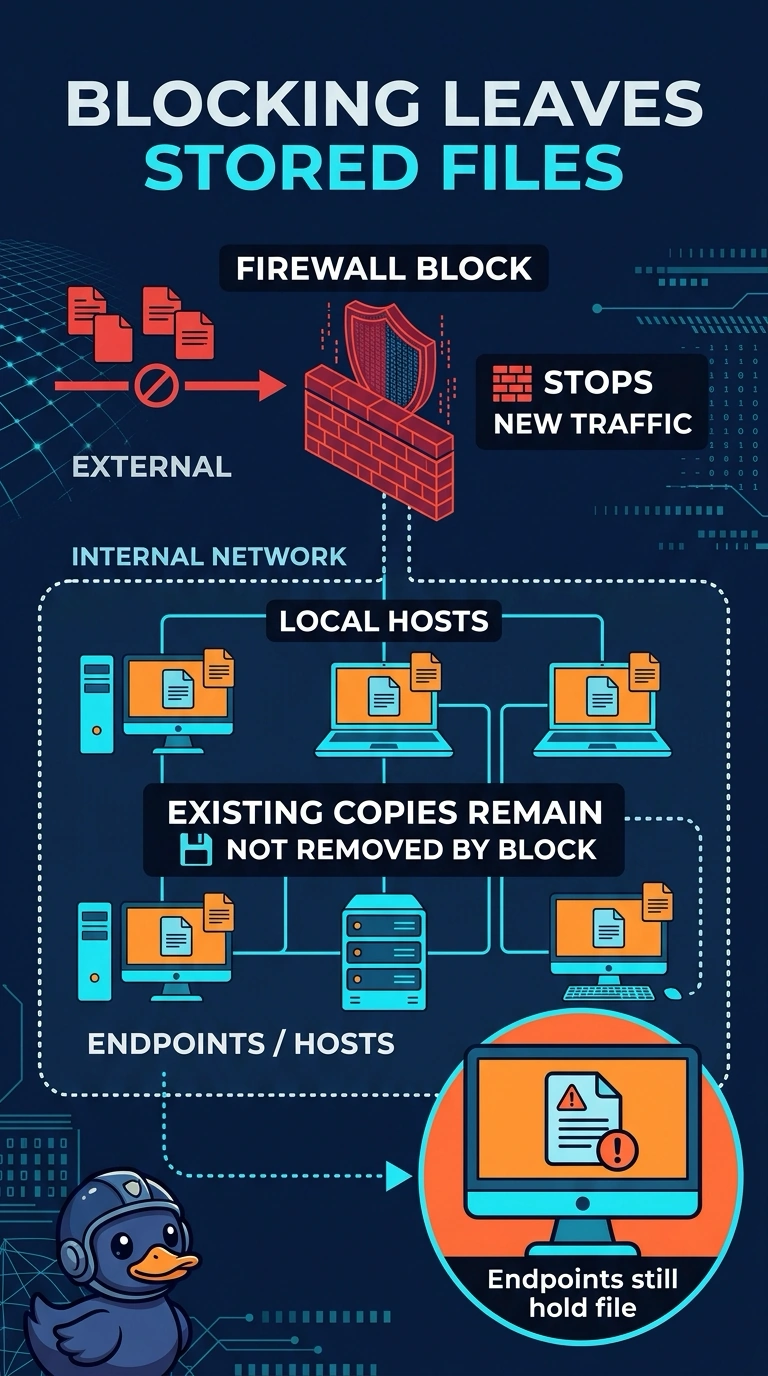
Locking the front door now does not walk into the spare room and remove a package you already set down. The firewall block stops new traffic to that address and leaves file copies that are already on hosts. Deleting those copies, quarantining them from the firewall, or rolling them out of snapshots is endpoint or storage work the address block does not do.
Full Explanation
The block stops new traffic to the address but leaves copies already stored on hosts, because a firewall drop acts on packets rather than on files sitting on endpoints. Hosts that fetched a payload earlier, or that received the file another way, still have those bytes. The firewall block deletes no calling file from every endpoint that contacted the address. Security intelligence quarantine removes no such file from the endpoint disks; file quarantine is an endpoint action, and this control is a network block. Blocking the address rolls no file out of host snapshots across the fleet; snapshots are a separate store the firewall does not rewind. An endpoint search or file trajectory comes after you know the hash, and that extra host-side work is not performed by the address drop itself. Exam caveat: you may still want a fleet search for the hash, and the firewall event is not that search. Operational check: note the firewall drop for the address, then search endpoints for the file hash and treat hits there as copies the block did not remove.