
Cisco Secure Endpoint has already observed one file hash across the fleet, and the team wants to reuse that observation. How does that differ from only consuming an outside feed?
Select an answer to reveal the explanation.
Short Explanation
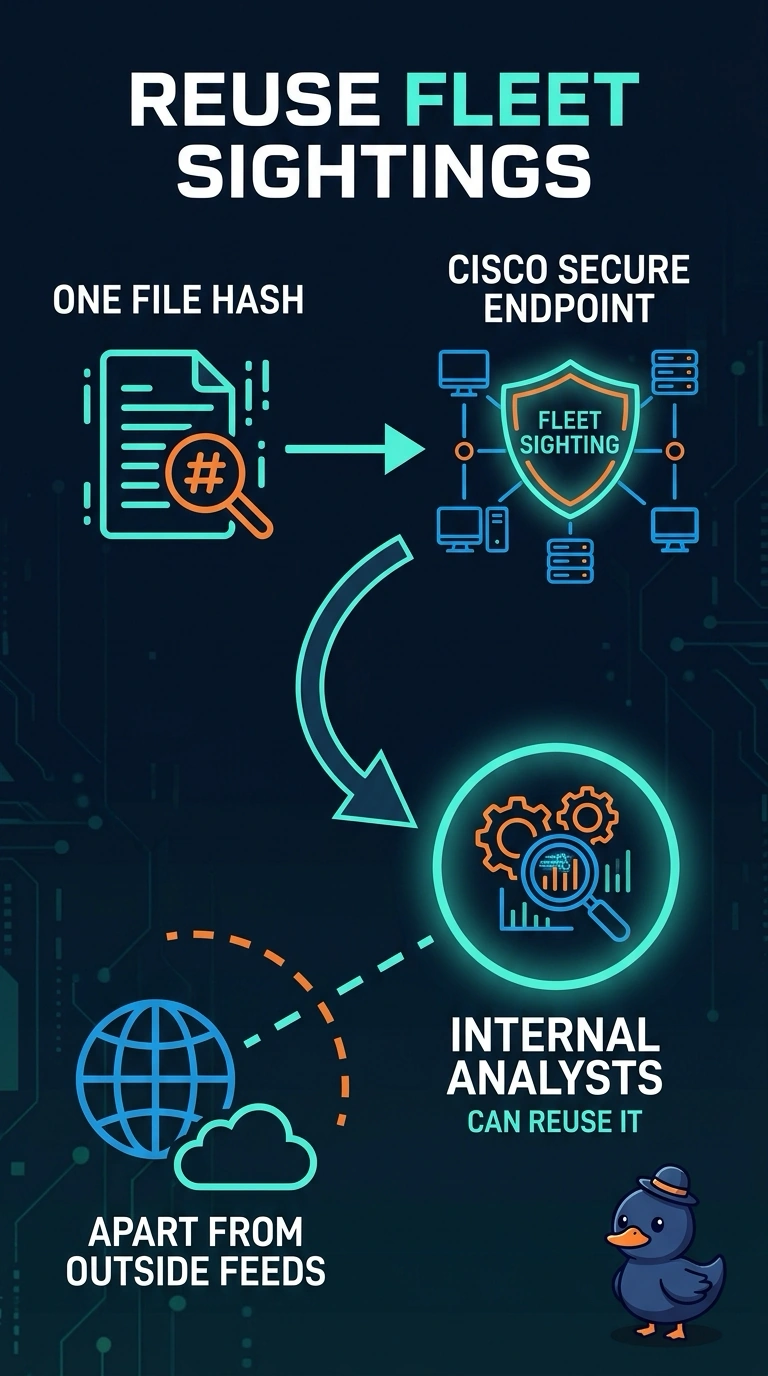
Your own visitor log is already intelligence, and you do not have to wait for another city to publish a bulletin before you use it. A hash Secure Endpoint observed across the fleet can be reused as an internal sighting, which differs from only consuming an outside feed. Waiting for that feed, throwing away host detail, or claiming the product sees files only through feeds misses what the fleet already recorded.
Full Explanation
The fleet sighting of that hash is internal intelligence analysts can reuse apart from any outside feed. Secure Endpoint already observed the file on your hosts, and that observation is evidence you produced, which differs from consuming an indicator someone else published. Fleet sightings do not stay unusable until an outside feed repeats the same hash; you can search what the fleet already saw. Fleet sightings do not replace outside feeds and drop the per-host record of the hash; an outside feed can still help, and the host-level record is the useful part of the sighting. Secure Endpoint learns that a file was present by observing endpoints, not only by reading an outside feed. File trajectory is the host-level record of where that hash was seen, and that record is the internal intelligence you are reusing. Exam caveat: an internal sighting is not by itself a malicious verdict, so reuse it as a place to hunt unless a disposition or other evidence says more. Operational check: open the host list or file trajectory for the hash and confirm the sighting exists even when no outside feed entry names that hash.