
A bank loaded Firepower security intelligence with known-bad addresses so traffic toward them is dropped at the firewall. What is that control for, compared with an endpoint retrospective?
Select an answer to reveal the explanation.
Short Explanation
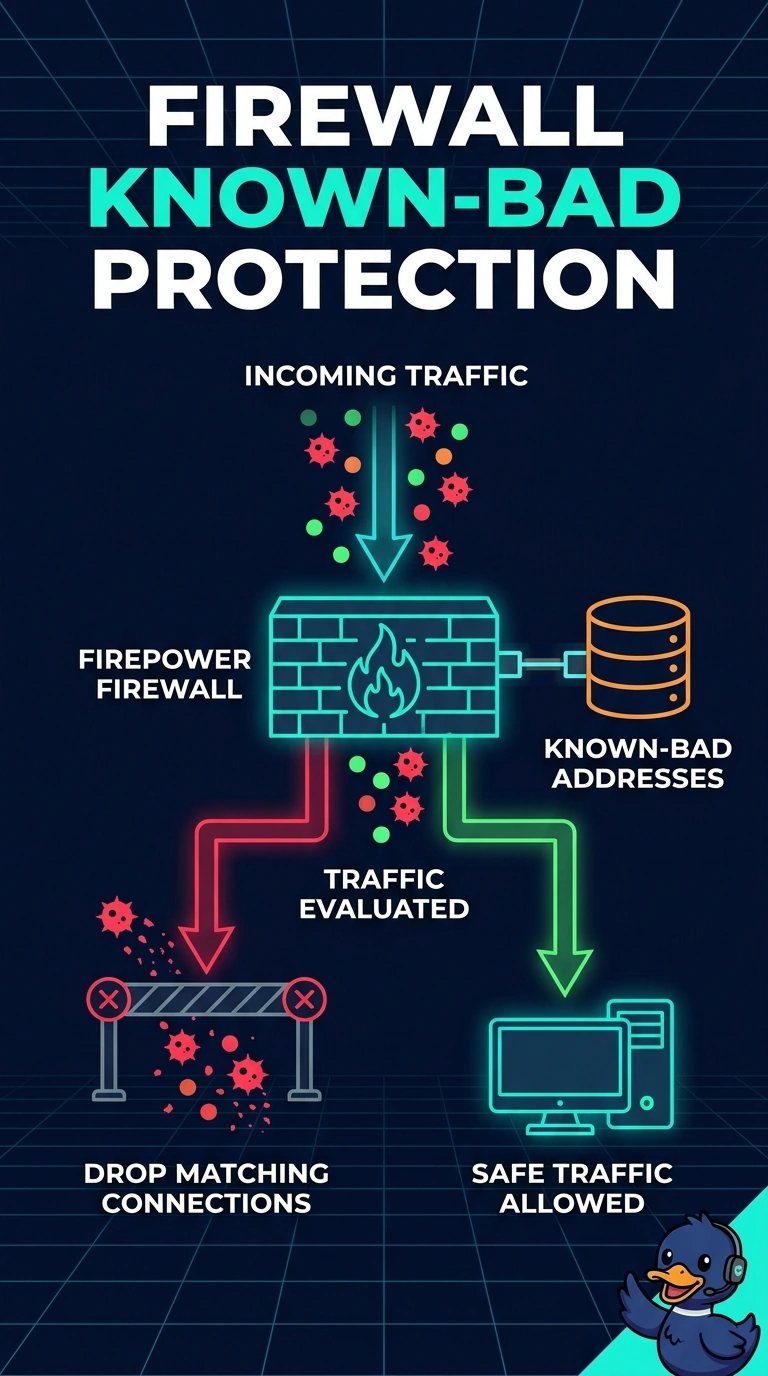
A bouncer at the door stops the next person walking in, and you do not call that a search of everyone already inside. Firepower security intelligence drops connections to those known-bad addresses as the firewall evaluates traffic. A retrospective alert, an endpoint quarantine, or a DNS rewrite is a different control aimed at a different place.
Full Explanation
Firepower security intelligence drops matching connections at the firewall as traffic to those known-bad addresses is evaluated. The control is a network block on the path, applied to connections as they are checked, and it is separate from any later endpoint look-back. It does not raise a retrospective alert on hosts that already stored a file tied to those addresses; retrospective follows a file disposition change on endpoints. It does not quarantine the related program on endpoints and leave firewall policy unchanged, because quarantine is a host action and this control is the firewall drop. It does not rewrite DNS answers so clients are steered away from those known-bad addresses; rewriting answers is a resolver action, not the security intelligence drop. Exam caveat: a drop at the firewall does not tell you whether a host already fetched a payload before the list existed, so an endpoint search stays a separate step. Operational check: find the firewall event for one address and confirm the action is a security intelligence drop on the connection, then note that no endpoint quarantine is recorded on that event.