
An intel feed gives a retailer one IP address used by a shared hosting provider with many customers. Why is a company-wide block of that address a risky response?
Select an answer to reveal the explanation.
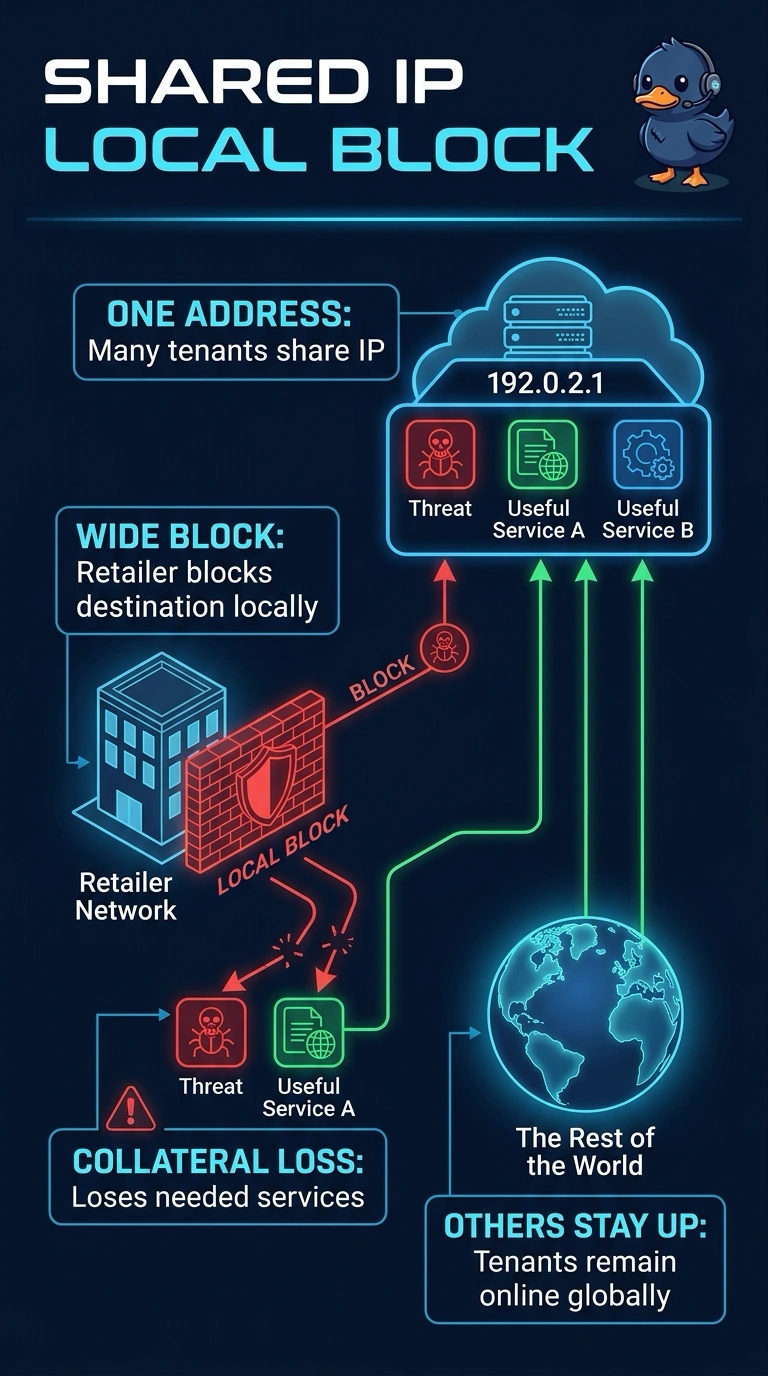
Short Explanation
Think of a shared address like an apartment entrance you use to visit many units. A wide block can deny the retailer access to unrelated services sharing that address. If you treat it as harmless or hide it in a YARA meta field, you still miss that loss of access.
Full Explanation
Shared hosting means many customers use one IP address, so a company-wide deny does not affect only the tenant named in the intel feed. A wide block can deny the retailer access to unrelated services sharing that address, including services the retailer still needs; that collateral impact is why this response is risky. The address is not necessarily harmless, and removing it from the working case would discard a potentially useful lead rather than manage the risk. Denying the address on every edge device used by customers at that provider is still a blanket block, so it can cause the same loss of reachability to needed services. Putting the address in a YARA meta field will not make endpoints refuse connections: metadata does not enforce network traffic. Exam caveat: shared infrastructure can still host malicious content, so the risk of blocking the address broadly is collateral loss of local access, not a reason to ignore the feed. Practical check: before pushing an edge deny, determine how many unrelated names use the address and whether the block would interrupt services the retailer needs.