
An automated ranking tells a school district a software package is likely to be exploited. Why verify exposure before scheduling a change window for every host?
Select an answer to reveal the explanation.
Short Explanation
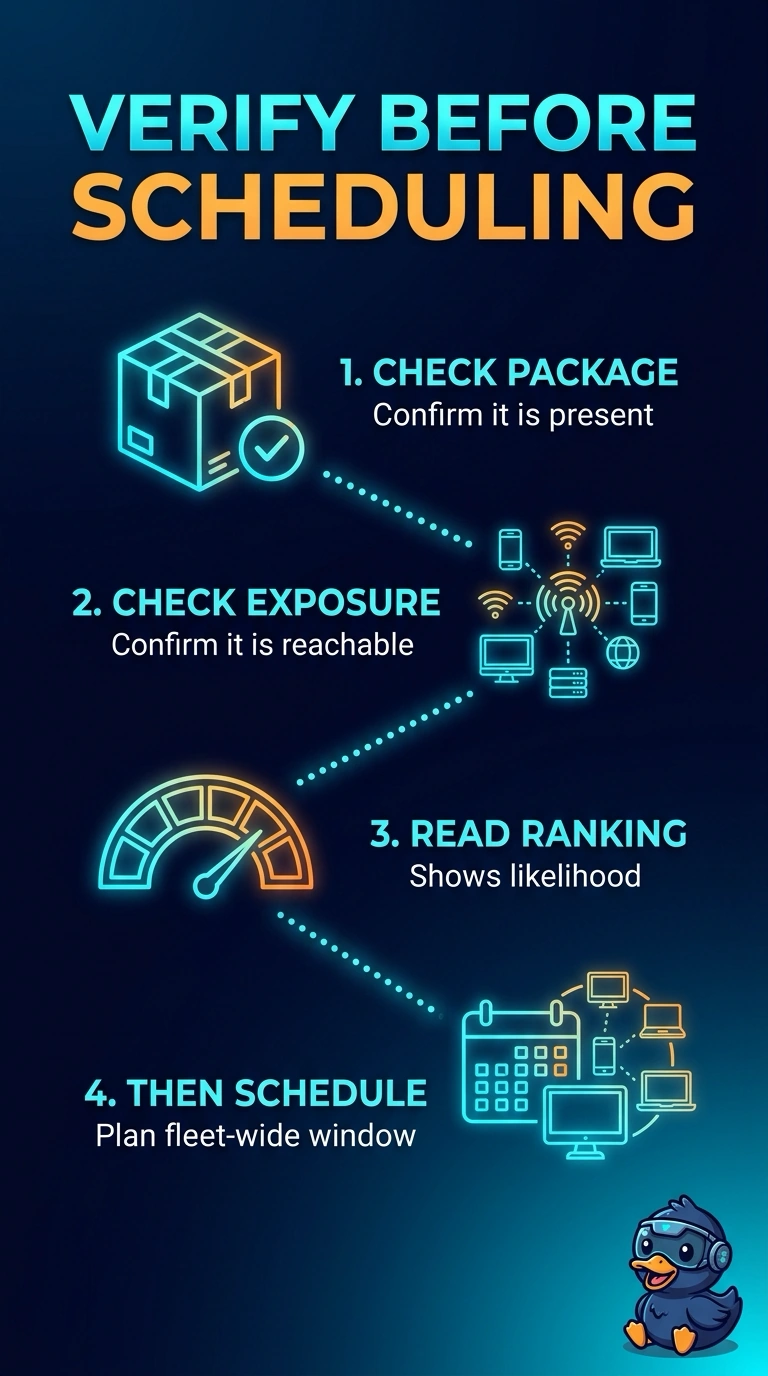
A weather forecast is not a flood inside your building. You verify the package is actually present and reachable before booking a change window for every host. A likelihood rank does not prove the whole fleet is exposed tonight; that exposure check helps you target the change.
Full Explanation
An automated likelihood rank says a package may be exploited somewhere; it does not prove that each school host has the package or that an attacker can reach it. Confirm the package is present and reachable before scheduling a fleet-wide change window based on the rank, and put hosts that fail that test on a different track. Opening a change window on every host and treating the ranking as confirmed compromise spends downtime on machines that may not run the package and confuses likelihood with an incident already in progress. Discarding the ranking and leaving the package in place across the whole fleet ignores a useful queue instead of checking it. Reimaging every workstation so a package flagged as likely to be exploited cannot run is a blunt rebuild that still skips the exposure question and can miss servers that are not workstations. Exam caveat: a likelihood rank can correctly identify a risky package while being wrong about your exposure, so verification is a step you should not skip. Practical check: for a sample of hosts, review installed-package inventory and test whether the related service is reachable before approving the change window.