
Campaign intelligence gives a software company a single file hash and no other indicators. Which response uses that artifact?
Select an answer to reveal the explanation.
Short Explanation
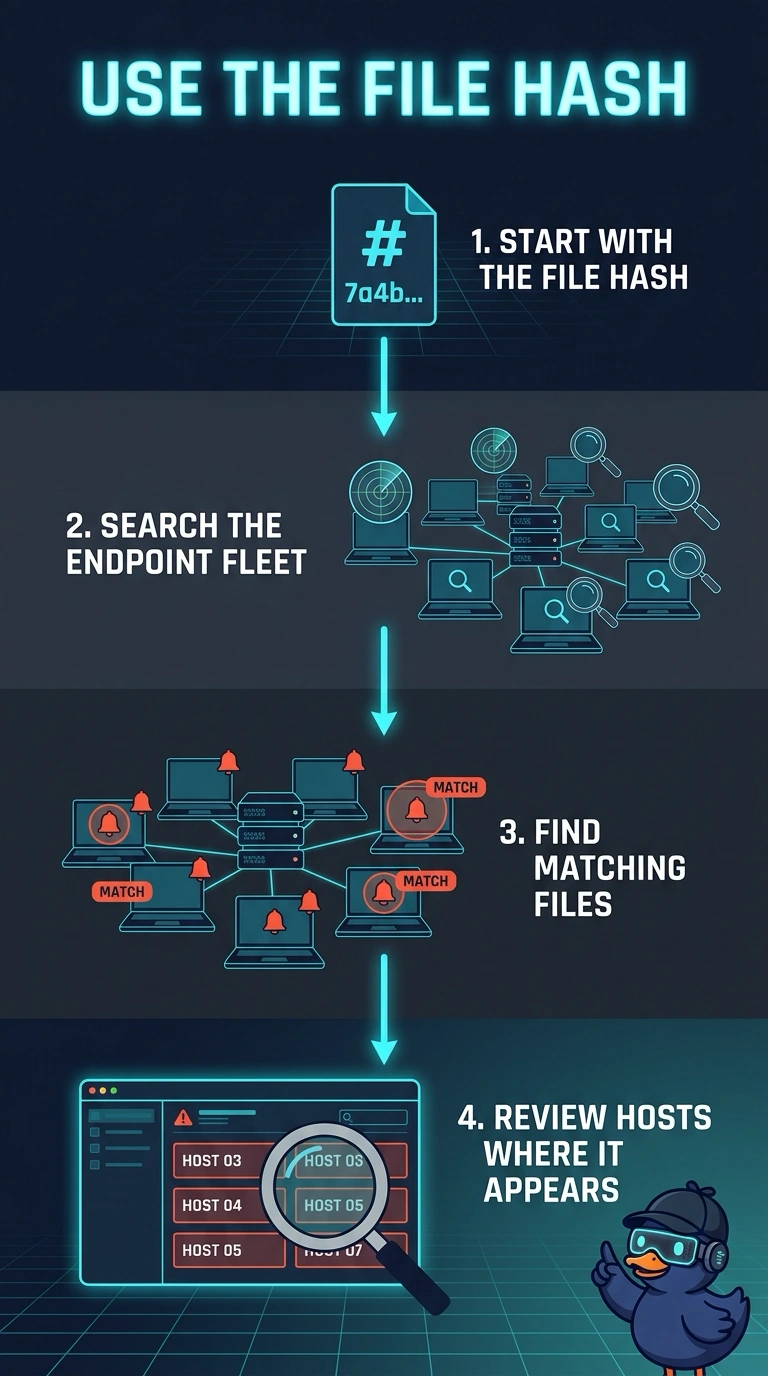
A file hash is a fingerprint, and you check which machines share it. You search the endpoint fleet for that hash and review hosts where the file shows up. Blocking a domain you were not given, or hunting a mutex you do not have, spends the wrong artifact.
Full Explanation
A file hash names exact file contents. The response that uses it is to search the endpoint fleet for that file hash and review hosts where the file appears, which is a fleet search or file trajectory, and then decide containment from the hits. Blocking a campaign domain on the resolver even though this intel supplied no domain spends a control on an artifact you do not have; a hash is not a domain. Hunting a campaign mutex as the primary action even though this intel supplied no mutex likewise ignores the hash in favor of a string that was not delivered. Turning the hash back into the original program and executing it on a user workstation treats a hash as a reversible encoding of the file; a cryptographic hash is not the program, and executing anything on a user workstation is not how you use the indicator. Exam caveat: a hash hit means those bytes were present, and you still check path and execution context before you call the host fully owned. Operational check: run a fleet search for the hash in Secure Endpoint and list the hostnames, paths, and first-seen times before you isolate anyone.