
A zero-day gives unauthenticated remote code execution on a public employee portal. Why does rebooting every laptop fail to reduce that exposure?
Select an answer to reveal the explanation.
Short Explanation
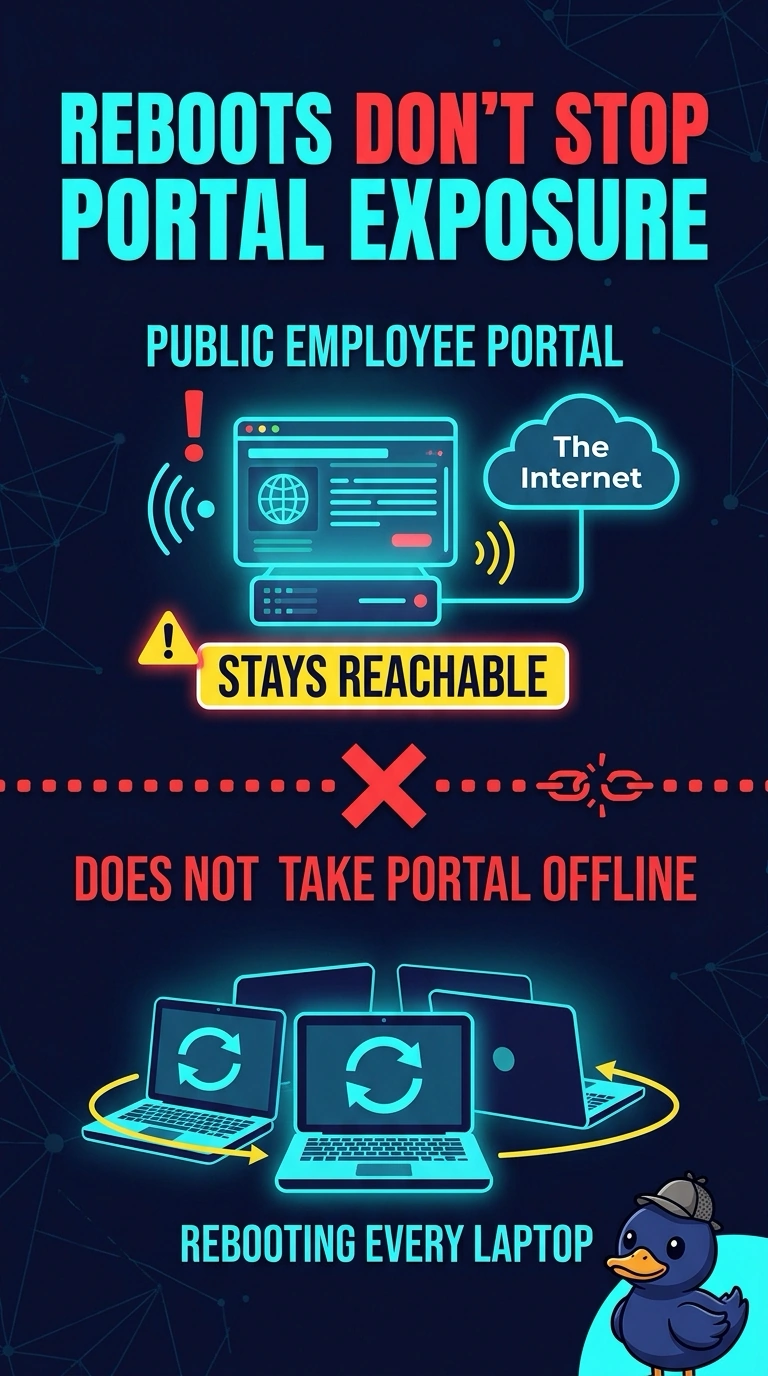
You’re right to focus on the service outsiders can reach: the public portal remains exposed while it is online. A laptop reboot does not take that portal offline or fix its vulnerability.
Full Explanation
The exposure is an unauthenticated remote code execution flaw in a public portal, so the relevant question is whether that portal remains reachable. The vulnerable portal stays reachable, and rebooting laptops does not take that service offline; therefore, the exposure is unchanged. Laptop reboots do not push the missing portal patch through cached startup tasks: no such patch-delivery mechanism is described, and restarting a client does not patch a separate portal service. Client reboots also do not pull the portal off the internet by expiring active browser sessions. Ending sessions on laptops does not unpublish the public portal or remove its unauthenticated attack path. The laptops do not host the public portal, so rebooting them cannot take the vulnerable service offline; the portal is a separate service. Exam caveat: rebooting an endpoint can help after that laptop is compromised, but it does not reduce exposure from a flaw in a public server. Practical check: identify the portal’s address and verify that it still responds from the internet after a laptop reboot; if it does, the reboot has not changed the portal’s exposure.