
A vulnerability is being actively exploited in the wild; inventory confirms an internet-reachable internal service runs an affected version and meets the exploitation preconditions. How should priority change versus a library that is installed but not exposed?
Select an answer to reveal the explanation.
Short Explanation
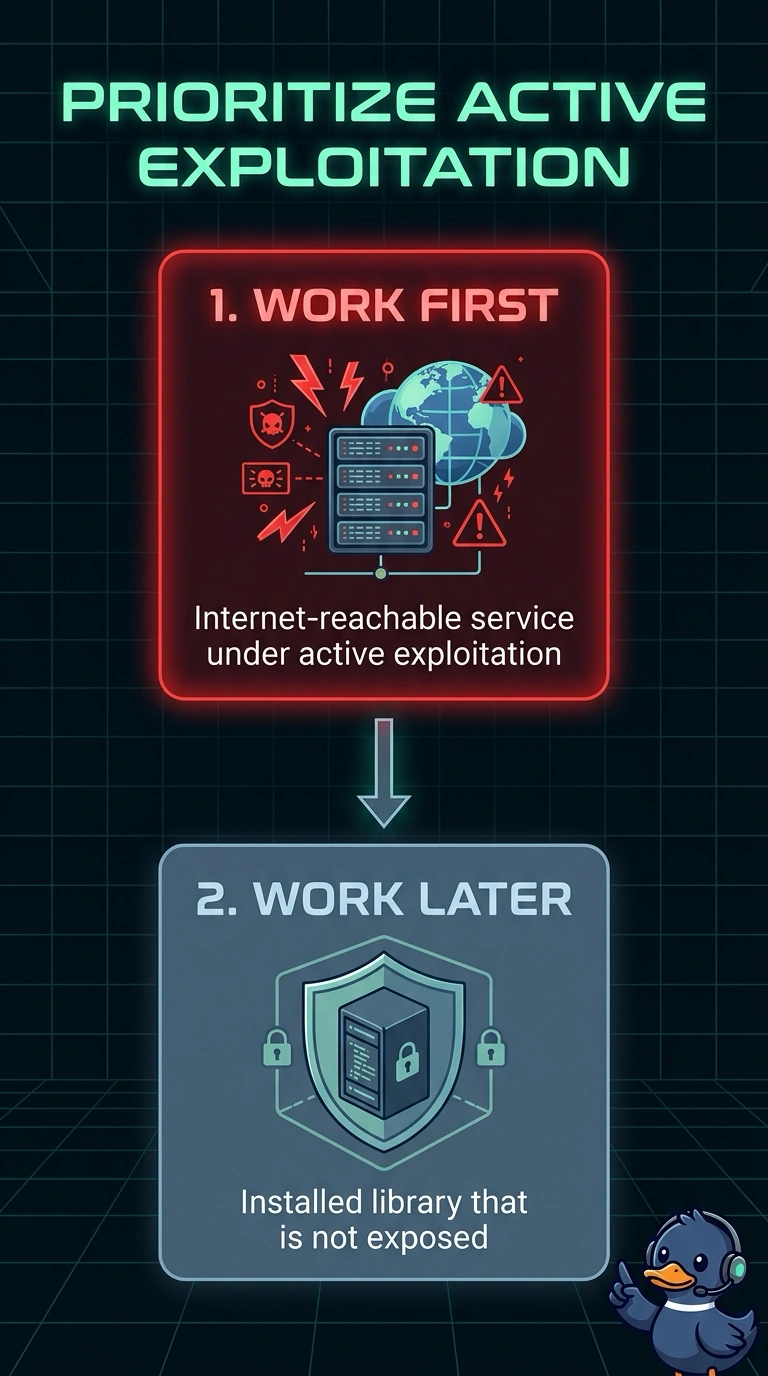
Confirmed vulnerability applicability plus active exploitation and internet exposure make this service an urgent priority. You prioritize the internet-reachable service under active exploitation over a library that is installed but not exposed. Installed does not mean reachable, and reachability changes who you help first.
Full Explanation
Confirmed vulnerability applicability plus active exploitation and internet exposure make this service an urgent priority. You work the internet-reachable service under active exploitation ahead of the installed library that is not exposed, because an outsider can reach the service now and the library cannot be hit the same way until it is exposed. Patching the unexposed library first and treating installation alone as the greater immediate danger ranks a latent flaw above a service people are already attacking. Holding both findings at equal priority and leaving internet reachability out of the decision ignores the fact that makes one of them exploitable from outside today. Deferring the reachable service until the unexposed library has been removed from every host delays the system under active attack for a cleanup that does not shrink today's exposure. Exam caveat: the unexposed library still needs a plan; priority is about what you do first, not permission to forget the library. Operational check: confirm the service is still reachable from the internet and that the library has no listening path, then schedule the service mitigation first.