
A software company receives a zero-day advisory that applies only to servers exposing one named web plugin. How should the team scope the risk assessment?
Select an answer to reveal the explanation.
Short Explanation
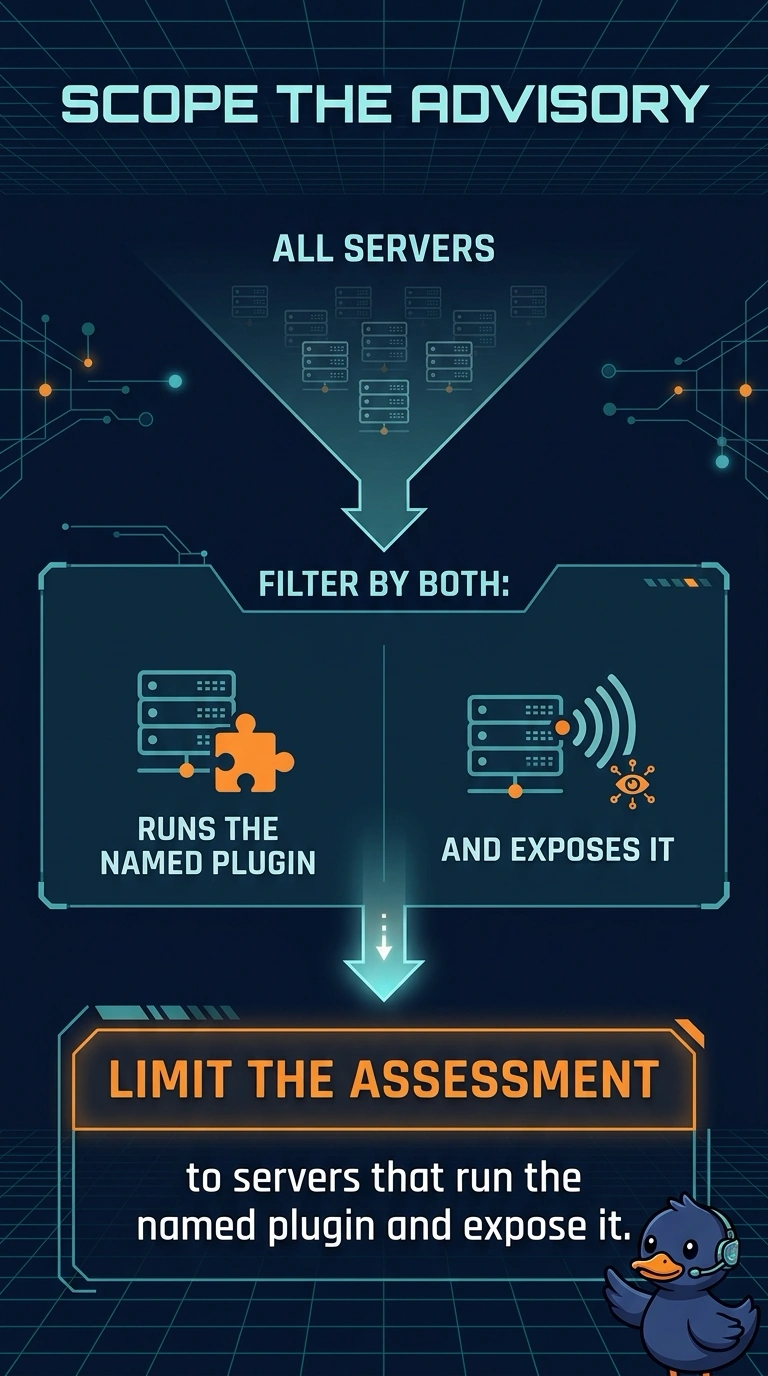
Think of the advisory as a guest list, not a fire alarm for the whole building. You scope the risk to servers that run the named plugin and actually expose it. The trap is pulling in every laptop or calling the entire company equally exposed.
Full Explanation
Published preconditions define the population that can be hit: the named plugin must be present and it must be exposed. The sound assessment will limit the assessment to servers that run the named plugin and expose it, then rank patching and shielding inside that set. Pulling in user laptops assumes the wrong product shape. Choosing to include every laptop, assuming the plugin is a browser add-on on user devices, invents a workstation add-on the advisory did not describe; a server plugin exposed on a web tier is not a browser add-on. Choosing to mark the entire company critical until the application vendor publishes a patch skips scoping and treats unaffected networks as if they met the precondition. Choosing to drop the plugin precondition and inventory only operating system build strings answers a different question; the advisory hinges on the plugin, not on a generic operating system inventory. Exam caveat: hosts that run the plugin but do not expose it are a separate, lower queue, not the same risk as the exposed set. Operational check: compare the plugin inventory with the addresses that actually accept traffic to that service, and keep the assessment list to the overlap.