
A factory's predictive report ranks internet-facing hosts that meet an exploit's preconditions above internal hosts that do not. Why is that the set to work first?
Select an answer to reveal the explanation.
Short Explanation
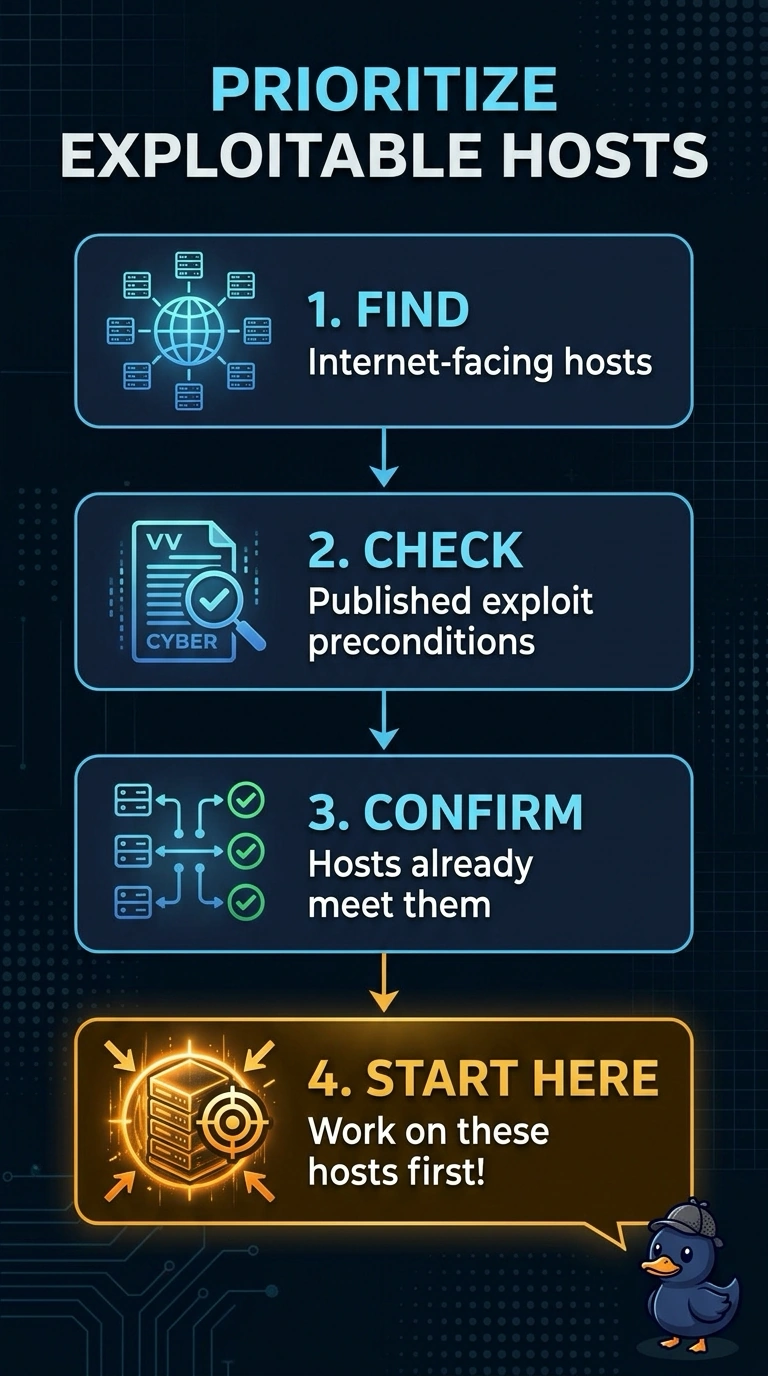
Work the door that is both unlocked and facing the street. You start with internet-facing hosts that already meet the exploit preconditions, which is what that ranking is sorting. Hosts that fail those preconditions are a later pass, not the first job.
Full Explanation
A predictive ranking is useful here because it puts two facts together: the host is internet-facing, so an outsider can reach it, and it already meets the published exploit preconditions, so the bug has something to act on. You start with the internet-facing hosts that already meet the published exploit preconditions, verify them, and only then move down the list. It is the wrong story that internal hosts that miss the preconditions are listed later only as powered-off systems; they are lower because they fail the exploit conditions, not because a power state was assumed. Treating the order as a display preference and ignoring it when choosing real response work throws away exposure and precondition data that should drive the queue. The claim that internet-facing hosts are already remediated by default and appear first only for reporting has the meaning backwards; the top of this list is where exposure and preconditions overlap, not a set that was magically remediated. Exam caveat: a high rank is a work order, not proof the host is already compromised. Operational check: pick the first host on that list and confirm it is reachable from the internet and actually meets each published precondition before you schedule the change.