
Secure Network Analytics at a hospital shows the byte count and the remote peer for a suspected malware transfer, but it shows no file hash. Which product is still needed to quarantine that file?
Select an answer to reveal the explanation.
Short Explanation
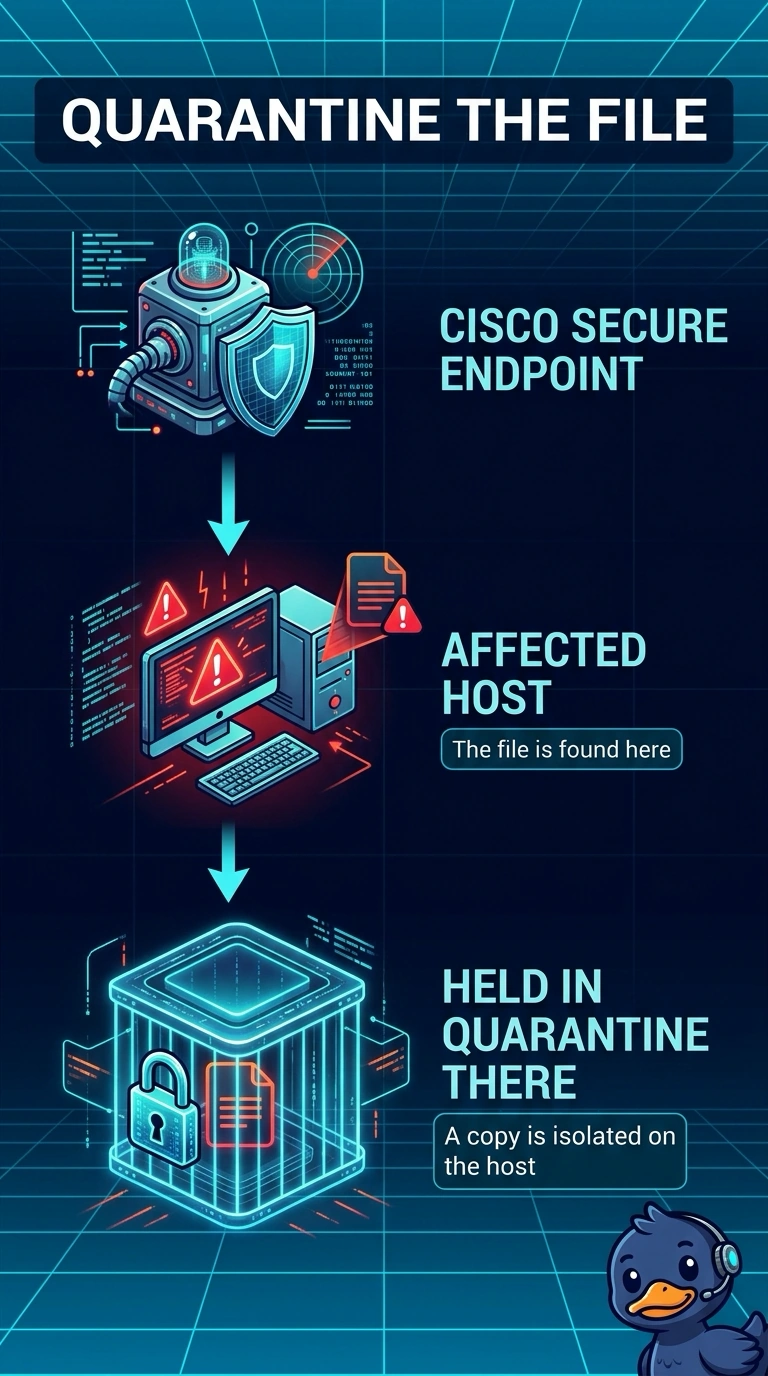
The flow-only view described here has no file hash or endpoint quarantine action; pivot to endpoint telemetry to identify the file. This comparison concerns Umbrella’s DNS-layer control, not every capability of the broader Umbrella security service. You still need Cisco Secure Endpoint to find the file on that host and hold it in quarantine.
Full Explanation
The flow-only view described here has no file hash or endpoint quarantine action; pivot to endpoint telemetry to identify the file. Secure Network Analytics identifies the internal host, remote peer, and time window from flows, but quarantine must happen on the host, which is why Cisco Secure Endpoint is still needed to locate the file and hold a copy in quarantine there. This comparison concerns Umbrella’s DNS-layer control, not every capability of the broader Umbrella security service. Cisco Umbrella enforcing at DNS layer cannot take an observed byte count and block it as though the count were a domain name, so it does not satisfy the quarantine need described. Running another Secure Network Analytics search does not create file content from flow records, so re-querying the same flow-only telemetry will not supply the missing hash. Threat Grid alone analyzes a submitted sample in a sandbox and does not provide direct quarantine of that same file on affected user laptops. For the exam, use the flow context to scope host and time, then pivot to the endpoint to identify and quarantine.