
A vendor advisory says a remote exploit is already being used and no patch is available yet. A branch-office service running that software is reachable from the internet. What is the first compensating move?
Select an answer to reveal the explanation.
Short Explanation
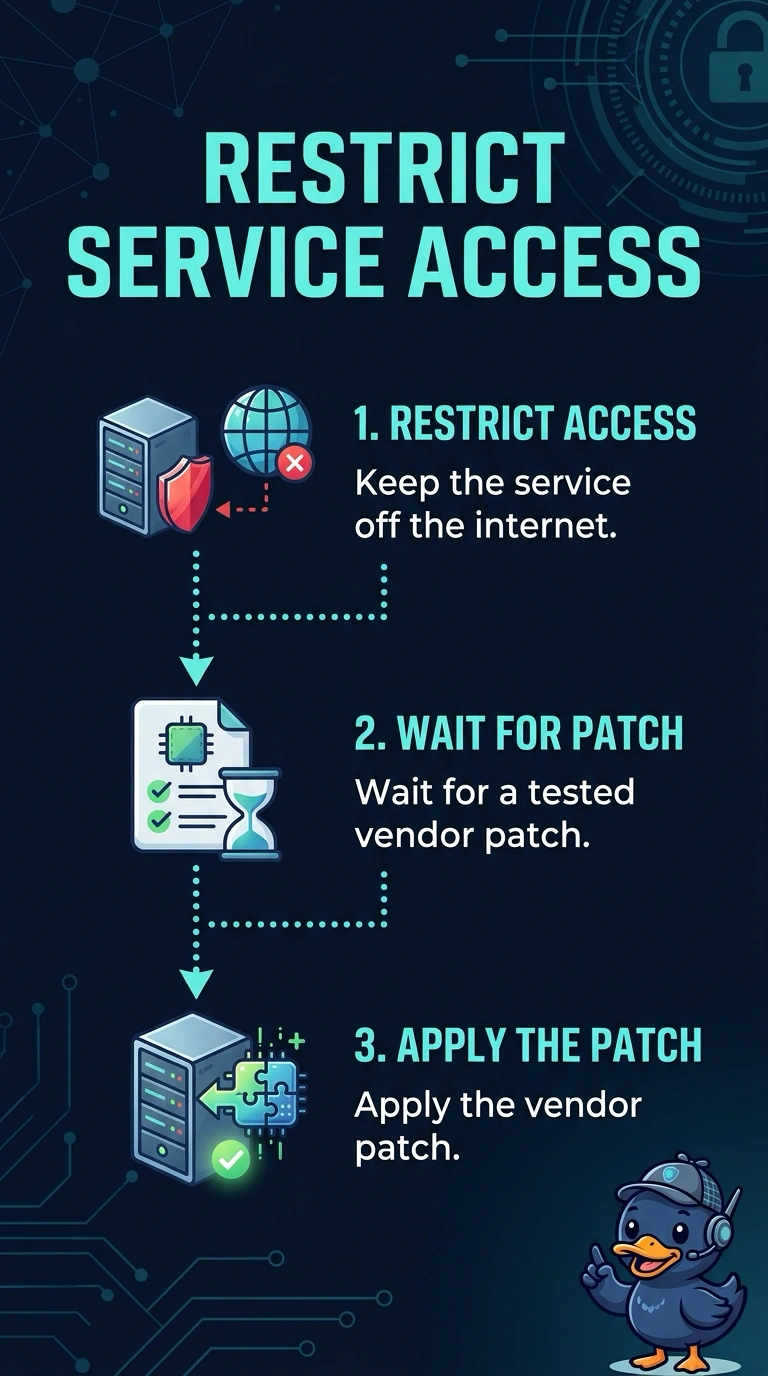
When the vendor has no new lock yet, you shut the street door. Restrict internet access to that service until a tested patch exists, and treat that as the first compensating move. Leaning on the advisory rank, or switching off the logs, leaves the exposed path in place.
Full Explanation
With a remote exploit already in use and no patch available, the exposed service is the problem to shrink first. Restrict internet access to the service until a tested vendor patch can be applied to it, using a firewall limit, an access list, or by removing the internet publishing if the service does not need it. To leave the service internet-reachable and rely on the advisory ranking without checking the exposure treats a severity label as if it closed the path. To disable logging on that service so the exploit attempts do not fill up the incident queue removes the telemetry that would show whether the attempt continues. To install an untested build copied from a public forum and treat that build as the vendor patch adds untrusted code instead of a compensating control. Exam caveat: use the advisory to identify exposure and what to watch, and do not skip verification that the internet path is actually closed. Operational check: from an outside network, confirm the service is no longer reachable, and confirm the firewall or IPS log still records blocked attempts against it.