
Umbrella can block a malware domain at a retail chain, but the sample also calls a hard-coded IP address and does not perform a DNS lookup. What additional control is required?
Select an answer to reveal the explanation.
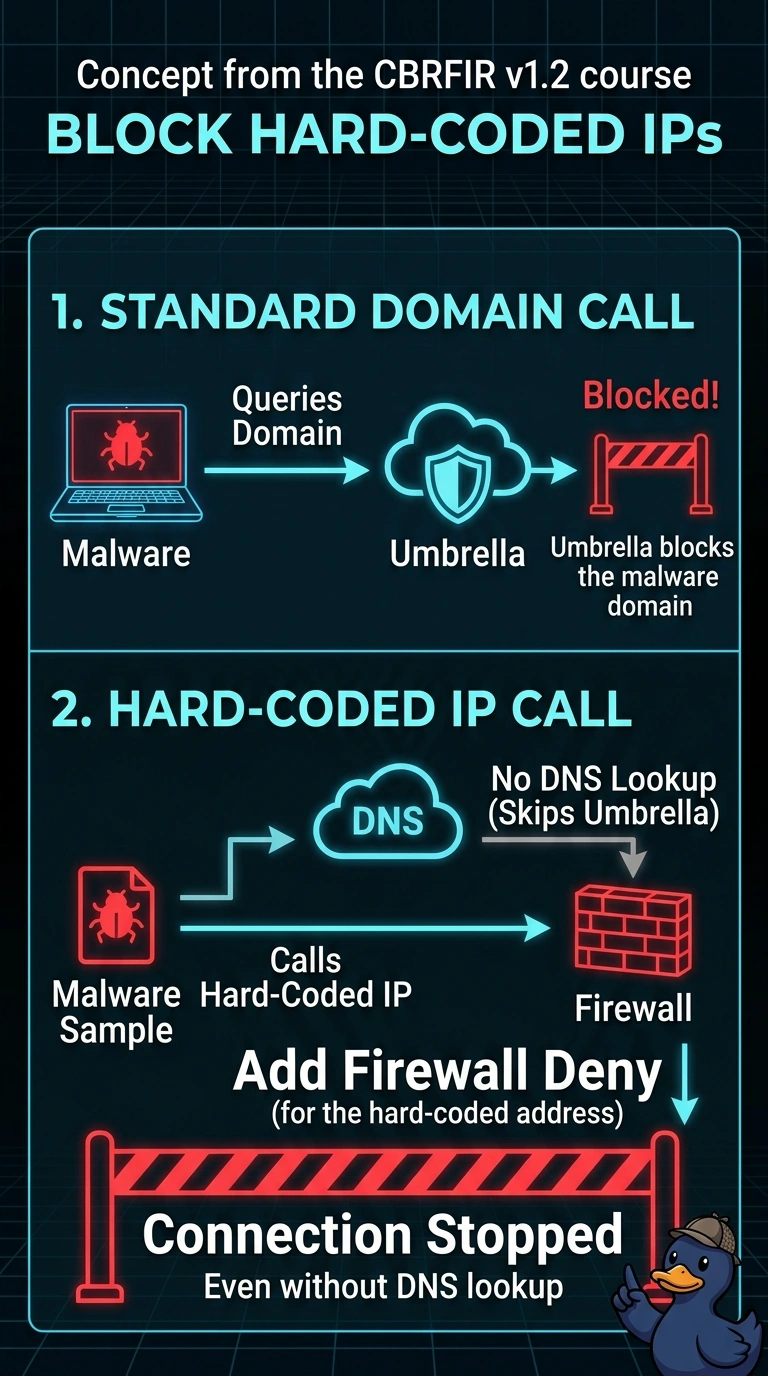
Short Explanation
Umbrella watches the DNS door, and this sample walks around it. You still need a firewall deny for the hard-coded address, because those calls leave without a lookup for Umbrella to block.
Full Explanation
An Umbrella domain block takes effect when a name is looked up. This sample instead calls a hard-coded IP address and performs no DNS lookup, so Umbrella’s domain control does not see or stop that connection. A firewall deny for the hard-coded address is required to stop connections that bypass DNS. A second Umbrella blocklist entry for the same malware domain would only repeat the domain control; it would not affect traffic that never looks up that name. A longer Umbrella cache time changes how long a DNS answer remains stored on the local resolver, but there is no lookup or answer to cache for this connection. An Umbrella allow for the domain would loosen the domain control and still would not make a hard-coded-address connection appear in DNS logs, because the sample never asks DNS for the address. Exam caveat: blocking the address supplements the domain block; the existence of an IP-based path does not mean the domain block should be removed. Practical check: confirm there is no DNS query for the connection, then verify that the firewall logs a deny for the hard-coded address from the affected host.