
At a retail company, firewall logs show command-and-control traffic matching an allow rule that sits above a later deny for the same destination. What rule change stops that traffic on the next connection?
Select an answer to reveal the explanation.
Short Explanation
A firewall rule list works like a bouncer who stops at the first matching name. Your command-and-control traffic is hitting the allow higher on the list, so the later deny never gets a vote. Adding another deny at the bottom only creates a rule this traffic will not reach.
Full Explanation
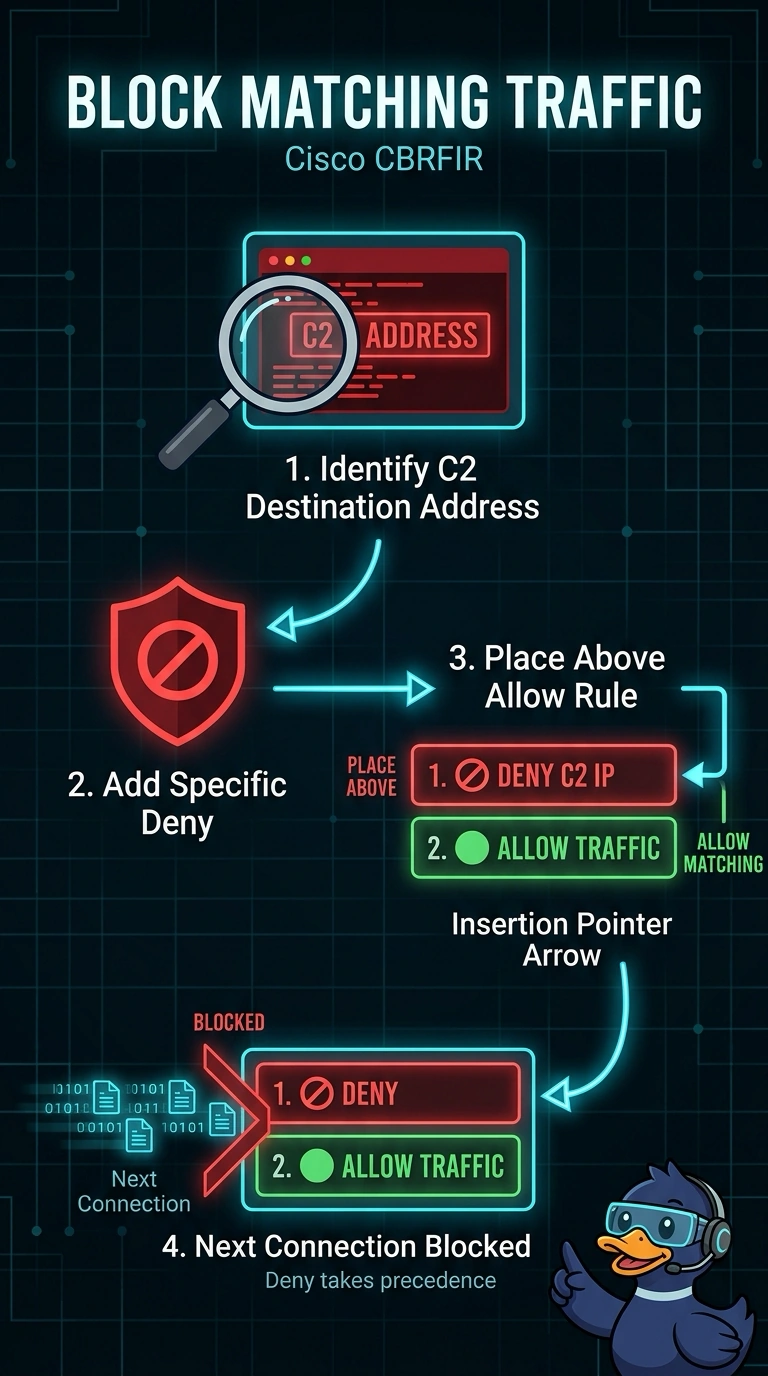
A first-match firewall stops at the first rule the connection fits, and this log already names the higher allow as the match for that command-and-control address. The permit stands until a deny for that address is placed where evaluation reaches it first. The analyst should insert a specific deny for that address above the allow that is matching the traffic now, so the next session hits the block before the permit. To append a duplicate deny at the bottom of the policy leaves the higher allow in control, and the added line is never evaluated. To enable extra logging on the later deny does not cause the next session to be recorded as blocked; logging only describes a rule the packets do not reach. To remove the later deny and leave the matching allow in place keeps that allow as the controlling rule and the path stays open. Exam caveat: on a first-match policy a narrower deny does not jump over an earlier allow, so position in the rule list is the control. Operational check: send a test connection to the address and confirm the connection log cites the new deny as the matched rule.