
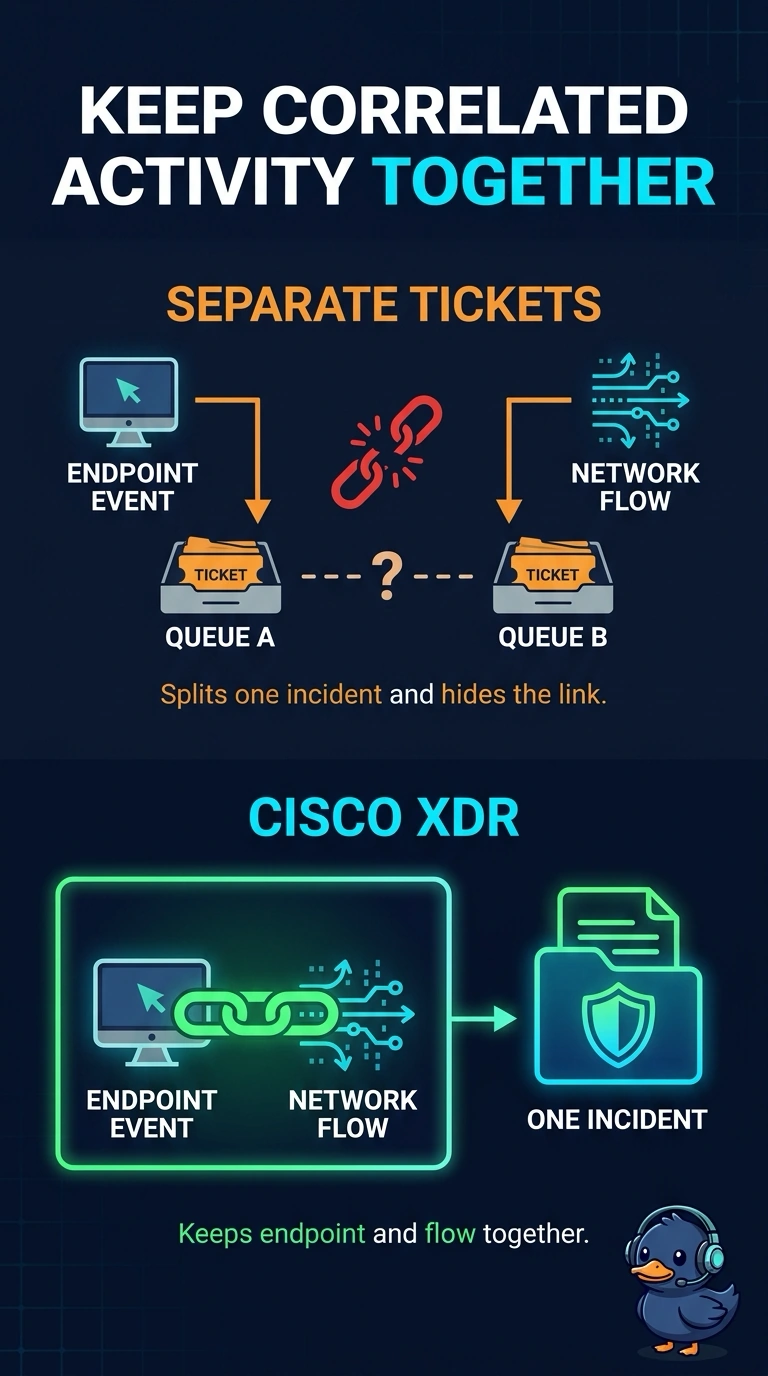
Cisco XDR has built one incident that joins an endpoint event with the matching network flow. Why is opening three separate tickets for that same activity the weaker response?
Select an answer to reveal the explanation.
Short Explanation
XDR already clipped the endpoint event and the flow into one folder. Open three tickets and you rip that folder apart, so the link between the host and the network activity gets lost. Extra copies do not make the case stronger when they hide the correlation.
Full Explanation
Cisco XDR correlated the endpoint event and the matching flow into a single incident so the host activity and the network activity stay one case. Separate tickets split one correlated incident across queues and hide the link between the endpoint event and the flow, which means analysts can work a fragment and miss the combined scope. Separate tickets do not force XDR to delete the endpoint event once the flow ticket has been filed; opening tickets does not erase the source event. Separate tickets do not inherently push each team to apply a conflicting block and leave no shared record of scope; the weakness is the split, not a requirement to contradict one another. Separate tickets that store three full copies of the alert do not therefore preserve stronger evidence, because duplicate tickets without the correlation are harder to close as one incident. Exam caveat: extra tickets can still be useful for a handoff, but they should point back at the one XDR incident rather than replace it. Operational check: work the single incident, and confirm both the endpoint observable and the flow observable are listed on that same record before you assign owners.