
Cisco Secure Endpoint shows one cashier PC with a malicious hash, and the rest of the store VLAN is clean. Why is endpoint isolation a better containment than shutting down that VLAN?
Select an answer to reveal the explanation.
Short Explanation
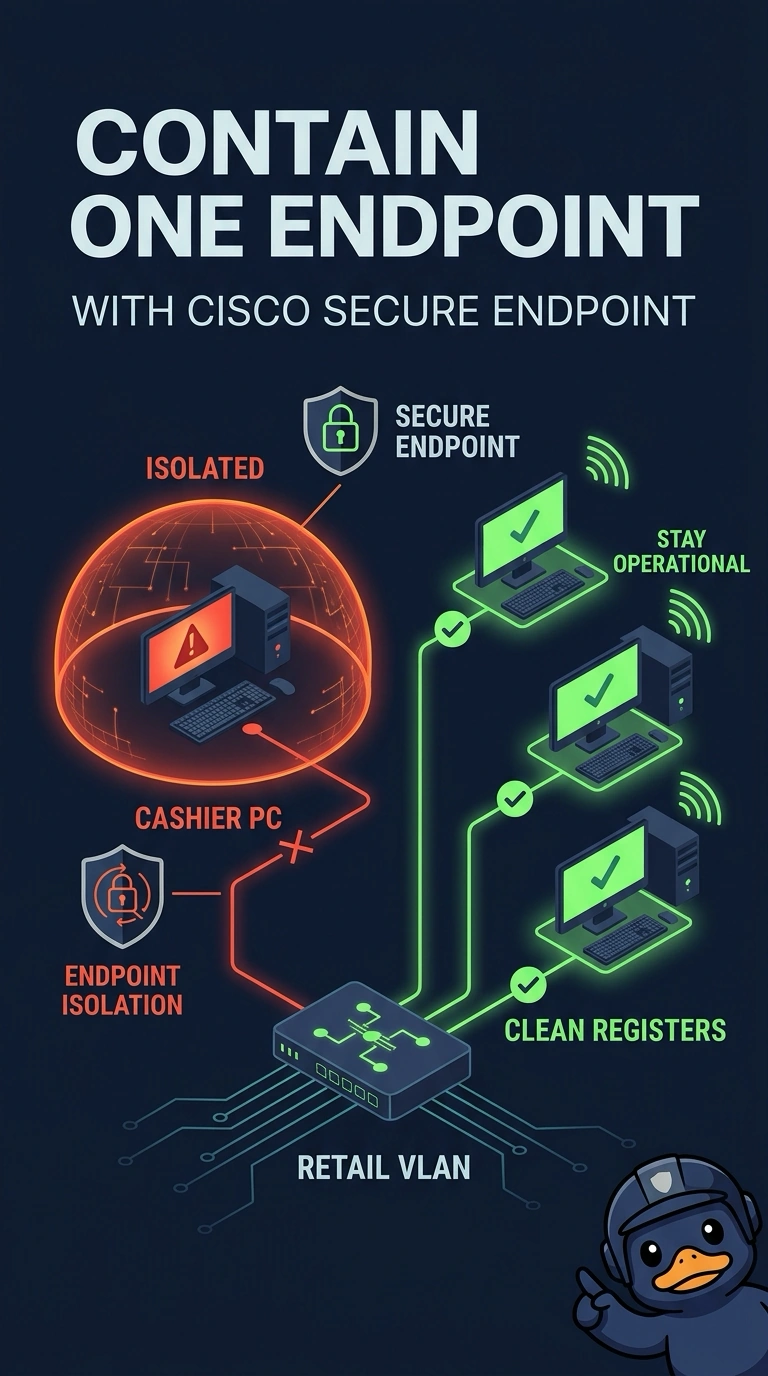
You close the sick register, not the whole grocery store. Endpoint isolation contains the one cashier PC that holds the malicious hash while the other clean registers keep operating. Shutting the VLAN, removing the gateway, or quarantining the internet circuit punishes hosts this evidence does not implicate.
Full Explanation
The evidence is one malicious hash on one cashier PC, with the rest of the store VLAN clean. Endpoint isolation contains that one cashier PC while the other clean registers on the VLAN keep operating, which matches the scope and keeps the store selling. The whole store VLAN should not be shut down on the theory that one malicious hash infects every register; that theory contradicts the clean results on the other hosts. The VLAN gateway should not be removed so no register can pass traffic until a replacement network is built, because the gateway is not the infected asset and removing it is a network outage. The store internet circuit should not be quarantined after the malicious hash appeared on a cashier PC; the circuit is a shared path, and the hash sighting is on one endpoint. Exam caveat: if a fleet search later finds the same hash on another register, widen containment beyond the first PC. Operational check: isolate the cashier PC from Secure Endpoint, confirm the host is contained, and recheck the VLAN for that hash before you restore normal access.