
A SOAR playbook can isolate a host, and an operator can reverse that isolation if the host is clean. When is it appropriate to let the playbook isolate the host automatically?
Select an answer to reveal the explanation.
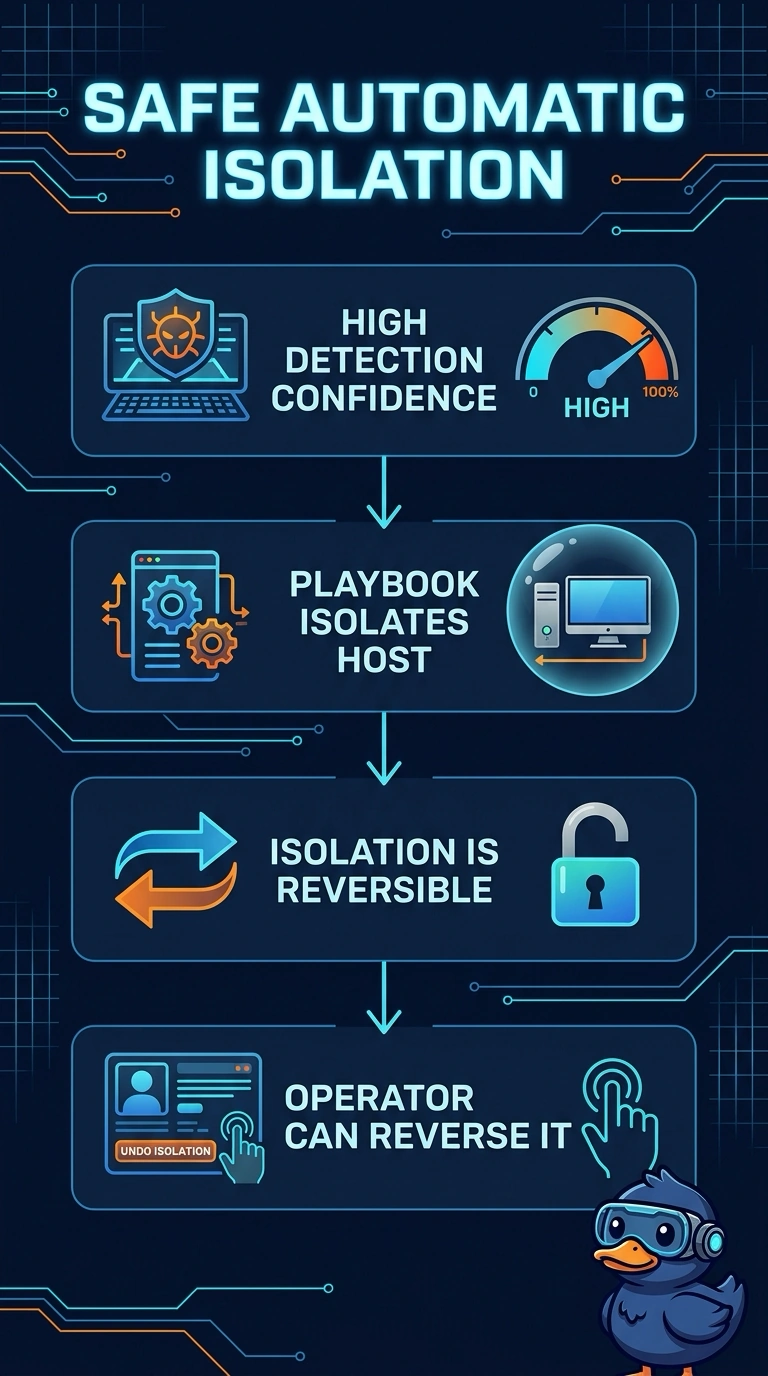
Short Explanation
Automatic isolation is a seatbelt you can unbuckle, not a shredder. Let the playbook isolate the host when confidence is high and the containment can be undone if the alert is wrong. Waiting on a full disk image while damage spreads, or automating every weak alert, misses that line.
Full Explanation
Automated isolation is appropriate when the detection confidence is high and the action stays reversible, so containment can proceed without destroying the host. That is the case when detection confidence is high and the host isolation can still be reversed if needed. Waiting until a full disk image finishes, even while encryption is still spreading across the host, delays containment for a forensic step that can follow once the harm is stopped. Running the action on every alert the SIEM creates, including low-confidence noise generated by the lab network, automates a disruptive control on detections that have not earned it. Requiring that the same automated step also wipes the disk so the affected host cannot be restored replaces a reversible containment with destruction, which the playbook was not built to do. Exam caveat: high confidence plus a tested rollback is what makes the automatic step acceptable; low confidence still belongs in a human queue. Operational check: read the playbook condition for confidence, confirm a documented way to remove the isolation, and only then allow the action to run unattended.