
Malware has been removed from a retail finance host, but a fraudulent payment batch was approved during the incident. Which validation is still required?
Select an answer to reveal the explanation.
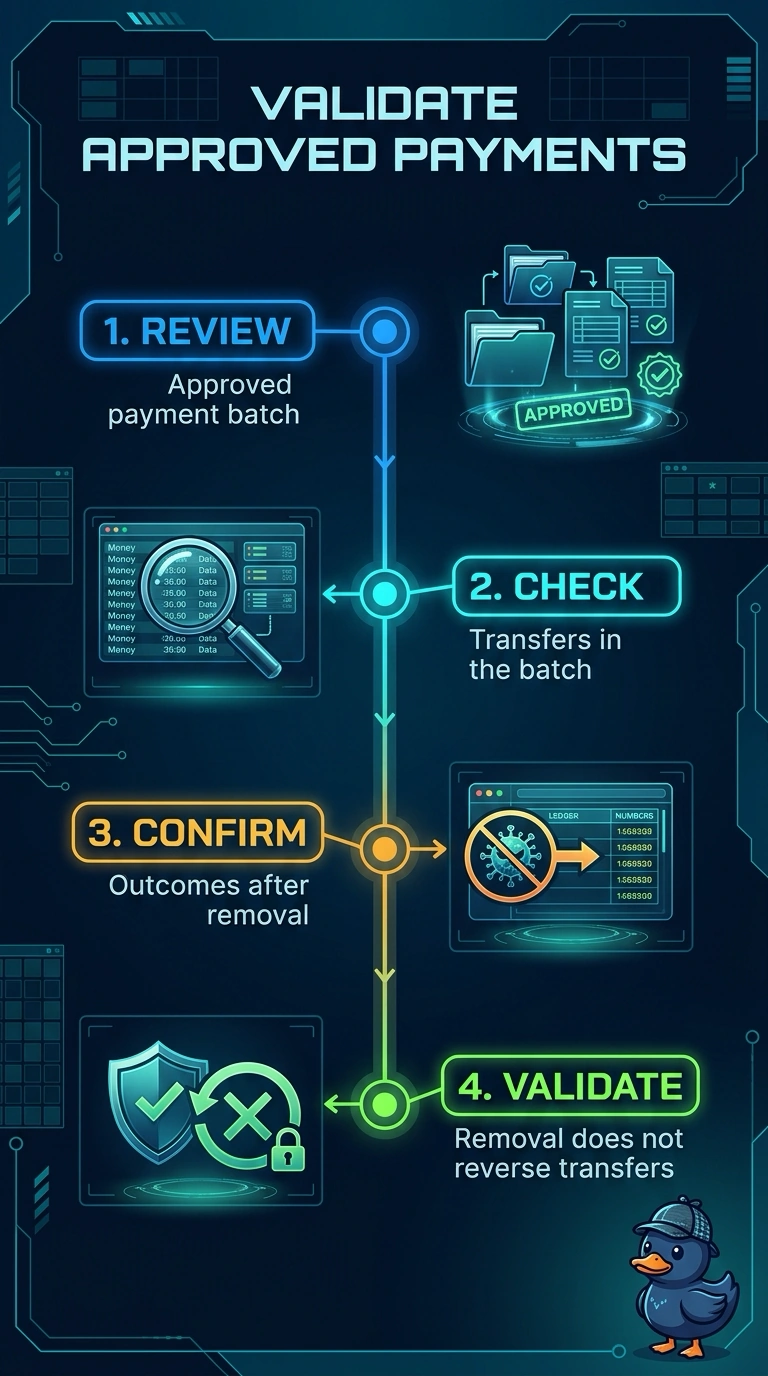
Short Explanation
Catching the clerk does not put the money back in the drawer. You still validate the payment batch that was approved while the malware was active, because removal does not reverse those transfers. A missing hash, an approval record, or a reinstalled workstation does not perform that check.
Full Explanation
Eradication of the malware does not unwind business actions taken while it was present. The validation still required is to validate the approved payment batch for transfers that malware removal does not reverse, then correct fraudulent payments through the finance process. A trusted restore of the finance host can come later, and it still does not tell you which transfers in that batch finance must reverse. Skipping further validation once the malicious hash is no longer present on the finance host treats a clean endpoint as a clean ledger. Accepting the payment batch as legitimate once the finance system shows an approval record trusts the same approval path the attacker used. Reinstalling the finance host operating system and treating the approved payment batch as settled rebuilds a workstation and leaves the fraudulent transfers untouched. Exam caveat: host eradication, credential resets, and payment validation are separate closeout tasks, and finishing one does not finish the others. Operational check: export the payment batch approved during the incident window and have finance mark each transfer as confirmed, reversed, or still suspect.