
Cisco Umbrella shows a school laptop repeatedly resolving a newly registered phishing domain. Which Umbrella action stops protected clients from receiving the real address for that name?
Select an answer to reveal the explanation.
Short Explanation
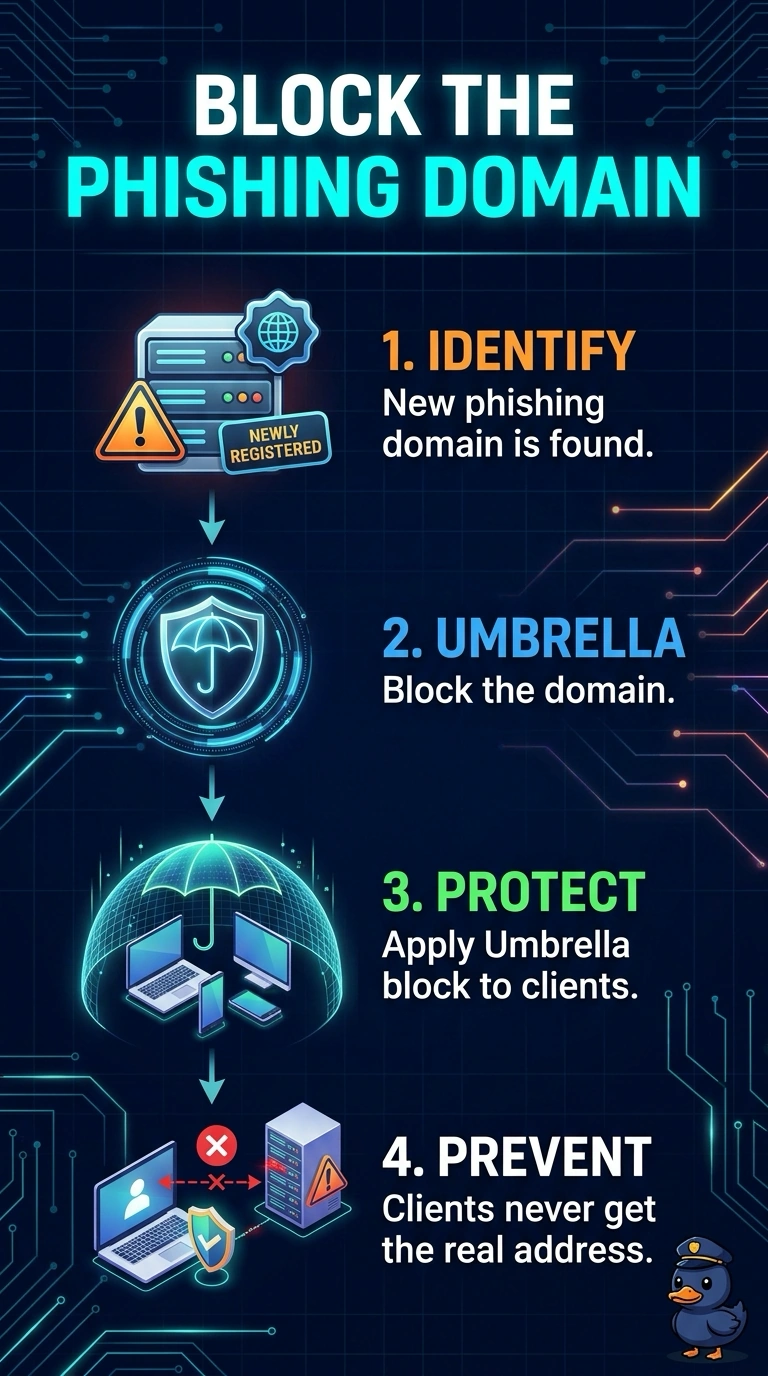
Umbrella is the phone book your school laptops use. You block the phishing domain there so protected clients are not given the real address for that name. Isolating one laptop in another product, exporting the query log, or lowering logging leaves the resolver answer unchanged.
Full Explanation
Cisco Umbrella controls what address protected clients receive when they resolve a name. The action that stops them from receiving the real address is to block the phishing domain in Umbrella so protected clients are not given its real address. That DNS-policy block is the Umbrella control; containing one laptop elsewhere does not stop other protected clients from resolving the same phishing name. Isolating the laptop in Secure Endpoint can contain that one host, but leaving the Umbrella policy unchanged for the domain means every other protected client can still resolve the name. Exporting the Umbrella query log and waiting for the laptop user to stop visiting the site preserves evidence and does not change the answer the resolver returns. Lowering the Umbrella logging level so those repeated lookups are no longer kept for review hides the trail and still hands out the real address. Exam caveat: an Umbrella block changes the DNS answer for clients that use Umbrella, and a host that uses another resolver is outside that control. Operational check: after the domain is blocked, resolve it from a protected school laptop and confirm the answer is not the phishing host address.