
A retailer's mail gateway still accepts macro-enabled Office documents from the internet, and a live campaign is sending those files. Which control closes that exposure?
Select an answer to reveal the explanation.
Short Explanation
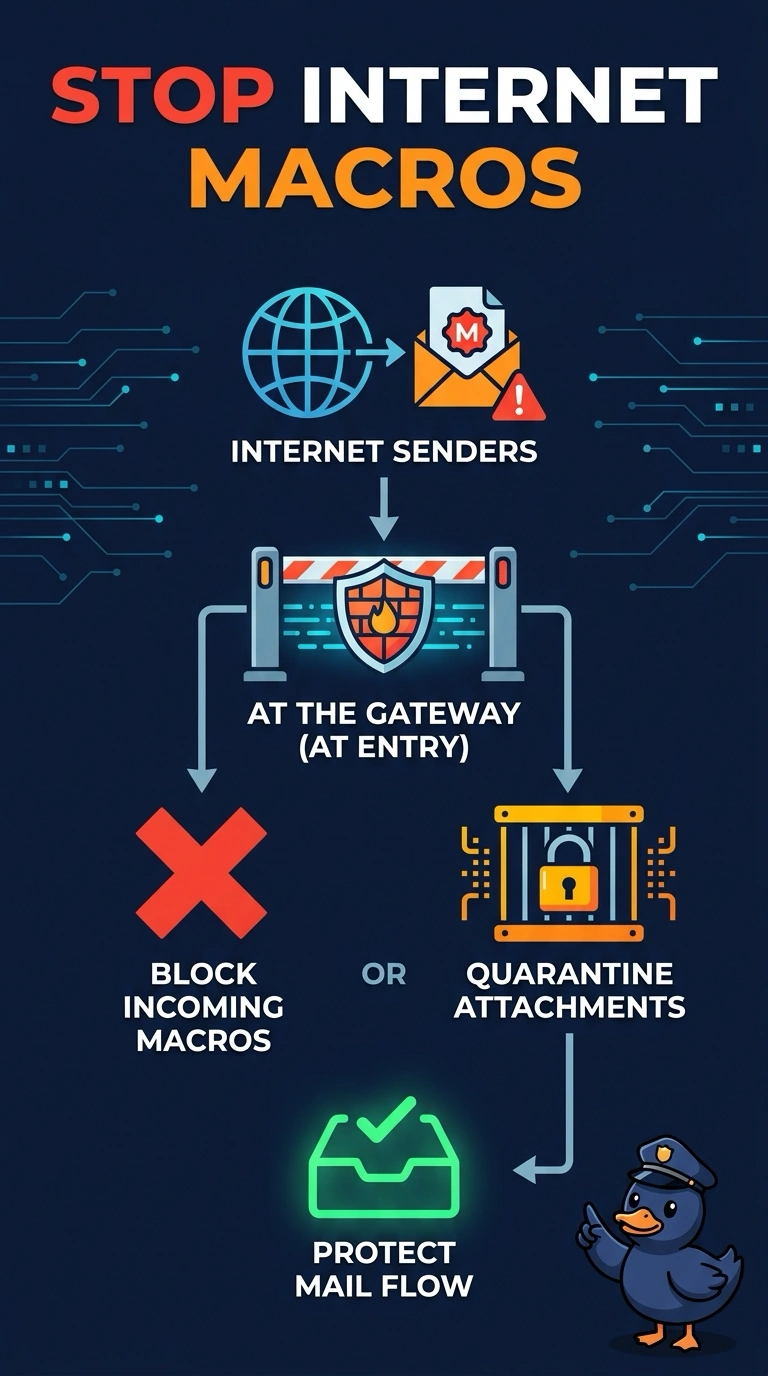
A macro-enabled document from the internet is a spring-loaded envelope. You close that exposure at the mail gateway by blocking or quarantining those attachments. A warning banner still lets the spring land in the inbox.
Full Explanation
The exposure is that macro-enabled Office documents from the internet are delivered to users while a campaign is using that path. You block or quarantine those attachments that arrive from internet senders at the gateway, so the macro never reaches the inbox. A warning banner about unexpected invoices and payment lures may help a careful shopper, but the file still arrives and the exposure stays open. Raising mailbox quotas so the campaign messages are stored gives the lure a larger shelf and does not remove the macro. Disabling spam filtering so staff can read every inbound message in full takes away a filter and makes the campaign easier to deliver. Quarantine still lets an analyst retrieve the sample, while a block stops delivery to the mailbox. Either control closes the path the campaign is using. Exam caveat: a block on macro-enabled mail from the internet can have a named exception for a partner who must send macros, and that exception should be narrow and logged. Operational check: send a test macro-enabled document from an external mailbox and confirm the gateway quarantines or rejects it instead of delivering it.