
An object-storage bucket at a payroll company allows anyone on the internet to list its contents, and the listing includes employee data exports. Which change removes that exposure?
Select an answer to reveal the explanation.
Short Explanation
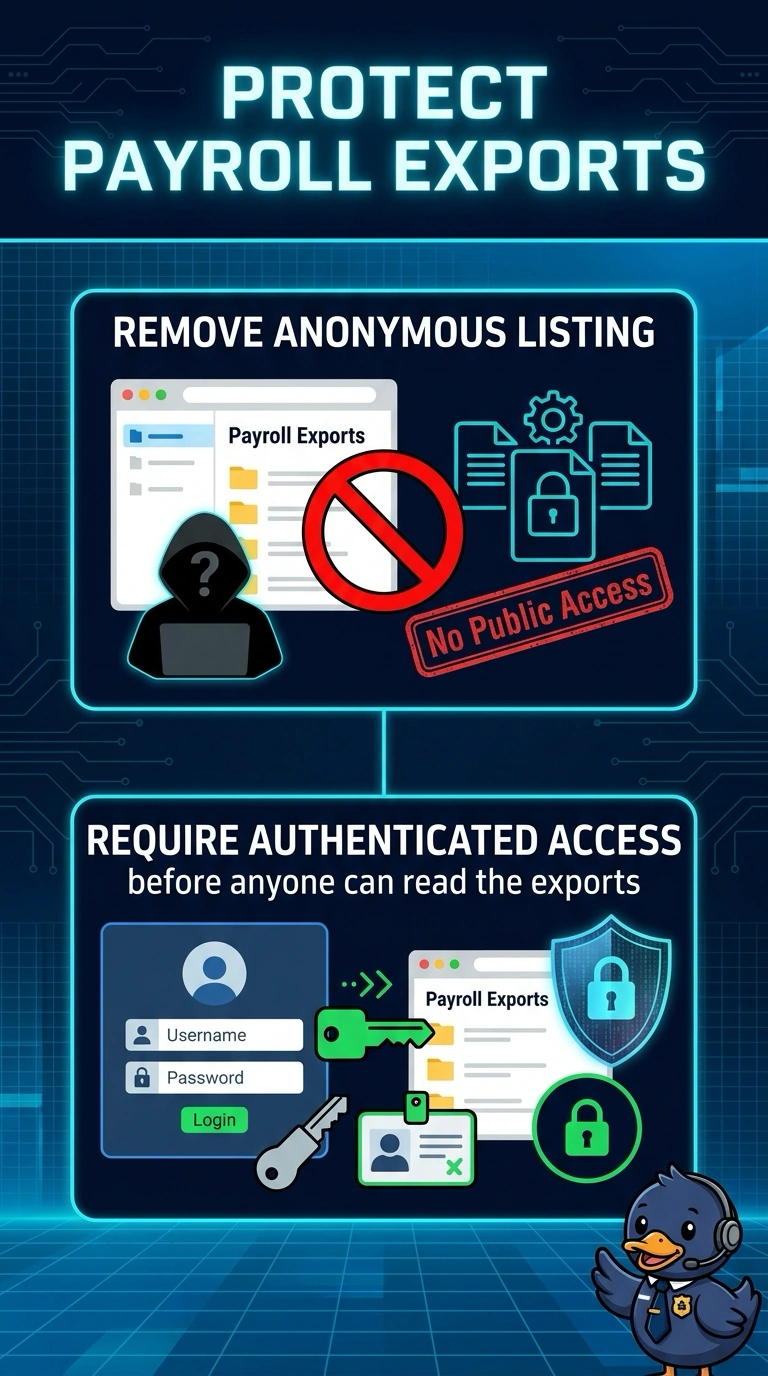
A world-readable bucket listing is a glass display case on the sidewalk. You remove the exposure by blocking anonymous listing and requiring authenticated access to the exports. Renaming the case or squeezing the files still leaves the glass in place.
Full Explanation
Anonymous listing exposes object names and metadata; it does not itself establish permission to read object contents. Remove anonymous listing and independently restrict object reads to explicitly authorized identities. That paired control closes the public list operation and separately closes public object reads, so unauthenticated callers learn no names and can retrieve no export bytes. Enabling versioning so older copies of the exports remain stored keeps history for recovery and does not change the bucket policy, so an anonymous caller can still list. Renaming the bucket to a longer name that outsiders are unlikely to guess is obscurity, not access control; if the list policy stays world-readable, discovery remains possible. Compressing the export objects so the public listing shows smaller object sizes only changes stored bytes and displayed size, and still leaves listing and any granted reads open. A private-list plus explicitly authorized-reads policy is what removes broad exposure. Exam caveat: authenticated access only helps if the accounts that keep access actually need the exports; a broad internal group can still overshare. Operational check: from a network with no company credentials, confirm the bucket listing is denied, then confirm an authorized account can still read an export.