
A backup tool's service account is a local administrator on every server and staff use it for interactive logons. Which change reduces that risk?
Select an answer to reveal the explanation.
Short Explanation
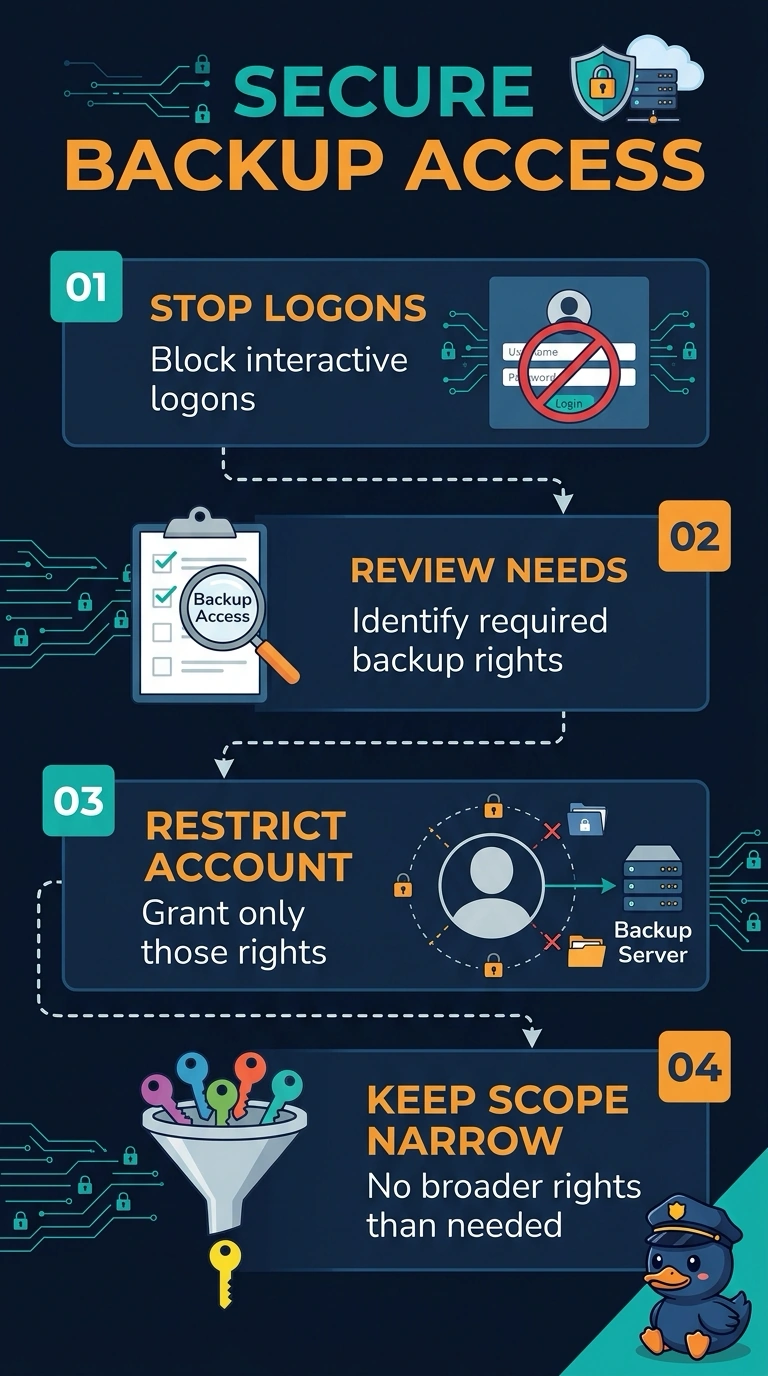
A master key that everyone borrows for ordinary doors will eventually open the wrong one. You stop interactive logons and restrict the account to the backup rights the tool actually requires. Sharing the password, adding more administrators, or silencing the log makes the key easier to abuse.
Full Explanation
A service account that is a local administrator on every server and is also used interactively is a single credential with far more reach than a backup job needs. The reduction is to stop interactive logons and restrict the account to the backup rights the tool actually requires, so a stolen password cannot be used as a general admin login. Handing the account password to the help desk so interactive logons are easier for staff to arrange spreads the secret and encourages the misuse. Extending the same local administrator rights to user workstations as well as to every server widens the blast radius. Stopping the recording of logons for the account so interactive use creates fewer alerts for the team hides the abuse and leaves the rights in place. Then confirm the backup job still completes under those narrower rights. Exam caveat: the backup job may still need powerful rights on the servers it protects, but those rights should not include casual interactive use. Operational check: review the account's group membership and confirm interactive logon is denied while the backup job still succeeds.