
Access switches at a factory still answer SNMPv2c queries from the user network using a default community string. Which change closes that exposure?
Select an answer to reveal the explanation.
Short Explanation
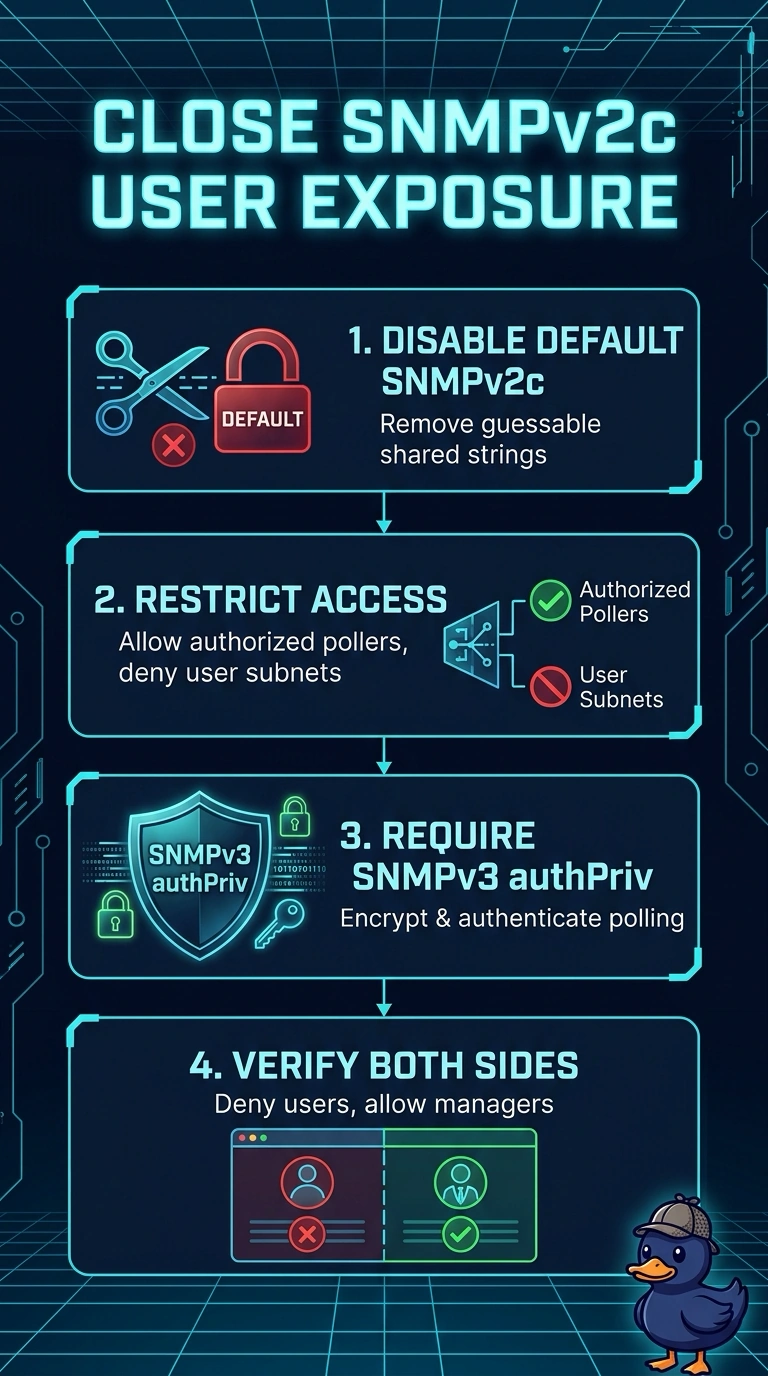
You can close this exposure by disabling the default community, limiting management access to authorized sources, and using SNMPv3 authPriv where supported. SNMPv3 alone is not a security guarantee: noAuthNoPriv lacks authentication and privacy, so retire insecure communities and enforce management-source ACLs.
Full Explanation
SNMPv2c identifies requesters with a community string sent in clear text, which someone listening on the path can capture and reuse. When switches answer user-network queries using a default community, user hosts have a working credential to poll them. Disable that community, restrict management access to authorized sources, and use SNMPv3 authPriv where supported; this removes the usable default string from user hosts and limits polling to approved managers. SNMPv3 alone is not a security guarantee: noAuthNoPriv lacks authentication and privacy, so require authPriv, retire insecure communities, and enforce management-source ACLs. Renaming the management network while leaving SNMPv2c reachable from user hosts and the same community working changes neither reachability nor the valid credential, so exposure remains. Extra switch logging may improve visibility, but queries still succeed while the community remains active. Storing the community string in startup configuration preserves it across reboots rather than removing it. Exam caveat: a security-related network name or added logging does not itself block queries or invalidate a community string. Verify that requests from user subnets are denied and authorized management hosts can poll using the approved authenticated and encrypted configuration.